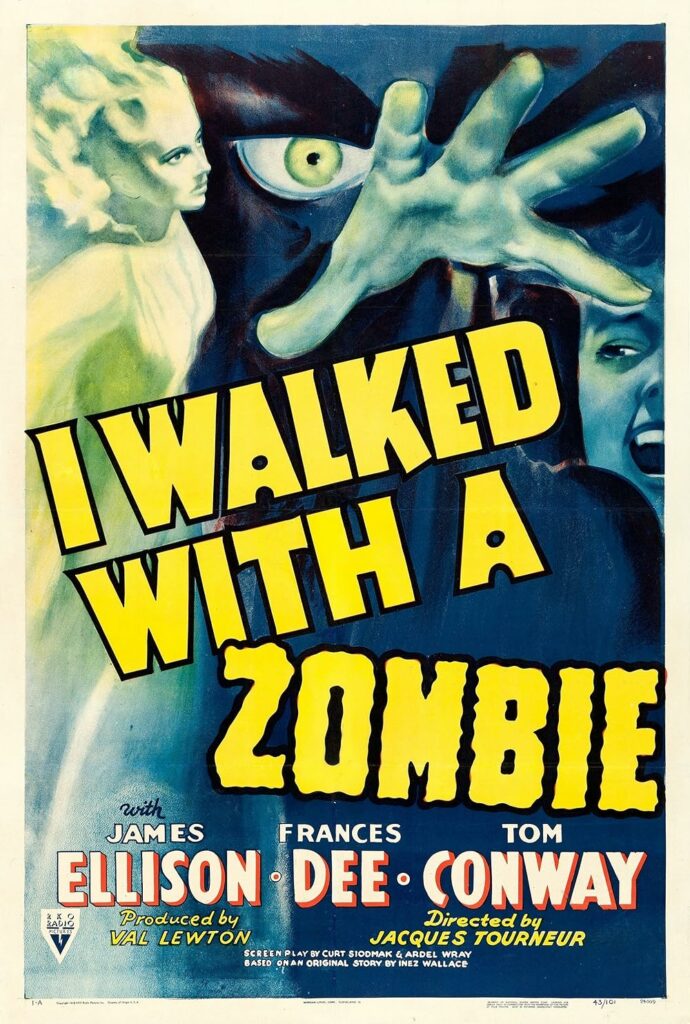
When Val Lewton took the job of heading up horror films for RKO in the early 1940s, one of the conditions he had to accept was that the executives at the studio would give him titles and he would then have relative freedom in how he turned those titles into movies. Cat People was the first, a title I expect the executives thought would lead to something like Universal’s recent hit The Wolf Man. Instead, Lewton and director Jacques Tourneur created a strange, moody, eerie film, much more mysterious than terrifying. But it was a big hit, so the executives couldn’t really complain.
They probably thought they’d cornered Lewton with the next title they gave him: I Walked with a Zombie. “Go ahead, Val,” I can imagine them saying, “try to make an artsy mood piece with a title like that!” To help steer Lewton toward what they wanted, RKO even provided him with the writer of The Invisible Man Returns, The Wolf Man, The Invisible Woman, and Frankenstein Meets the Wolf Man: Curt Siodmak. Surely, an experienced Universal horror writer plus a title like I Walked with a Zombie would lead to a conventional, commercial B-movie!
Lewton seems to have enjoyed the challenge of the constraints RKO put on him. Even if he didn’t enjoy those constraints, he certainly thrived under them. Like a poet who blossoms with sonnets more than free verse, or Houdini finding ever more creative ways to escape from whatever his audiences tied him up with, Lewton and his collaborators found their greatest inspiration in constraints. Ridiculous titles, tiny budgets, and a strict requirement to keep every film around 70-75 minutes — these difficult conditions led to the greatest horror films of the 1940s; indeed, some of the greatest of all time. For me, I Walked with a Zombie is the best of the best.
Siodmak’s script ultimately provided little more than an outline for the film, because Lewton hired the young writer Ardel Ray to serve as a researcher and rewriter. Ray is only beginning to get her due as a key contributor to the Lewton films’ aesthetic accomplishments, but her contributions weren’t only to the mood of the story. She brought a seriousness to the research that was rare at the time for any Hollywood film — she even reportedly met with Zora Neale Hurston to talk about the experiences Hurston wrote about in Tell My Horse, her book about Jamaica and Haiti — but Ray’s care with the research was especially unusual for a low-budget film set in the Caribbean. It was the sort of material that, in 1940s Hollywood, anyone else would have filled with common stereotypes and racist drivel. Lewton was himself famous both for the depth of his research and his commitment to undoing some of the racism in the industry; he must have noticed a similar sensibility in Wray, and thus gave her her first big break. He noticed the same in Jacques Tourneur, a director of intellectual and aesthetically complex sensibilities who was also, throughout his career, determined to at least lessen what he could of the entrenched anti-black racism in Hollywood.
Though Lewton himself spoke of the story as drawing from Jane Eyre (he’d recently assisted producer David O. Selznick on Alfred Hitchcock’s Rebecca, a Jane Eyre-esque tale), to me it feels at least as redolent of the best of William Faulkner. Faulkner’s great works of the 1930s are consistently concerned with the original sin of slavery and its insidious corruption of the landscapes and families that supported it. A similar idea is repeated throughout the first 30 minutes of I Walked with a Zombie: the Holland family, for whom the island has long been something of a personal fiefdom, have reached the end of their line, trapped in melancholy and madness, the inevitable outcome of a life made possible by the enslavement of other human beings.
Though my focus here is mostly on the film’s air of melancholy, it also has a sly wit throughout, and I don’t mean to neglect that. It’s present even in the titles, where the standard disclaimer about the story being fictional is slightly alterred to read: “The characters and events depicted in this photoplay are fictional. Any similarity to actual persons, living, dead or possessed, is purely coincidental.”

I Walked with a Zombie is a story that we might call pre-postcolonial in its politics. The (fictional) island of San Sebastian is clearly at the end of its colonial heyday, the sins of the colony’s founding having corrupted the ruling powers almost completely, leaving them debauched, decadent, dying. The Holland family isn’t able to command much of anything anymore, never mind oppress. What we see of power on the island is entirely among the descendents of the enslaved: Sir Lancelot with his mocking song, the “voodoo” powers of the houmfort.
What we have then is a story without villains, only victims. The houmfort rituals at first may seem scary to characters (and viewers) unfamiliar with them, but the same could be said of a Catholic mass. Despite its short length, the film gives us the time to sit with the rituals, landscape, and people long enough that we are able to have some understanding of people’s motives and histories. Certainly, some of the characters behave badly, but I Walked with a Zombie embodies the famous line from Renoir’s The Rules of the Game: “The awful thing about life is this: Everyone has their reasons.”
Despite its natural beauty, the whole island is a place of melancholy and misery. Lewton, Tourneur, and Ray are clear about the source of this misery and melancholy: the Holland family ship that brought enslaved people to the island in the first place. This original sin is given concrete form in the ship’s figurehead of St. Sebastian, which the locals call Ti-Misery. A body still pierced by arrows, a body perpetually suffering. And one the film makes some subtle visual connection with Carre-Four (played by Darby Jones), the guardian of the crossroads.
The figure of Carre-Four was likely intended to be terrifying — certainly, some of the first shots of him are striking, even shocking — but Lewton and Tourneur’s basic humanism overcomes this. Carre-Four becomes a figure of sadness and loss, but also of a kind of objective, even indifferent power. He is something of a psychopomp, more Charon than monster. (In a 1972 essay on Jacques Tourneur’s films, critic Robin Wood wrote that Carre-Four is “the intermediary between the two worlds, the messenger the night world sends to claim its due.”) I’ve been watching and rewatching this film for 20 years, and Carre-Four is the character I remember most vividly between viewings, the character who haunts my imagination, a figure ultimately of mystery but also of dignity and sadness, like Frankenstein’s monster if the villagers had let him be.
Sadness is the overwhelming emotion provoked by I Walked with a Zombie. Some moments are played for horror, but the horror is always undermined. Or perhaps a more accurate word is excavated. Lewton, Ray, and Tourneur certainly knew that the material of the film would be unfamiliar and sensational for most of the audiences that they would expect to see it, but they never allow the material to remain purely sensational. This is a film told from a white and colonialist point of view, but its goal is to expand that point of view — even, perhaps, to end it. There isn’t much left to say about the white folks at the end. They’re mostly either dead or headed elsewhere. The imaginative space the film leaves us in is one where we might imagine the island now being taken over not by the descendants of the rulers but by the descendants of the exploited and enslaved. The white people in the film have been zombified not by black magic but by their own history, their own failures; they have been rendered hollow and dead-in-life by colonialism, racism, jealousy, greed, alcohol, and even (in the case of Mrs. Rand) by good intentions. Paul Holland wants to blame some mysterious property of the island for the depth of misery there, but though much is mysterious in I Walked with a Zombie, the source of misery is not, though the white people are oblivious to it. But they shouldn’t be. Early on, the coachman describes Ti-Misery to Betsy as he drives her to the house (“An old man who lives in the garden of Fort Holland, with arrows stuck in him and a sorrowful weeping look on his black face”), then says that “the enormous boat brought the long-ago fathers and the long-ago mothers of us all, chained to the bottom of the boat,” to which Betsy, naive and uncomprehending, replies, “They brought you to a beautiful place, didn’t they?” The coachman’s face and manner show he knows his information has not sunk in with her, and he replies, with both irony and resignation, “If you say, miss. If you say.” She will learn.
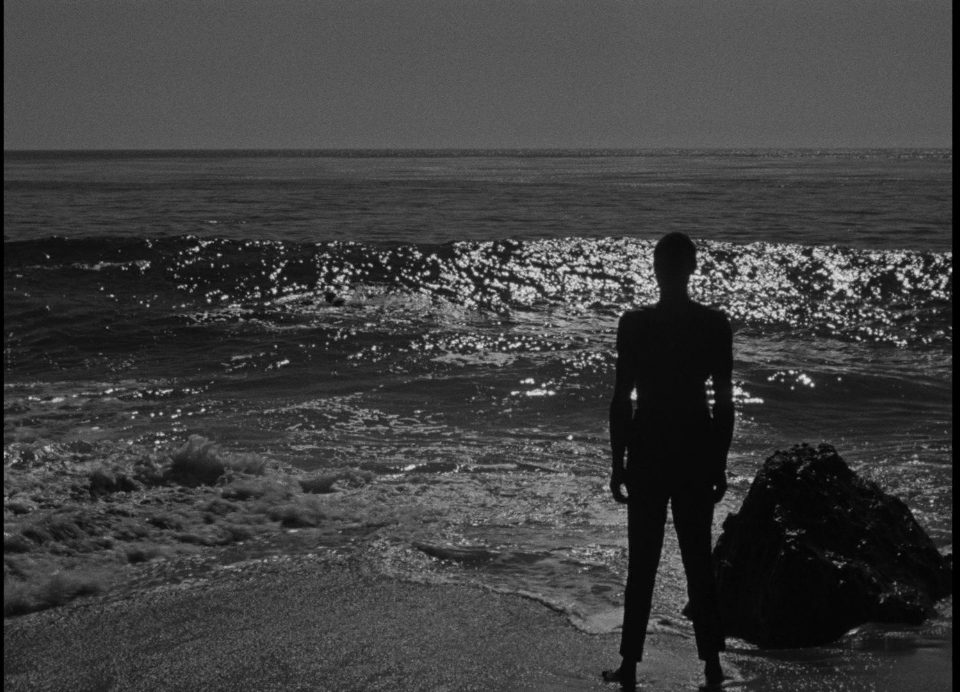
Though the source of the island’s misery is no mystery, there is much in the film that is mysterious, even contradictory. Some of this was undoubtedly the result of the conditions of the film’s making — the opening shot of the beach, for instance, seems to be there just to have someone walking with a zombie, and doesn’t have any clear connection to the narrative; or consider the ways the voiceovers move through time and space, sometimes in ways that don’t fit with the events as depicted by the camera. But Lewton, Wray, and Tourneur clearly embraced the possibilities within the ambiguities. We are never given a clear explanation for Jessica’s condition, for instance. Various possibilities are offered, and the characters all come to their own conclusions, but those conclusions are not the same. We see that the rituals do in fact have an effect on people, so it’s possible that Jessica is, indeed, some sort of zombie … but it’s also possible that she is mentally ill, that she has had brain damage from a disease, etc. The film does not want to give conclusive explanations for her condition, because ultimately the reasons for her condition don’t much matter. What matters is how people react to her, how people interpret her, because their understanding of Jessica and what has happened to her explains much about their own view of the island and its people.
With Cat People, Lewton and Tourneur established the dreamy, eerie atmosphere that would become a hallmark of Lewton’s RKO movies, though arguably no director other than Tourneur was as committed to the aesthetic. (And that aesthetic would prove influential beyond Lewton’s own films — Robert Wise, who got his start as a director with Lewton’s Curse of the Cat People and The Body Snatcher, would use all he learned from Lewton to great effect in The Haunting twenty years later.) Tourneur was famously demanding of cinematographers, with precise ideas about camera angles and lighting. As numerous commentators have pointed out, the visual differences are stark between Tourneur’s three films produced by Lewton and the popular horror movies from Universal at the time. Universal had more money for lavish sets and costumes than RKO, so some of Tourneur’s shadowy scenes are making the most of small budgets, but ultimately the difference is an opposite perspective on what is horrifying.
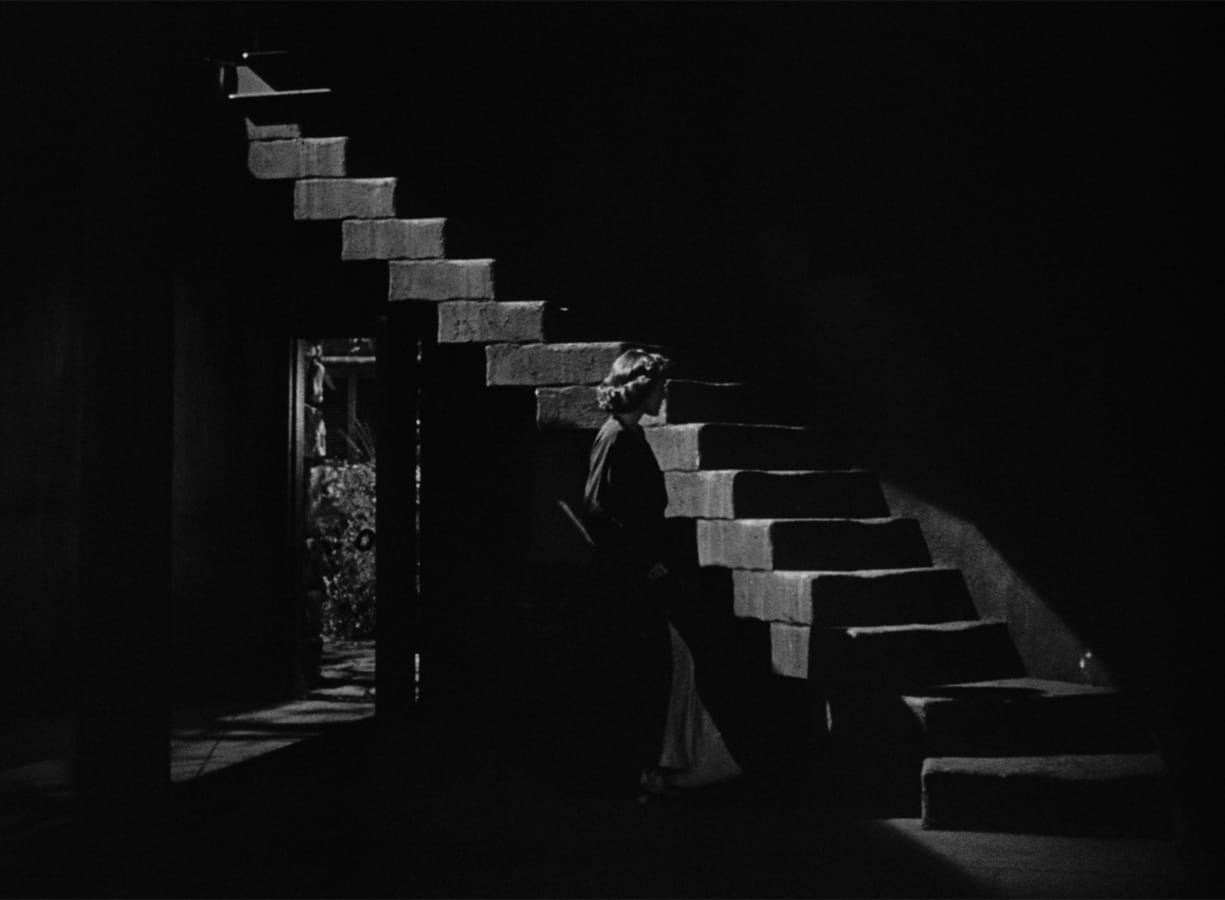
In the popular horror movies of the era, what’s horrifying is what is seen: clearly shot, with the characters themselves brightly lit even in nighttime. In the Lewton films, the horror is what is in the shadows, what is off screen, what is unknown. Popular horror proposes that monsters can be seen, known, and thus vanquished. Lewton, Ray, and Tourneur knew better. The universe itself is the monster.
Maybe it’s not even horror. The dominant emotion from the film is melancholy. The beautiful, shadowy imagery produces a tale of deep sadness, the wailing of past tragedies echoing into the present.
It brings us to a beautiful place, doesn’t it?
If you say so, miss. If you say so.
Discover more from Matthew Cheney
Subscribe to get the latest posts sent to your email.
