The theme for this year’s International Open Access Week is “Who Owns Our Knowledge?”, a question that ought to be nonsensical, but which is becoming ever more urgent.
I cannot help but think about Open Access (OA) within the current context both of our world generally and also my own world personally. The general world’s disasters are apparent for all to see, so I will not waste your time in delineating any of them right now, but I should give a basic outline of my own circumstances, because those circumstances inflect everything I will say here and lead to my sense of urgency about OA and about knowledge generally.
My colleague and supervisor Robin DeRosa was recently forced out of her job at our university, ending a long and distinguished career there. I could write at length about how and why this happened — it had nothing to do with Robin herself, who has only been a boon to the university, probably the most effective leader on campus, a beloved and even legendary figure — but for now I think Robin’s own statement at that link can say what needs to be said publicly.
As Director of Learning & Libraries, Robin faced a daunting final task: helping our librarians figure out how to cut resources down to the bone. Actually, beyond the bone. We’ve been cutting into the bone for many years.1As Robin notes in her essay, New Hampshire funds higher education at the lowest rate of all 50 states. Double our state funding and we’re still below the national average. And we are not a poor state. There are houses in my little town worth millions of dollars. But our state politicians keep cutting government revenue sources because they do not believe in the concept of the public good, and some in fact have celebrated our last-in-the-nation status, saying it demonstrates our commitment to “individual responsibility”.
The result of all this cutting is that our university library now has considerably less access to resources than it did even two years ago, especially electronic resources, but not solely — we subscribe to hardly any print periodicals anymore. If I publish in a closed-access journal, it’s likely that my colleagues and students will not have access to that publication. I have no desire to publish in places walled off from them — walled off, in fact, from myself.
These and other circumstances have got me thinking about access, openness, knowledge, and ownership. The following notes are something of a continuation of ideas I at least gestured towards earlier this month with “On Not Knowing Professors”, and build from the last ten years or so of my writings on openness and access (which, I now realize, began when I first interviewed Robin about Open Educational Resources in 2015).

Open Access Is the Base, Not the Summit
For most Open Access advocates, OA exists as part of an ethical structure … but it is also easy to miss this, because we get caught up in arguments about details, about hows more than whys, and forget that OA is premised on a set of values. Within those values, OA is a beginning, not an end.
I say for most OA advocates, it exists as part of an ethical structure because for some it does not at all. For commercial, corporate publishers, OA is just another tool in the money-making machine, which is why they tend toward so-called “Gold OA” (gold as in what merchants hoard), shifting the cost of publication to authors rather than readers via Article Processing Charges (APCs), the bane of OA for anyone with a sense of ethics.2Yes, I know some people claim “Gold OA” does not necessarily mean APCs and exploitation of scholars. This may have been true when the term was created, but I have seen no evidence that it is true in practice. It’s easy to see why publishers love APCs — it shifts the income to an earlier part of the publishing process, allowing for-profit publishers not to have to think much about how well they publish anything, only how well they attract people willing and able to pay APCs to have their work published. The business model is hardly different from vanity publishing.
I’ve been reading Samuel A. Moore’s excellent — thrilling — new book Publishing Beyond the Market: Open Access, Care, and the Commons, which in so many ways is the book on OA that I’ve been waiting for. Moore’s approach to OA is entirely based in values and ethics. He notes in the introduction that he is most interested
in seeing whether OA might be oriented to nurture a radical commons-based approach to knowledge production and dissemination. I am therefore taking it is axiomatic that publications within any commons-based system of publishing should be freely accessible as standard and that it is the commercial element that must be eradicated or left behind. This is to say that if it is possible to fund the creation and dissemination of academic publications without recourse to informational capitalism, then there is no reason for the artificial scarcity that market-based systems rely on. We can work towards “commoning” publishing in a way that will also make academic publications free for all. I am therefore not arguing for OA as the end point of any new systems of publishing, nor am I making a case for a particular definition of OA publishing. This book is all about how to return control to academic communities, away from the privatised publishing industry.
The focus on commons is dear to my heart, as my first academic presentation on an OA-related topic was titled “Gift Economies in the Gig Economy” (the commons being a frequent topic or reference point for ideas about gift economies — in fact, Lewis Hyde, whose book The Gift is the most famous text about gift economies, later wrote the book Common as Air: Revolution, Art, and Ownership). But of course there are problems (if not tragedies) with a general idea of the commons as a place of free stuff. I think of this as the techbro idea of the commons, because a lot of techno-utopians espouse some idea of a commons — remember “information wants to be free!”? This has led to terrible things because this idea of the commons has all the complexity and selfishness of a small child’s thinking. (No wonder it’s popular with Libertarians, whose political ideology is that of a small child.) But it has also led to good things such as Creative Commons. Free stuff! is not, though, a value.
Moore understands the dangers of a broad idea of the commons, and so goes for a more useful and ethical definition:
When talking about the potential for publishing to be a commons, I mean loosely how it might be controlled by and answerable to different research communities, how publishing processes may be guided by ethical rather than commercial outcomes, and how the outputs may be shared with all.
I’m restraining myself from quoting this entire section of his introduction — really, the whole thing is worth reading … and since it’s OA, you can.

Commoners
I’m especially drawn to Moore’s idea of the commons as a mode of production. Conceiving of the commons this way brings attention to the idea of the commons as a process and ethic by which people work together toward goals that have little to do with profit. In such a model, sustainability is more important than growth. From each according to their ability, to each according to their need (and desire)…
Seeing the commons as a mode of production also brings attention to things even a number of ethical OA advocates often downplay: labor and infrastructure.
I must confess that I sometimes feel that many of my colleagues in academia do not have a well-developed theory of labor; indeed, I often think they have no theory of labor at all. Academics are often quite willing both to be exploited and to serve as an exploiter. I am perhaps especially sensitive to this because I came to academia relatively late, taking almost a decade off between my bachelor’s and master’s degrees, then nearly as long between my master’s and PhD. I also came to it with lots of experience in trade publishing and no experience of academic publishing. So though I was somewhat dazzled by the occasional dazzling elements of academia when I arrived, I was also utterly horrified by how much people let themselves be used by a system that obviously profited from their work without returning much, if any, remuneration.
I remember early on when my friend David Beronä shared with me a call for papers for an encyclopedia of comics or something like that, a big expensive academic publication he thought I might want to write for. “There’s nothing about pay here,” I said as I looked it over. “But I guess it’s an expensive book, so maybe it would be worth it for a contributor’s copy or two.”
David sighed. “They don’t usually do that,” he said.
I looked at him like he had just landed from Mars. “Wait, they want people to write for them and they won’t even provide a copy of the book?”
He chuckled ruefully, then said, “Big collections like that, not usually. If there aren’t too many authors they might.”
I was aghast. “Who would ever write for them!” I said.
He said, “You’d be surprised.”
The logic of academic publishing allows immense exploitation. It’s a logic that began from a somewhat different place, one where most academics who were involved with publishing were able to make a good living as professors, their publishing work was considered an esteemed part of their professorship, and publishing was subsidized by universities and scholarly organizations — it was not commercial or profit-driven (and, in fact, rarely profitable). The work of academia, for all its various faults, oppressions, and exclusions, was closer to Moore’s idea of a commons, at least on the production side.
That world no longer exists, and not only because corporate and for-profit publishers entered the scene. It no longer exists because most professors are now barely able to survive on their work as professors and universities have been neoliberalized. The whole ecosystem is corrupted and rotting. But people keep approaching publishing as if the world hasn’t changed utterly, and thus allow themselves to be exploited and to be complicit with exploitation, extraction, and enclosure — the very opposite of the commons.
We can get back to a more ethical idea of scholarship. In Achieving Global Open Access: The Need for Scientific, Epistemic and Participatory Openness, Stephen Pinfield advocates for emphasizing “interaction and reciprocity as parts of openness”, and this idea connects with my own stated values from 2018/2019: solidarity, cooperation, coalition, refuge, regeneration. (We still have those values posted on the wall of the CoLab, but, like many values these days, they’re getting a bit ragged.) The most important point is intentionality. Open Access is a tool, not a value. We must bring values to it.
This is where infrastructure comes in. Publishing — good publishing — is labor intensive. That labor needs to be accounted for somehow. At the very least, it needs to be valued by promotion committees and offices of academic affairs. Scholarship is work. Publishing scholarship is also work: the work of acquisition, editing, design, production, promotion, distribution. All of this work needs to be valued and accounted for. Big publishers seem to account for it by charging APCs or pricing books at hundreds of dollars each, but scholars aren’t seeing any of that money and few people in publishing other than the owners are benefiting. The money stays with upper management and stockholders, not with the people doing the actual work. It’s a textbook case of exploitation, extraction, alienation.
The landscape of scholarship has changed so completely over the last 100 years that it may be foolish to think of anything within a university as a commons anymore. Better to think of the undercommons. Better to think not simply of openness, but of fugitive openness.

Fugitives
There is a sense, per the OED, of fugitive as something/someone that is “driven out, banished, exiled”. This is what neoliberalism and fascism have done to ethical scholarly work over the last 50 years. We, professors and researchers and students alike, have been made fugitive.
We must think about how the commons and community can work together. We must think about how we can create not only a scholarly community but a community of fugitive scholars.
I think here of Sarah Schulman’s introduction to NYRB’s wonderful reissue of Diane DiMassa’s Hothead Paisan comics, where Schulman talks about the fugitive lesbian communities in which Hothead was cherished:
Hothead Paisan came out of an era when lesbians created our own conversations, completely independent of corporate influence. …Our stories were not reported in the non-lesbian press, our organizations were not funded, our leaders’ names were not known to others. But there was so much activity that a life could be filled to the brim with performances, readings, parties, dances, relationships, affairs, revelations, demonstrations, and endless conversations. Every night, we went out, met new people, encountered new ideas in women’s newspapers and books, and had revelations together as a way of life….
The movement was so alive as to be constantly shifting: new women trying out new endeavors, new ways of gathering and of understanding ourselves. All were entirely invisible to the marketplace and to corporate media.
Imagine!
entirely invisible to the marketplace and to corporate media
had revelations together as a way of life
a life could be filled to the brim with performances, readings, parties, dances, relationships, affairs, revelations, demonstrations, and endless conversations
We do not have to settle for the eviscerated, corporatized, institutionalized, spreadsheeted idea of academia that we have been given.
Imagine scholarship as a community of care. Imagine scholarship as a dance party associated with an underground press.
Imagine learning and teaching as a fugitive activity. And find the fun in that.

Access
I don’t actually care much about openness — I care about access. That seems to be at odds with some acolytes of OA who sometimes seem to forget there’s a second word in the phrase Open Access.
For whom are we providing access? How?
Here, I think of Universal Design, particularly Universal Design for Learning. As with OA, there’s plenty of good scholarship exploring UDL, but, as Allyson Laird wrote in a 2024 master’s thesis at Penn State, “Despite ‘growing up’ together and with very similar goals, these movements have yet to formally unite, and instead are often seen as separate and distinct.”
More OA practitioners need to read work such as two articles from the Journal of Librarianship and Scholarly Communication:
* “The Limits of Inclusion in Open Access: Accessible Access, Universal Design, and Open Educational Resources” by Matthew Weirick Johnson and Salma Abumeeiz
* “Access for Whom? An Examination of Public-Facing Accessibility Practices in Library Accessibility Alliance Members’ Open Access Institutional Repositories” by Carli Spina, Colleen Lougen, and Jennifer Keller Jensen
OA generally relies on PDFs, and though it is possible to create accessible PDFs, having a variety of formats is always better, for various reasons. Project Gutenberg is a good model. (The Internet Archive would be a good model if they didn’t just automatically generate their EPUB, txt, etc. files from PDFs, making PDF the only actually functional format.) Multiplicity is strength.
Every OA publisher should be familiar with the DAISY Consortium and their standards. At the very least, article publishers should offer both PDF and HTML and book publishers should offer both PDF and EPUB (EPUB 3 is “born accessible”). Anything less is to privilege open over access.
Samuel Moore wonders how, in a true academic commons, “the outputs may be shared with all” — but many of the practices of OA make it difficult for those outputs to be shared with people who are not conventionally abled.
It’s time to widen our circle of solidarity.

The OA Problem of AI Is Not a Problem of OA or AI
Open Access has an AI problem. Maybe a few, but the biggest one is the problem of generative AI being trained on open materials that the creator does not want to have used for training AI. Theoretically, anything with a Creative Commons Noncommercial license should be untouched by any big AI, since the big AI companies are commercial businesses. Of course, the big AI companies are utterly predatory, with a huge sense of entitlement, and they have gobbled up everything they could find, regardless of any sort of copyright. This is all being litigated at the moment, but the way early court cases have gone, it’s likely that in the US at least, AI companies will be allowed to train on most materials and this will be considered fair use. Given the mendacity and cravenness of the current US Supreme Court majority, it is unlikely that any meaningful legal guardrails for AI will last.
(Still, I do wish Creative Commons would come up with a simple no-AI license. I know all the AI companies would ignore it, but at least it would allow those of us who want nothing to do with AI to be able to signal our disapproval.)
This is not, though, an OA problem. Whether you publish OA or not, your work is likely to be fair game for AI. In fact, with so many of the big academic publishers going head-over-heels toward AI tools, publishing closed access is equally likely — maybe even more likely — to turn your work into grist for AI swill.
So the problem is not OA. But ultimately the problem is also not AI.
I still believe there is no ethical use of AI. That does not, though, mean there couldn’t be an ethical use in the future. The problem is not AI as a concept. The problem is the world into which AI has been born.
There are numerous downsides to AI, but the ones I tend to mention are that it is a massive hog of resources, it was trained on countless writers’ and artists’ work without even the slightest attempt to ask permission to use that work, and it makes some of the worst people in the world even wealthier and more powerful than they already are. Those are all solveable problems, but we have not organized the world in such a way as to make them likely to be solved in our lifetimes.
We could halt most of the environmental and resource problems by requiring that all data centers draw from sustainable, renewable sources and that they meet strict guidelines for, for instance, groundwater use and pollution. This would prevent some growth and also spur those innovative, entrepreneurial wizards (as they style themselves) to come up with solutions to resource challenges. We could pay writers and artists to use their work. We could require AI companies to make significant donations to nonprofit arts organizations — at least 10% of their annual budget, say. Or, even better, we could structure our economy in such a way that writers and artists could live more freely, less beholden to whatever scraps of royalties they can get — with, for starters, a basic income plan like the one in Ireland.
Abolish capitalism and a lot of the problems with AI go away. Ban billionaires. You can get up to $999,999,999 in wealth and then congratulations! You’ve won capitalism! Everything else goes back into the society that allowed you to become so rich and powerful. Start with something small like the Massachusetts wealth tax (4% fee on incomes above $1 million) and go from there until the obscene wealth inequality in this country is significantly lessened. Rebuild the social safety net. Nationalize and de-monetize healthcare. Reinvigorate the public good.
These things are all possible and would make living in the US vastly more pleasant and happy, but with so much money in politics and with the Supreme Court captured for a generation by rightwing zealots, there is no political path forward that does not require massive changes to current systems. So right now many of the methods by which AI could be made ethical are unavailable. But, again, this is not the fault of AI as a concept or a possibility. It is the reality of tech and politics in the current environment of American death-drive hypercapitalism.
And as Justin Raden points out in a recent piece for Defector, there are specific problems of AI (and capitalism) within the world of education and scholarship — but they are also not inherent to AI, they are inherent to the neoliberalization of academia, the cowering of universities under the boot of big business:
The increasing vocationalization of the university … also signals another shift, away from the already insidious product-oriented education model that has long defined the corporatized university, and toward a subscription-based education, modelled on the software-as-a-service scheme that predominates today’s tech. This has played out at all levels of the university.
Faculty autonomy has been shattered, shared governance whittled away, tenure made almost meaningless, the idea of the public good tossed into a dumpster like a dead cat in an alley. These are not problems of AI, but they are problems AI companies feast on and exacerbate.
Open Access Against Fascism
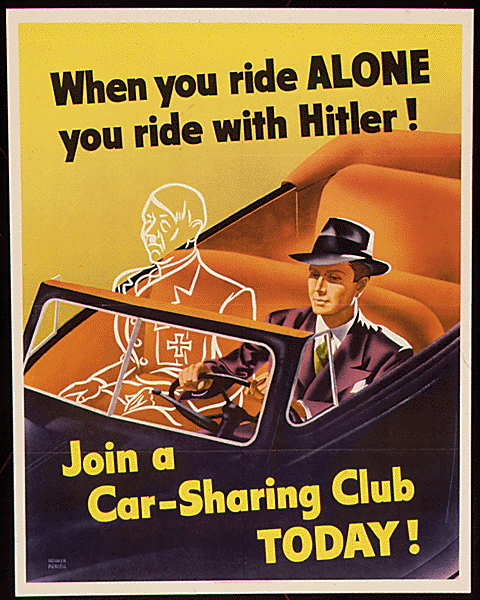
And now in the United States we live in fascism. (Maybe a more common experience in our history than we tend to think.) The triumph of neoliberalism has been terrible for knowledge and learning, but now that disaster is compounded by the triumph of rightwing authoritarianism and by the particular ways technocapitalism is playing out (cf. the younger techbros). Fun times!
Open Access can stand against this — if we remember our values and remember that OA is a tool and a strategic component, not, itself, an end.
One of the reasons I like OA is that it makes it more difficult for work to disappear at the whim of an authoritarian power. Open redundancy is powerful. It’s the principle of LOCKSS: Lots Of Copies Keep Stuff Safe. My book About That Life is the book of mine least likely to disappear from the world because it’s mirrored all over the place — publisher punctum books provides a PDF, I provide various formats on my own site, it’s in JSTOR and the Internet Archive and many other places, their servers scattered all over the world. Short of a catastrophic event wiping out the internet and/or electricity, the book is available (and if we get to a catastrophic wipe-out event, we’re going to have far bigger worries than whether we can access particular books).
Open Access works against the current environment in which “the truth is paywalled but the lies are free”. There is a social value to having good, vetted, edited, reviewed information freely available. That’s long been a basic principle of OA, but in an age of active disinformation campaigns and AI slop, it’s even more important. When Robert F. Kennedy, Jr. is in charge of a country’s health information, it is truly a matter of life and death to get reliable information out there for people.3Kudos to the New England Journal of Medicine and the Center for Infectious Disease Research and Policy for stepping up to take over the role of the CDC’s Morbidity & Mortality Weekly Report and offer free public health alerts, even if not as comprehensively or regularly as the MMWR.
With the current administration’s crackdown on universities creating conditions worse than during the post-WWII Red Scare, knowledge is being locked away, research hollowed out, teaching and learning impoverished. Open Access is anathema to the authoritarians creating the current crisis because even the most capitalized and compromised OA stands in contradiction to authoritarian control. OA with an ethics behind it can be a tool for antifascist practice.

Open Thinking and Analog Access
Above, I discussed my university library’s devasting budget cuts. To their credit, our librarians have preserved as much of the print book budget as best they can. Unlike electronic resources, we actually own the books, don’t have to pay for them over and over again, and are not going to lose them when a contract ends. They are a good investment. As Matt Seybold is fond of saying, print is a rent strike.
Technocapitalism loves rentier capitalism. Companies like Microsoft no longer sell applications so much as they sell licenses. This is why I primarily use LibreOffice and give them money, but I’m still trapped in a huge number of more closed applications for my job, applications which the University System of New Hampshire rents for millions and millions of dollars every year. I’m inspired by groups like punctum books that publicize the tools they use and prioritize Open Source and Open Access apps. There are good alternatives to many tools out there, but for the sake of both use and development, they need to be known.
Digital Open Access is of course vitally important and the primary focus of OA activism, but I strive for an idea of open access as an ethos, one that does not rely on the digital world or even on electronic tools.
We must not fall into fetishizing high tech. If we’ve learned anything from the data center debacles of AI, we should have learned that while AI has massively accelerated the problems, the energy and resource challenges we face are inherent to our digitized lives. Those of us who own smartphones and computers were already complicit with slave labor and toxic pollution. We need more Luddites.
An open access ethos is an ethos of the public good. Public libraries are a perfect example, one of the few remaining institutions in the US where the idea of the public good is still fully visible. No wonder dictators work hard to censor and control libraries — and why librarians end up so often on the front lines of battles against authoritarians.
Ideas of open access and the public good are central to any consideration of Poor Queer Studies or other marginalized approaches. Work hidden behind walls, whether ivy-covered gates or digital paywalls, is not work that is accessible to the oppressed and marginalized, nor is it work that can ultimately be anything other than extractive and exploitative — because if it draws on the work of the oppressed and marginalized, it is expropriating that work, moving it from a public space into a gated community.
This is why I keep coming back to Danica Savonick’s important book Open Admissions, which reminds us that higher education can be different from what it currently is. (I led a conversation with Savonick and Matt Brim this past spring that got to some of these possibilities. I was not a great interviewer because we were in the midst of learning about a lot of the cuts and such happening at our university at the time and I was exhausted, scared, and unable to think clearly about any of it, so some of my questions and comments are almost nonsensical, but Danica and Matt triumphed despite me.)
Savonick writes in the introduction to Open Admissions that:
the era’s debates surrounding educational access lit a fire in the imaginations of both professors and students. There, in their classrooms-turned-canvases, they questioned prevailing assumptions about learning: that teachers should determine what is taught, that students are the passive recipients of wisdom, that intellectual work should be painful, torturous, and disciplinary. If redesigned to serve the will of the people, what could learning look like? What might it become? And if an institution as historically exclusive as universities could be democratized, what other hierarchies might be toppled?
This is the real vision of open access, the greatest vision.
But we must also not let our thoughts be anchored to institutions. That was one of my points in “On Not Knowing Professors” and why I keep feeling the need to quote Harney & Moten’s Undercommons, even as I grumble at the opacity of a lot of its language and thought. The basic idea is essential for our era. When the institution of the university is so beholden to capital and its ideologies, when administrators are simply middle managers in service to corruption, then, yes, “THE ONLY POSSIBLE RELATIONSHIP TO THE UNIVERSITY TODAY IS A CRIMINAL ONE.”
Alternatives are possible, but we must recognize that to be a scholar committed to anything other than the growth of capital is to be a fugitive in this world.
As Sarah Schulman reminds us in her introduction to Hothead Paisan, and as scholars such as Savonick, Brim, and Jarvis R. Givens show us, marginalized groups know how to work outside of institutions in ways that support community and ultimately can affect institutions in positive ways, even if liberatory topics are expressly forbidden (as for a lot of Gender Studies, Queer Studies, and Black Studies in places like Florida today). As Givens’s work reminds us, fugitive pedagogy has historically been a quite literal description.
Remember what a Mountain Goat once sang:
God bless all petty thieves
With tins of oysters up their sleeves
Feast when you can
And dream when there’s nothing to feast on
There’s not much left to feast on in institutional higher education today. But we can keep dreaming.

Openly Onward
I am still thinking about tools and behaviors for access in this moment, including analog open access. Here are a few (incomplete) (inadequate) ideas to finish up this Open Access Week:
Normalize resource sharing. I take this phrase from a zine from Late Night Copies Press, the title of which itself is useful to us: Own the Means of Production and Share It. (“Who owns our knowledge?” OA Week asks. We do — and we share.) Create a commons and support a community.
Support public libraries. They own books and other resources available for sharing. Libraries are based on the idea of the public good, on access for all. Even in the clutches of rentier capitalism, they can mitigate the detriments and increase the affordances — interlibrary loan, for instance, is something of a miracle.
Commit to reading and publishing openly. People often ask, “Why publish Open Access?” when the better question is: “Why not publish Open Access?” There may be valid reasons. I’ve done it — I do not regret my closed-access articles in Woolf Studies Annual or The LGBTQ+ Comics Studies Reader or Teaching Modernist Women’s Writing in English (the latter of which, thanks to a good contract from the MLA, I was allowed to make more-or-less OA after a period of exclusivity). All of that was done pre-tenure and helped me to both get a job and get a certain amount of job security. Those publications continue to give me a whiff of legitimacy in spaces where I might not otherwise be taken seriously because my PhD is not from a particularly prestigious institution and I work at an underfunded regional public college most people have never heard of. These days, though, if I don’t publish Open Access I do so knowing it is a deliberate choice — for instance, I was invited to contribute a chapter to the upcoming Routledge Companion to Virginia Woolf and in that chapter I discuss OA and even name exactly the silly price Routledge wanted to charge for the chapter to be made OA (which I refused). Now and then it’s good to go into gated communities for the purpose of denouncing gated communities to the residents therein. Mostly, though, it’s best to prioritize publishing openly, even if that means turning down opportunities, as I have done multiple times now. The cost, whether financial or philosophical, is just not worth it.
Prioritize access over openness. Paradoxically, sometimes access is best served via some mechanism of gatekeeping. This is especially true for marginalized communities. I may be queer, but I’m also a middleclass cisgender white guy — which means I have lots of access to lots of things and I do not need or deserve access to everything. This is why I emphasize the value of regeneration. It may be impossible to grow and regenerate if you are not within protective walls. (Back in 2018, I asked of public scholarship, “How Public? Why Public?” Those questions still seem vital to me today, and might be supplemented with “How Open? Why Open?”) Sometimes we have to protect a commons. Sometimes we need to create samizdat literature rather than billboards. If Sauron’s fiery eye is looking for you, it’s better to be a hobbit than a giant. Access can be appropriate rather than universal. It may sometimes be most useful, equitable, and regenerative if it is limited.
From Open Access to Mutual Aid. In a 2009 interview, David Graeber noted that
Pretty much every great worthwhile achievement in human history, every discovery or accomplishment that’s improved our lives, has been based on cooperation and mutual aid; even now, most of us spend more of our money on our friends and families than on ourselves; while likely as not there will always be competitive people in the world, there’s no reason why society has to be based on encouraging such behavior, let alone making people compete over the basic necessities of life. That only serves the interests of people in power, who want us to live in fear of one another. That’s why anarchists call for a society based not only on free association but mutual aid.
In our society, and therefore in our institutions of learning, we need more emphasis on mutual aid. Solidarity, not charity. Generosity, not competition. Sharing, not hoarding. Commons, not enclosures. Open Access is a part of that, but it is far from sufficient.
We need openness, but we need an openness that prioritizes ethics and values, openness that doesn’t cherish itself more than it cherishes access, fairness, mutuality.


Images:
Photo by Peter Herrmann on Unsplash
“Landscape with Shepherd” painting by Robert S. Duncanson via Wikimedia Commons
Meta data center, Stanton Springs, Georgia, photo by Katie Tucker/The Telegraph, via Georgia Public Broadcasting
U.S. propaganda poster via National Archives
Photo by Leo Bayard on Unsplash
Logo via International Open Access Week
-----
- 1As Robin notes in her essay, New Hampshire funds higher education at the lowest rate of all 50 states. Double our state funding and we’re still below the national average. And we are not a poor state. There are houses in my little town worth millions of dollars. But our state politicians keep cutting government revenue sources because they do not believe in the concept of the public good, and some in fact have celebrated our last-in-the-nation status, saying it demonstrates our commitment to “individual responsibility”. ↩︎
- 2Yes, I know some people claim “Gold OA” does not necessarily mean APCs and exploitation of scholars. This may have been true when the term was created, but I have seen no evidence that it is true in practice. ↩︎
- 3Kudos to the New England Journal of Medicine and the Center for Infectious Disease Research and Policy for stepping up to take over the role of the CDC’s Morbidity & Mortality Weekly Report and offer free public health alerts, even if not as comprehensively or regularly as the MMWR. ↩︎
Discover more from Matthew Cheney
Subscribe to get the latest posts sent to your email.

