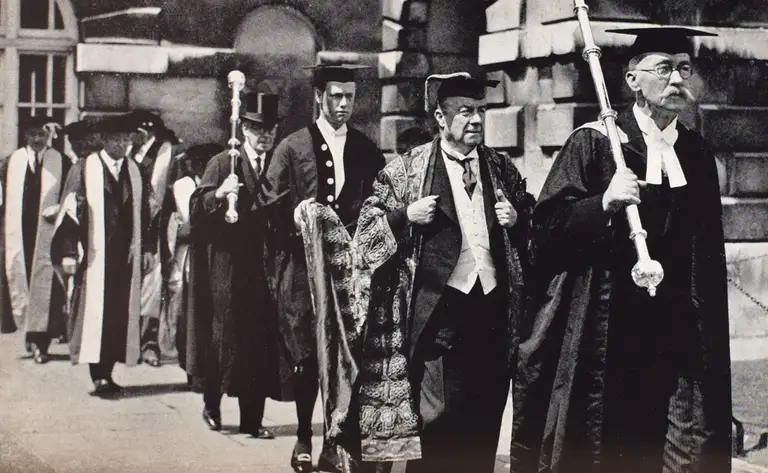
I delivered the following essay as a paper at the 2025 Modernist Studies Association conference in Boston. (There are actually a couple more paragraphs here than in the paper as delivered, since I cut it for the sake of time.) A paragraph or so is repeated from a chapter I have in the upcoming book The Roultledge Companion to Virginia Woolf and another paragraph or so derives from my July 2024 post “Commonalities”. Everything else is original to this paper. Since it is all part of some thinking I’m currently doing about Woolf, institutions, education, etc., it is possible I will build from some of this material, or at least similar material, in the future. (Thanks to a lively, generative conversation with fellow presenters, the audience for the paper, and friends, I am thinking about Woolf and ideas of impermanence…)
I seem to need to think about Woolf reiteratively — bits and pieces of work I’ve been doing for over 10 years now on Woolf, fascism, and didacticism keep finding new forms in articles, in my PhD dissertation, in Modernist Crisis & the Pedagogy of Form, and in my forthcoming book Asterisks, for instance. My work on Woolf, institutions, education, etc. is following the same path, so in addition to “Commonalities” and the Routledge Companion chapter, this paper should be considered a cousin to my 2022 MLA paper “Poor Queer Studies for a Society of Outsiders”.
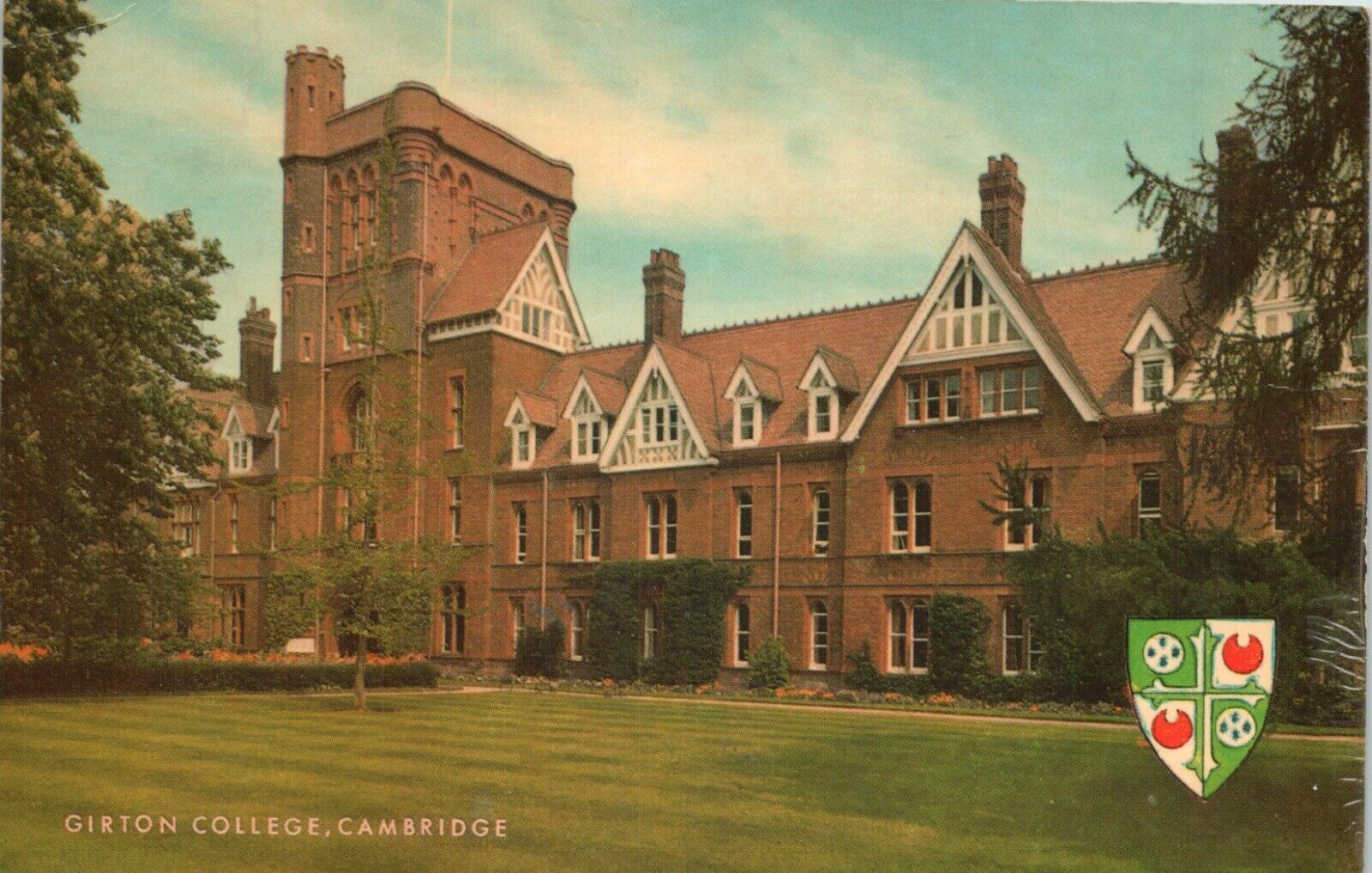
In her 1938 polemical pacifist book Three Guineas, Virginia Woolf discussed, alongside institutions such as the church and the government, the institution of schools, particularly colleges, and their relationship to war, militarism, masculinity, fascism. She noted, as she had previously in A Room of One’s Own, the unequal status of women’s colleges versus men’s, but her analysis in 1938 is more caustic than it had been a decade earlier, more skeptical, more despairing. Hitler had taken over Germany, the British Union of Fascists had marched in the London streets, and Woolf had suffered losses, including the death of her nephew Julian Bell, who had gone to Spain to fight against Franco.
Addressing a more-or-less imaginary request for a donation from the head of a women’s college, Woolf wrote:
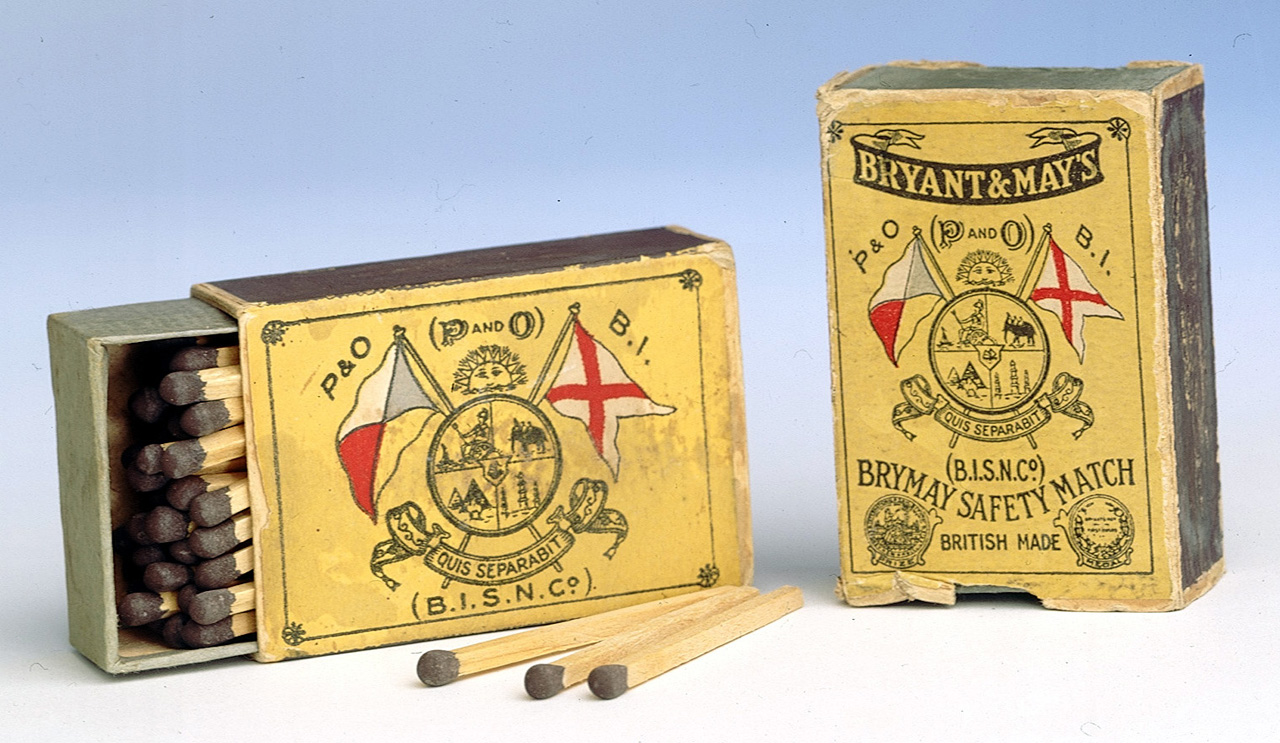
Shall I send it or shan’t I? If I send it, what shall I ask them to do with it? Shall I ask them to rebuild the college on the old lines? Or shall I ask them to rebuild it, but differently? Or shall I ask them to buy rags and petrol and Bryant & May’s matches and burn the college to the ground?1Woolf, Three Guineas (hereafter TG), p. 42.
Woolf’s perspective was avowedly and determinedly that of an outsider. She spoke of an Outsider’s society and of education for outsiders.
Susan Stanford Friedman in 1992 offered an insight that linked Woolf’s later, Outsider-focused writings with her earlier literary essays, collected in the 1925 and 1931 Common Reader volumes. “The defining element of the ‘common reader,’” Friedman wrote, “is his or her positionality as ‘outside’ culture — or to be more precise, since no one can exist ‘outside’ culture, as one who occupies and interrogates the borders between canonical and marginalized traditions.”2Friedman, p. 118.
Woolf’s critique and, indeed, rejection of institutional thinking, and her demonstration of an uninstitutionalized praxis inspires me as a teacher, reader, and writer today by forcing me to question the attachment I have to the idea of learning as an institutionalized endeavor. If, as I have come to believe, it is impossible to maintain an unoppressive pedagogy within the oppressive institution of neoliberal American education in an ever-more-fascist United States … then what are we left with?
As Beth Rigel Daugherty, Christine Kenyon Jones, Anna Snaith, and others have shown, Woolf had more experiences with institutional education than she generally portrayed herself as having, but, nonetheless, in comparison to most people in the U.K. and North America today, her time in schools was brief. And in comparison to her male relatives, friends, and peers, her formal, institutional education was minimal. She was throughout her life surrounded by the people she called, in Three Guineas, the “educated men” — the men of Bloomsbury in particular, most of whom had first met each other at Cambridge. Woolf’s writing returns to questions of education again and again, and it often (perhaps even usually) explores those questions while also exploring institutions: their histories, ideologies, functions, effects, and oppressions. This is absolutely explicit in Three Guineas, but it is also clear in A Room of One’s Own, a work centered on institutional and educational deprivations.
The institutional critique and educational — indeed, pedagogical — purpose of the two Common Reader volumes is more implied than stated, but it suffuses and in fact shapes both books. What the Common Reader books make clear is that while pedagogy will not save us, pedagogy may be vital to a liberatory praxis.
For the sake of time and to avoid dissipating into a fog of unsupported generalizations, I am going to focus here on the first Common Reader collection. While there is much potentially fruitful work to be done in comparing and contrasting the two books to each other, what I have to say here about institutions and pedagogy in the first book is easily applied to the second (whose last chapter, we should remember, is an essay with the pedagogical title “How Should One Read a Book?”).
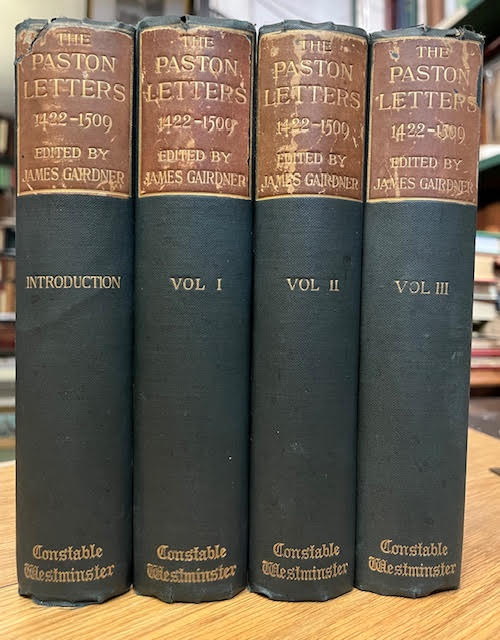
Woolf’s inclinations are always to approach canonical writing from the outsider’s perspective. For instance, the first essay in The Common Reader (after a brief preface) concerns itself with Chaucer — but it is not a standard literary essay about Chaucer. Instead, it approaches Chaucer via the Paston Letters, a collection of correspondence between and concerning the Paston family of Norfolk between 1422 and 1509. But it doesn’t even really begin with those well-known, well-bred members of the English gentry; it begins, instead, with ruins:
The tower of Caister Castle still rises ninety feet into the air, and the arch still stands from which Sir John Fastolf’s barges sailed out to fetch stone for the building of the great castle. But now jackdaws nest on the tower, and of the castle, which once covered six acres of ground, only ruined walls remain, pierced by loop-holes and surmounted by battlements, though there are neither archers within nor cannon without. As for the “seven religious men” and the “seven poor folk” who should, at this very moment, be praying for the souls of Sir John and his parents, there is no sign of them nor sound of their prayers. The place is a ruin.3Woolf, Common Reader (hereafter CR), p. 3.
The essay starts by getting us to reconcile our knowledge with the past, to imagine our way toward these ruins, to rebuild them in our imagination and to imagine people in them. This is analogous to what she wants us to do with the literary past as well. We get necessary background on the families in The Paston Letters, but Woolf’s attention always goes toward the marginalized people, even among the wealthy and powerful. Mrs. Paston, for instance. Like everyone of their class, the Pastons sought to “buy land, to build great houses, to stuff these houses full of gold and silver plate (though the privy might well be in the bedroom)”, an acquisitive quest that was, they thought, “the proper aim of mankind”.4CR, p. 6.
Woolf says of Mrs. Paston’s “long, long letters” that they could have included tales of the wars of her youth or the difficulties of her life as a woman, but they do not. Woolf’s paragraphs in this essay are all many lines long — except for one: “But Mrs Paston did not talk about herself.”5CR, p. 6. Woolf’s impeccable sense of rhythm comes through in her paragraphing, but here her purpose isn’t basic prosody as much as it is a call to focus attention. The long paragraphs are full of details and divagations, sometimes sprawling, sometimes overwhelming, but this single short paragraph, this utterly uncomplex sentence floating separate from all the masses around it — But Mrs. Paston did not talk about herself. — brings the laser of our attention to something essential, something more than a bit of trivia or local color or historical flourish. From the ruins of greatness and the everyday lives of long-forgotten families, we find our way to Mrs. Paston’s silence and to the works of Chaucer.
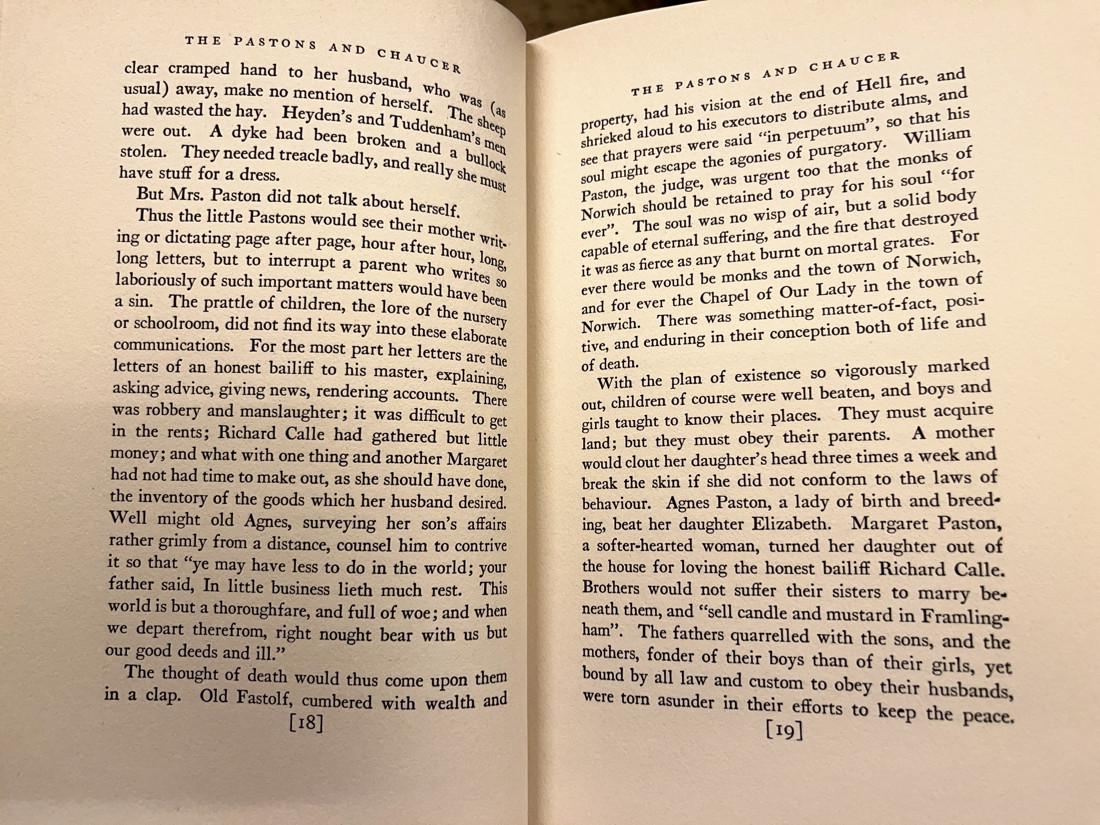
Or, rather, we find our way to the Pastons’ reading of Chaucer, because that’s what this essay is really about. How people read and write, how they make sense of language, how they participate or don’t participate in the world of words. Chaucer is canonical, but Mrs. Paston is not, and it is Mrs. Paston who is of as much interest to Woolf as the teller of Canterbury tales.
Throughout The Common Reader, Woolf is concerned with epistemology. How do we make meaning of literature and its history, how do we perceive readers of the past, how do we bridge the centuries — how, in the end, can we claim to know anything? These questions are subtly raised in “The Pastons and Chaucer” and then become more explicit in the next chapter, “On Not Knowing Greek”. This essay is much less about knowing Ancient Greek as a language than it is about the challenge and perhaps impossibility of knowing, truly knowing, the mindsets and personalities of people who lived so long ago. Then the third chapter, “The Elizabethan Lumber Room”, brings the analysis of language, history, and reading to the question of the astonishing difference in quality between Elizabethan poetry and Elizabethan prose, a question that leads Woolf ultimately to make some claims for the relationship between self-consciousness (literal self-consciousness, the consciousness of the self) and prose, proposing that “the sublime genius of Thomas Browne” was among the first to prefigure modern prose writing. Browne’s “immense egotism has paved the way for all psychological novelists, autobiographers, confession-mongers, and dealers in the curious shades of our private life. He it was who first turned from the contacts of men with men to their lonely life within.”6CR, p. 45.
By the next chapter — this one concerning Elizabethan theatre — Woolf’s pedagogical impulses come to the fore. She is not simply proposing ideas about Elizabethan literature and English literary history, she is offering instruction in how to read, understand, and appreciate it. She instructs us to “draw in those filaments of sensibility which the moderns have so marvellously developed, use instead the ear and the eye which the moderns have so basely starved, hear words as they are laughed and shouted, not as they are printed in black letters on the page, see before your eyes the changing faces and living bodies of men and women, put yourself, in short, into a different, but not more elementary stage of your reading development and then the true merits of Elizabethan drama will assert themselves.”7CR, p. 55. This remains good advice — indeed, advice we might even today give to students.
These first chapters set up the moves that Woolf will make throughout the rest of the book. Because of her pedagogical inclinations, The Common Reader can serve as a kind of seminar on approaching literature from an outsider’s point of view. This is not exactly an anticanonical approach — though there are plenty of anticanonical moments throughout both Common Reader volumes, the overall thrust of these books is to encourage readers toward confidence in the face of the canon and its authorities.
Woolf’s preferred pedagogy was dialogic: a give and take between speaker and audience that makes the barriers between them porous and renders the task of learning into a play of ideas. In her 1940 essay “The Leaning Tower”, Woolf derided “the pedagogic, the didactic, the loud speaker strain” in younger writers’ work: “They must teach; they must preach”.8Woolf, Essays vol. 6, p. 272. Such a formulation is more than a statement about Woolf’s younger peers: it expresses assumptions about the endeavor of teaching as much as it expresses aesthetic preferences. Teaching, in Woolf’s conception, easily slips into preaching, a monologic action where the preacher is the lone authority and the audience’s only task is to listen. This was a longstanding position for her. Melba Cuddy-Keane draws from Woolf’s 1918 review of Joan and Peter: The Story of an Education by H.G. Wells to assert that “Woolf continually encourages a reading practice of ‘talking back’ but, on the writer’s side, her implication here is that the approach of ‘talking to or with’ — as opposed to ‘talking at’ — is preferable not because it lends a ‘nicer’ construction to the speaker but because it converts confrontation into dialogic negotiation”.9Cuddy-Keane, Virginia Woolf, the Intellectual, and the Public Sphere, p. 134.
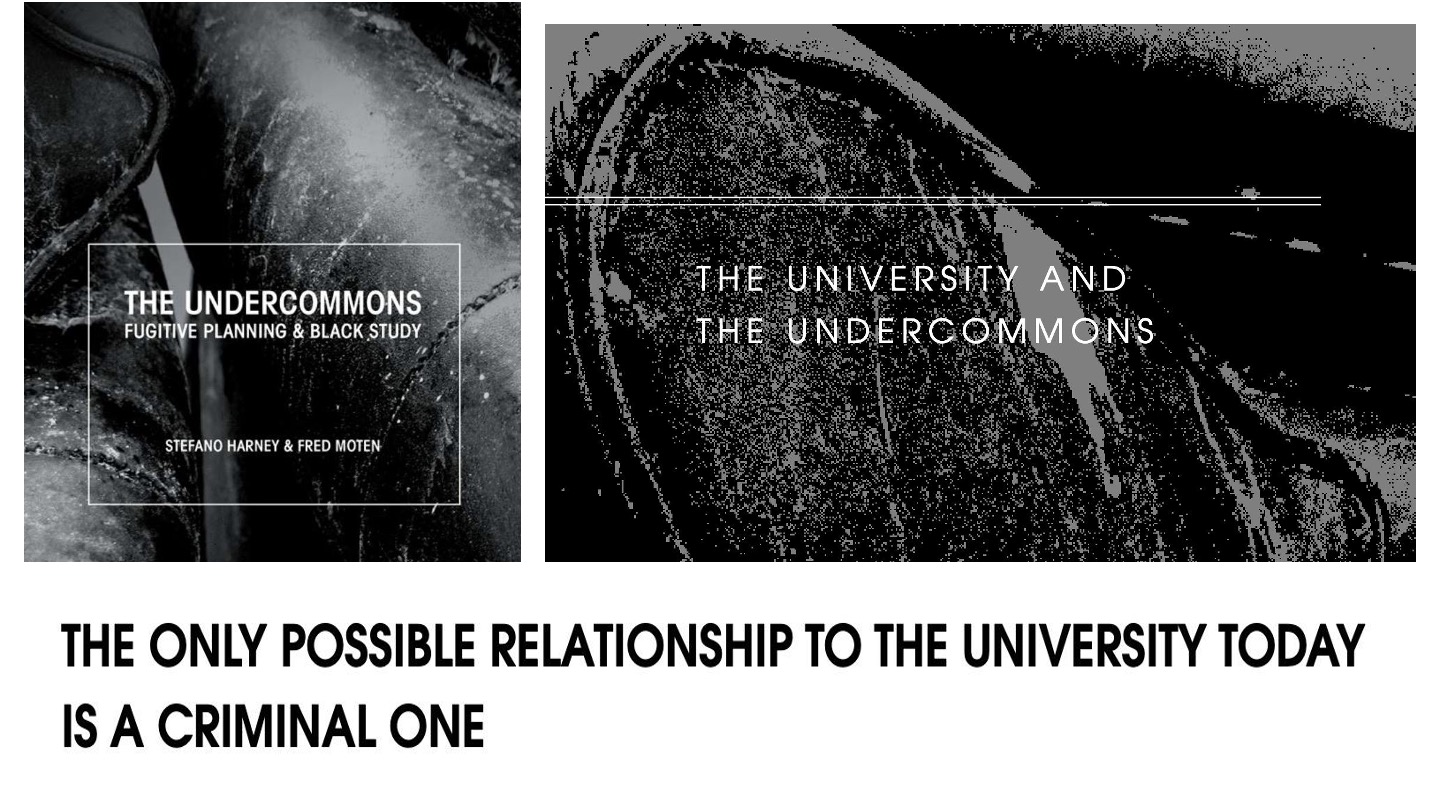
In addition to aligning with Paulo Freire’s notions of critical pedagogy, which encourage just such dialogism and the decentering of the all-knowing, authoritarian teacher figure, Woolf’s writings, in their skepticism toward institutions, align well with Stefano Harney and Fred Moten’s Undercommons, where the second chapter, titled “The University and the Undercommons”, begins with an all-caps statement: “THE ONLY POSSIBLE RELATIONSHIP TO THE UNIVERSITY TODAY IS A CRIMINAL ONE”. Harney and Moten then write that in the U.S. today “it cannot be denied that the university is a place of refuge, and it cannot be accepted that the university is a place of enlightenment. In the face of these conditions one can only sneak into the university and steal what one can. To abuse its hospitality, to spite its mission, to join its refugee colony, its gypsy encampment, to be in but not of — this is the path of the subversive intellectual in the modern university.”10Harney & Moten, p. 26.
As higher education as we know it collapses into ruins around us, we need, I think, to return to the sense of pedagogy I see in Woolf’s writings — pedagogy not as the construction of syllabi or the arrangement of curricula, which of course has its place, but must be posterior to the development of real intellectual values that exist separate from and regardless of institutions. A curious person who has little formal educational background can pick up The Common Reader and discover a different way of looking at a cultural heritage, the outsider’s way. If that person is willing to do some work, Woolf is there alongside them to offer not only guidance but dialectical questions and mischievous provocations and productive ambiguities. Woolf is not a professor in any institutional sense, but she is an intellectual and a teacher, and she uses her intellect and her experience to shape her writings into opportunities for learning.
This makes me think of something Stuart Hall said late in his life, in a 2011 interview, looking back on the remarkable work of the Center for Contemporary Cultural Studies at the University of Birmingham, where he worked in the 1960s and ’70s, including as director from 1972 to 1979. “I never felt I was in academia except to describe it to other people,” Hall said. “…It’s how I’ve made my living. But I don’t think of myself as an academic. I think of myself as an intellectual and a teacher. Not an academic. I’m critical of academia as an institutional space.”11Hall, p. 773.
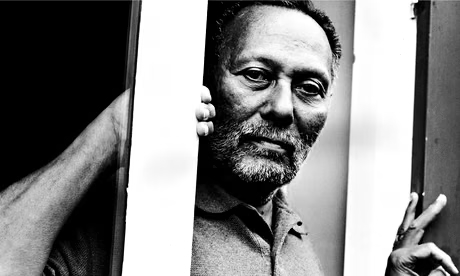
Discussing the differences between the relatively free and even fugitive work the Center did during his time there, in comparison to the more regulated processes it had to adjust to in the more regulated environment of the 1980s, Hall said:
We blurred the lines. Today this is not possible. …it’s partly about managerialism in the university. Whoever is a student must be registered. They must pay fees. We must know who they are. The others must either finish within five years or give it up. All of that atmosphere which comes into the universities in the 1980s. It’s a Thatcherite turn as it were. The sort of authoritarian management of the university does not leave any room for manoeuvre, for freedom, so it does a great deal of harm.12Hall, p. 771.
In its heyday, the Center for Contemporary Cultural Studies was more or less ignored by university administration because it was inexpensive, scrappy, gloriously marginalized. Of course, those days when anything was allowed to be scrappy and glorious in its marginalization within an institution are mostly gone, smothered under spreadsheets and endless assessments, but it is a vision worth preserving, one Woolf herself spoke about in Three Guineas as the affordances of a poor college, her utopian ideal of an educational institution, “an experimental college, an adventurous college. Let it be built on lines of its own. It must be built not of carved stone and stained glass, but of some cheap, easily combustible material which does not hoard dust and perpetrate traditions.”13TG, p. 43.
This vision is one that makes the college highly susceptible to catching fire, but that for Woolf is a good thing — we must always have our Bryant and May’s matches at hand, ready to render into cinders any infrastructure that has grown too solid, too imposing, too dominating. We should devote ourselves to what is inexpensive to teach, and we must remember what it is we actually value in learning and teaching. “The aim of the new college,” Woolf said, “the cheap college, should be not to segregate and specialize, but to combine. It should explore the ways in which mind and body can be made to co-operate; discover what new combinations make good wholes in human life.”14TG, p. 43.
Woolf did what she could do as an intellectual, a writer, a reader, and a teacher. She remained skeptical of institutions and did not tie herself to them, but she shared her knowledge, experiences, ideas, and, yes, pedagogies via books available at public libraries and in bookshops, priced so that ordinary people could read them — as the many letters readers sent her showed, in fact, they did. Like Stuart Hall, she did not aspire to be an academic, but to be an intellectual, a writer, a reader, and a teacher.
What, I wonder, might she make of us?
References
Cuddy-Keane, Melba. Virginia Woolf, the Intellectual, and the Public Sphere. Cambridge University Press, 2003.
Daugherty, Beth Rigel. “Teaching Woolf/Woolf Teaching.” Woolf Studies Annual 10 (2004): 275–307.
Friedman, Susan Stanford. “Virginia Woolf’s Pedagogical Scenes of Reading: The Voyage Out, The Common Reader, and Her ‘Common Readers.’” MFS: Modern Fiction Studies 38, no. 1 (1992): 101–25.
Hall, Stuart. “Stuart Hall Interview – 2 June 2011.” Cultural Studies 27, no. 5 (2013): 757–77.
Harney, Stefano, and Fred Moten. The Undercommons: Fugitive Planning & Black Study. Minor Compositions, 2013.
Jones, Christine Kenyon, and Anna Snaith. “‘Tilting at Universities’: Woolf At King’s College London.” Woolf Studies Annual 16 (January 2010): 1–44.
Snaith, Anna. “Woolf and Education.” In The Oxford Handbook of Virginia Woolf, edited by Anne E. Fernald. Oxford University Press, 2021.
Willis, J. H. Leonard and Virginia Woolf as Publishers: The Hogarth Press, 1917-41. University Press of Virginia, 1992.
Woolf, Virginia. The Common Reader: First Series, Annotated Edition. 1925; Harcourt Brace & Company, 1984.
Woolf, Virginia. The Essays of Virginia Woolf. Edited by Stuart N. Clarke and Andrew McNeillie. 6 vols. Hogarth Press, 1986-2011.
Woolf, Virginia. The Second Common Reader. Annotated Edition. Edited by Andrew McNeillie. 1932; Harcourt Brace & Company, 1986.
Woolf, Virginia. Three Guineas. Edited by Jane Marcus. 1938. Harcourt, 2006.
—–
Images: 1. “A University Procession” from Three Guineas. For background on the photographs in the book, see “Name That Face” by Alice Stavely, Virginia Woolf Miscellany, Spring 1998, pp. 4-5 and “About Face: The Three Guineas Photographs in Cultural Context” by Rebecca Wisor, Woolf Studies Annual, vol. 21 (2015), pp. 1-49. 2. Girton College, Cambridge postcard via eBay. 3. Bryant & May matches via National Maritime Museum, Greenwich, London. 4. The Paston Letters via Foster Books, London. 5. “The Paston Letters” in a first American edition of The Common Reader, by MC. 6. Undercommons collage by MC. 7. Stuart Hall by Eamonn McCabe via The Guardian. 8. Virginia Woolf, October 1929, via Yale Review.
-----
- 1Woolf, Three Guineas (hereafter TG), p. 42. ↩︎
- 2Friedman, p. 118. ↩︎
- 3Woolf, Common Reader (hereafter CR), p. 3. ↩︎
- 4CR, p. 6. ↩︎
- 5CR, p. 6. ↩︎
- 6CR, p. 45. ↩︎
- 7CR, p. 55. ↩︎
- 8Woolf, Essays vol. 6, p. 272. ↩︎
- 9Cuddy-Keane, Virginia Woolf, the Intellectual, and the Public Sphere, p. 134. ↩︎
- 10Harney & Moten, p. 26. ↩︎
- 11Hall, p. 773. ↩︎
- 12Hall, p. 771. ↩︎
- 13TG, p. 43. ↩︎
- 14TG, p. 43. ↩︎
Discover more from Matthew Cheney
Subscribe to get the latest posts sent to your email.
