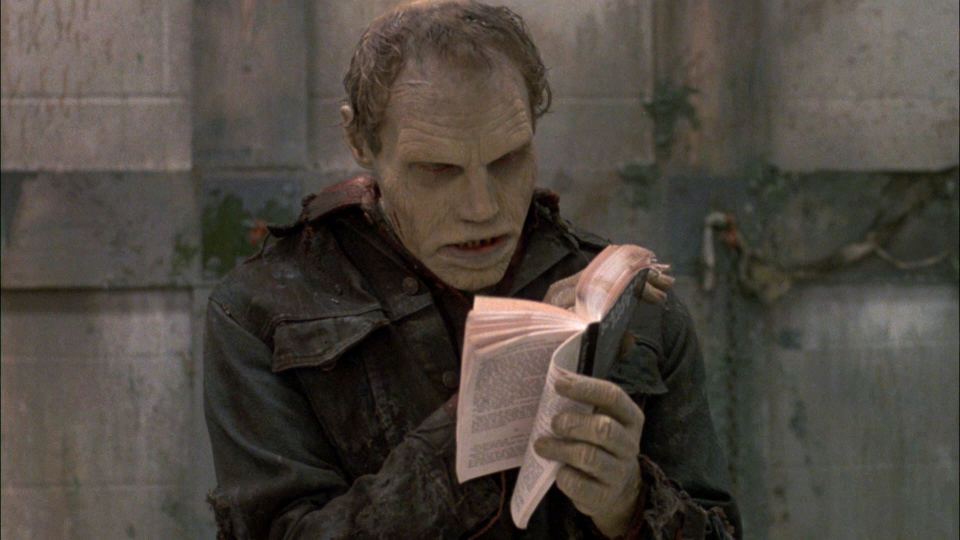
We must theorize horror.
(We must horrify theory.)
*
…instead of arriving at a clear grip on what kind of entity is horrifying, we are confronted with the feeling that there is this something that must harm us according to its very essence. Horror retains this character of indefinite something because we can know it only by suffering it. If expressed in clear-cut terms and situated in the system of cultural significance, horror loses its horrifying character and becomes transformed into a mundane phenomenon. So, instead of being clearly articulable, horror advances in spurts unclearly indicating the possible counter-cultural connections, identifying areas of tension and tacitly reversing their polarities. In the domain of horror, we can only move by groping our way forward from one such area to another.
—Daniil Koloskov, “Beyond the Reach: Horror and Phenomenal Life”
*
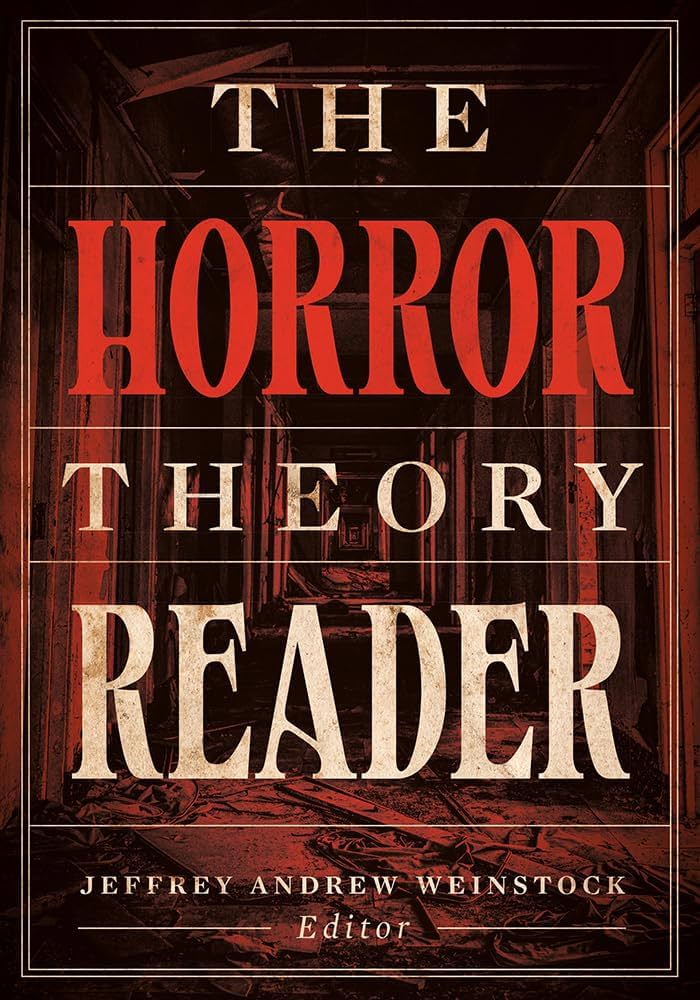
I have here some books, one of which is titled The Horror Theory Reader. It follows in the footsteps of Zombie Theory: A Reader and The Monster Theory Reader, both of which contain some useful and indisputably Theoretical essays, but The Horror Theory Reader, which is the most recent, struggles. The struggle derives from two causes: 1. a narrow (and, to me at least, uninteresting) idea of what ought to be theorized about horror; 2. not enough Theory.
As a collection of essays, it is a perfectly adequate book. As a collection of essays seeking to explain why people enjoy something called horror, it is actually pretty good; in fact, on that count, it’s probably the best that exists. But as a book of Horror Theory broadly writ, it fails.
While Zombie Theory: A Reader is edited by Sarah Juliet Lauro, both The Monster Theory Reader and The Horror Theory Reader are edited by Jeffrey Andrew Weinstock, who also co-edited maybe the best collection of academic writing on H.P. Lovecraft, The Age of Lovecraft.1Granted, there isn’t much competition when it comes to collections of academic writing on HPL; the quality of the ones I’ve seen is, to my mind, generally not very high. But The Age of Lovecraft has some good stuff in it. Weinstock’s Monster Theory book is significantly more useful and theoretical — indeed, Theoretical — than his Horror Theory book. The quality of the Monster Theory book in particular got my hopes up for Horror Theory. But in this latest anthology, Weinstock has chosen a frame that renders the book far more narrow and far less useful than its title suggests.
I recognize that Weinstock’s frame is narrow by his own apparent choice, and so my statement that the book fails as a book of Horror Theory broadly writ could be seen as unfair — and fairly so! We should not blame a book for being what it does not seek or claim to be. But while Weinstock’s anthology may not seek to be a book of Horror Theory broadly writ, it does claim to be such. The title is The Horror Theory Reader. Not A Horror Theory Reader: Reception Studies. Not Theories About Why People Like This Horror Stuff: A Reader.
And so I am going to use Weinstock’s inaccurate title as a tool for thinking about what Horror Theory is, does, and might be or do — what theories horror might allow, what horror has brought and might further bring to other theories.
Let us start from a naïve question that I hate: Outside of the scientific context, what is theory?
Oversimply said: theory is distinguished from and perhaps opposite to terms like applied and praxis. It is more than hypothesis but less than law. It is more idea than thing, more thought than action.
I start from this naïve question that I hate and offer an oversimplified answer because all the decades of talk about theory — or, rather, Theory (maybe even THEORY) — in the academic humanities have emptied the word out, turned it into a blurry label that gets smacked onto this, that, or anything. Theory as a term has metastasized beyond all possible sense, and so perhaps returning to a simple and admittedly inadequate (ostentatiously inadequate!) definition will help us keep sight of a core.
(We are royally tired of Theory.
Always already tired.
Always already skeptical.
Always already critical.
Always.
Already.)
(We are dreamers inhaling the exhaust fumes of Theory.)
And yet though of course after all these decades we are tired of theory (Theory) ((THEORY)) … we can’t let it go. We slap the label onto books and articles and conference presentations and the last few remaining words scribbled on this year’s postcard of job listings in the academic humanities. But the label is so worn now, so scratched and torn and smudged, that it is hard to see if there were any actual words there at all, or if, like ghosts in a movie theatre or criticism from American rightwing politicians, it’s all just projection.
*
That afternoon, while we academics tried to collect and curate ourselves around Yara’s descriptions of us, Yara shocked us all with a question. “So who do you people fuck?” she asked. No sooner had we thought her charming than we thought her disrespectful. We became defensive. One of us said, “Well, that is not a theoretical question.” And another someone covered her mouth in dismay, and someone else gave out a huff of disagreement. I smiled enigmatically, and my closest academic rival, Josie Ligna, gathered some words about theory and praxis, mocking the academic who had denied the theoretical implications of “fucking.” In the end, our failure as theorists was apparent, since if we were theorists of the kind we’d hoped to be, Yara’s question wouldn’t have floored us or caused so much obfuscation. Yara made a joke again, saying, “You’re probably none of you getting any, eh?” We all laughed and left the subject there, as if we were joking too.
—Dionne Brand, Theory: A Novel
*
I should come up with a theory for why I hate origin stories, why I fiercely resist the urge to define things like literary genres, why my impulse with any taxonomy is to smash it. (I’m sure Freudian theory would blame it on childhood, maybe toilet training.) I can make arguments about these resistances: origin stories replace productive ambiguity and resonant mystery with a clodhopping insistence that birth is fate; taxonomy is a game for pigeonholers and Procrusteans, for sorters not seekers; and, as Samuel Delany has convincingly argued (see Starboard Wine), overdetermined phenomena such as genres cannot be defined (the quality of being overdetermined means examples will always escape even the most comprehensive definition). Overdetermined phenomena can be described, their varied lines of causation/determination isolated, though perhaps not without some quantum effects, some indeterminacy slipping in.
I should come up with a theory for my resistances, not because I think they are irrational, but because the strength of my emotion about them is greater than they deserve, and such strong emotions likely play into my response to the books I’m discussing here.
(Reader, beware:
a flawed person here will be claiming books are flawed.
Pinch your salt.)
We ought to attend to the relationship between theory and desire. Not a theory of desire but rather theory as desire. Theory as an abstract, seemingly objective, seemingly impartial, seemingly clean container for concrete, biased, partial, messy libido. Is the container untainted by what it contains?
Today I do not want to talk about my desires. Therefore, instead of proffering a theory, I will simply note, for your information, that I hate origin stories, fiercely resist the urge to define (overdetermined) things like literary genres, and never met a taxonomy I didn’t want to smash to a million pieces.
*
Why do you want this theory to be true?
*
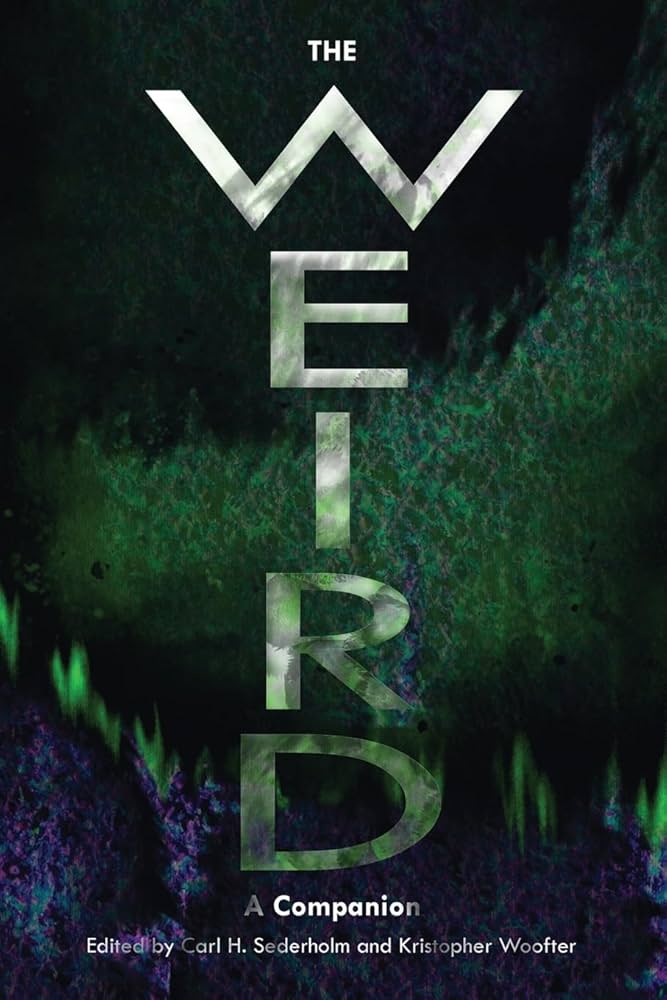
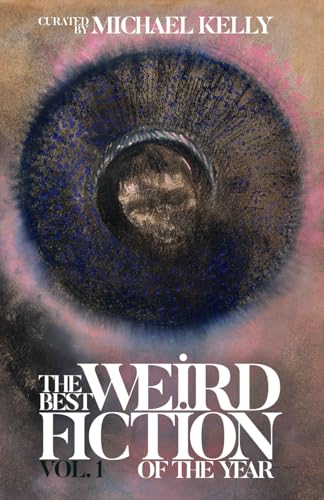
One of the best pieces of literary criticism I’ve read recently is “The Brackish Pool: Towards a Critical Practice of Reading Weird Fiction” by Zachary Gillan, published in January by Strange Horizons. It is an essay-review, a form of nonfiction I’m especially partial to, wherein Gillan reviews The Weird: A Companion edited by Carl H. Sederholm and Kristopher Woofter and The Best Weird Fiction of the Year, Vol. 1 edited by Michael Kelly, using the two books to explore ideas of what Weird Fiction is, does, might be, and might do.
Gillan’s insight activates weirdness in a way that allows us to apply Stuart Hall’s model of encoding/decoding to reading, interpretation, and analysis. The writer encodes weirdness, the reader decodes via an attention to weirdness, an activation of weird reading strategies. Gillan writes: “Weird reading is the active search for … estrangement, just as weirding is the active creation of this affect in a text. Both are applications of Shklovsky’s ostranenie: defamiliarizing as an artistic technique to make the usual strange and to make perception/understanding slower and more difficult.”
The encoding/decoding model is useful because it gives us a simple way to think about a complex idea: a text may not have weirdness on both the encoding and decoding sides. Thus, for instance, a writer might not have any intention to create a weird story, might have no sense whatsoever of what they’re up to as part of a weird fiction tradition … but a reader may still find it productive to decode the work via reading practices of the weird. Conversely, a writer might think they’ve written a work of great weirdness, but the text still requires a reader to read (decode) with weird protocols … or else weirdness may be absent from the reading experience.
Weird reading/weirding is particularly cognate, in this mirroring, with queer reading/queering: Both are practices of reading that find something within a text and simultaneously critical approaches to the thing being found. Indeed, Brian Johnson’s chapter in The Weird: A Companion, “From Qweird to Queered Weird and Back: Notes on Reading Lovecraft in the Closet,” notes the etymological similarity between “queer” and “weird” before suturing them into the jarring portmanteau of its title.
I have sometimes jokingly said I’m a writer more of the qweird than the weird, so I’m pleased to see that wacky word has also been coined and used by others. (It goes a ways back.) “Qweirding” is a silly construction that highlights something useful, which Gillan picks up on: the easy association of the two words and concepts. A lot of weird theory would benefit from some queer theory; and these days, with Queer Theory™ feeling exhaustedly exhausted, it might itself benefit from some resuscitation via the weird.
*
Lee Edelman’s No Future: Queer Theory and the Death Drive is a central — and highly controversial, even hated — work of Queer Theory, but it should also be recognized as a work of horror theory, a book that makes a fine companion to Thomas Ligotti’s Conspiracy Against the Human Race. Together, though not separately, the books are qweird.
*
The Weird: A Companion does not bill itself as a theory collection, and thus avoids some of the problems The Horror Theory Reader falls into. The editors’ goals with The Weird, as laid out in the introduction and made clear in the essays themselves, are primarily to see how wide the idea of weirdness could be stretched, to “indicate the conceptual flexibility and broad applicability of the Weird”. The anthology succeeds pretty well at this, though at a cost: the best essays in the book feel too brief. (The few essays that don’t feel too brief are not the strongest in the book, for the paradoxical reason that their subjects are so small that they fit comfortably into the space allowed, and thus feel to me a bit trivial.) To achieve the breadth they sought, the editors inevitably had to sacrifice the depth of individual chapters, and it seems that the authors were given a relatively small wordcount. Only a few essays in the book are longer than 10 pages (including references), and some are shorter — for instance, Dru Jeffries’s essay on David Lynch’s Lost Highway is just beginning to get somewhere when it stops after not quite 7 pages. Alison Sperling’s “Weird Queer Ecologies” is one of the longer and most interesting essays in the book (8 pages of text, 3 of notes and references), but I nonetheless moaned in agony at the end because the topic is so rich that it needed at a minimum twice the length.
Because of the collection’s breadth, though, it does provide readers with a sense of The Weird as a field of possibilities. When reading the essays individually, I didn’t feel that the lost depth was worth the breadth gained, but as I think about the book as a whole, and particularly as I think about it via Gillen’s review-essay, I think Sederholm and Woofter made the right decision about how to use the pages their publisher allowed them, because The Weird: A Companion makes for a fine jumping-off point for further thinking and scholarship. Indeed, the excitement of the book for me is that it is so provocative and generating. It’s hard to imagine a reader getting to the end of it and not feeling energized to continue thinking.
*
In a 1970 interview called, at least in the English translation, “On Theory”, Roland Barthes said, in translator Chris Turner’s words: “I’d like to say first that theory isn’t to be taken to mean abstraction; hence it isn’t opposed to the concrete.” Later: “The etymology of the word pointed toward an action of observing or contemplating, a meditation or speculation.” Then he emphasizes the importance of theory as discourse thinking about itself, a “language that reflects back on itself” and “observes itself in a permanent self-criticism. And it’s probably pursuing itself in order to destroy itself. But it doesn’t destroy itself immediately, and that kind of stay of execution produces theory.”
*
Jeffrey Andrew Weinstock is undone by a few problems in putting together The Horror Theory Reader. First, as I said above, his Monster Theory Reader is pretty good. Most importantly, it has a clear purpose, which Weinstock lays out in the introduction: “Focusing on contemporary theorizations of monstrosity with an emphasis on the humanities, this collection, then, is itself inevitably a kind of monster — a Frankenstein’s creature assembled out of diverse approaches and perspectives. It first supplies a set of ‘tools’ for researchers and students — common approaches to and vocabulary for theorizing monstrosity — and then provides an interdisciplinary selection of important readings theorizing monsters and monstrosity from disciplines ranging from medieval studies to ecocriticism to terrorism studies.”
Horror of Frankenstein (1970)
Compare that to Weinstock’s introduction to The Horror Theory Reader, which is titled “‘Won’t Someone Please Think of the Children?!’ Thinking Horror Through the Lens of Moral Panic” and begins: “This anthology collects together writings from antiquity to the twenty-first century that address the seemingly counterintuitive appeal of horror.” The introduction lays out a history of people arguing for and against the value of tragedy and horror in a structure similar to that of Sarah Cleary’s The Myth of Harm: Horror, Censorship, and the Child, a book Weinstock relies on heavily, then finishes with an overview of “theories of horror enjoyment” and the collection’s contents. Nothing about what Horror Theory is or might be. (All the evidence suggests that Weinstock equates theories of horror enjoyment with Horror Theory. This is a sadly narrow conception.) It feels like Weinstock was working on an essay about horror and moral panics and, rushing to meet a deadline, plunked it into the book as an excuse for an introduction. As with so much in The Horror Theory Reader, it’s not bad on its own, it’s just perplexing in the context of a book called The Horror Theory Reader — it’s a historical overview of popular reactions to horror, no theory in sight. One might be forgiven for expecting, in an essay with “Moral Panic” in its subtitle, at least a passing citation of Folk Devils and Moral Panics or Policing the Crisis or … something to ground readers in an understanding of a key concept in modern sociology, cultural studies, and media theory.
(“So who do you people fuck?” she asked.)
The chapters of The Horror Theory Reader are organized in three sections: 1. Early Inquiries and Quick Takes (Aristotle to Stephen King on the purpose and definition of either tragedy or horror); 2. The Paradox of Horror (essays on the apparent paradox of people liking things that provoke negative emotions); 3. Different Voices (people of various ethnicities and sexualities who like horror, particularly movies). The strongest section is the first, but it’s strongest for the rather negative reason that it demonstrates just how little development there has been over the centuries in how people conceive of the attraction and value of horrific stories. Very little from later in the book develops beyond the concepts available in Aristotle, Hume, Schiller, and Burke — which once again raises the question of why Weinstock kept the focus so narrow. Reams of writing about horror and philosophy move in other directions, but because Weinstock is only concerned with the question of why some people like horror, those directions are generally absent in the book.
One essay is used in both The Monster Theory Reader and The Horror Theory Reader: “An Introduction to the American Horror Film” by Robin Wood. If an essay needs to be in both volumes, that’s a good one: influential, provocative, wide-ranging, and a clear demonstration of theoretical analysis, using Freud, Marx, and the hovering ghost of F.R. Leavis to propose new ways (in the late 1970s) to understand and appreciate horror movies. More importantly, unlike a lot of the essays in The Horror Theory Reader, it is more than an application of a particular lens of analysis to horror texts. It is truly a work of Horror Theory. Wood’s essay at least suggests that horror is a mode that can be both analyzed with other theories and one that requires something of a theory of its own. We see this in Wood’s concept of reactionary vs. radical horror films, with The Omen and Texas Chainsaw Massacre as paradigmatic examples. This concept makes claims about art, politics, and cinema, but also about qualities unique to works of horror. We do not need to agree with Wood’s particulars to be able to find his concept useful — I completely disagree with his analysis of David Cronenberg’s work, for instance, but because Wood’s theory is robust, I can still find uses for it, still find it, in fact, a very helpful way to understanding Texas Chainsaw Massacre. And, in fact, I can even find it useful for thinking about Cronenberg, because Wood’s criticisms are so specific that they force those of us who appreciate Cronenberg to think dialectically, to consider why it is that we think Wood’s criticism is wrong.3Wood had a deep aversion to Cronenberg’s work, which is clear through multiple essays in the posthumous collection Robin Wood on the Horror Film. I’m glad he wrestled with his aversion rather than setting it aside with a shrug of, “Well, I guess he’s just not a filmmaker I can appreciate. C’est la vie.” We not only get some good, thoughtful, iconoclastic writing from his essays on Cronenberg, but we also get a better understanding of the strength and limitations of Wood’s often clunky uses of Marx and Freud. It’s one of the things that makes Wood such an interesting critic for me: his Marxism and Freudianism had all the subtlety of a battering ram, and yet, even as I frequently cringe whenever he brings out a Marxist or Freudian concept, I am then more often than not impressed by the insight he is able to glean from using those concepts so thunkingly. In fact, I’m tempted to say that Wood’s approach might be well described as thinking by thunking…
The biggest problem with The Horror Theory Reader remains with its title. The book does little to identify anything we might call Horror Theory. It is a book of essays that are mostly about reception: why does anybody like this thing called horror? The essays in the first section begin with tragedy, which, like so much here, feels like a missed opportunity. Weinstock displays no interest in exploring potential differences between tragedy and horror, or the ways in which tragedy gets supplanted by horror in theatrical and literary history. (Terry Eagleton’s Sweet Violence: The Idea of the Tragic might point some ways to think about this.) Then the book gets bogged down quite tediously in various arguments about what people like about horror. Some of these are important essays — Kendall L. Walton’s “Fearing Fictions” has been just as influential in its own way as Robin Wood’s “Introduction to the American Horror Film”, as has Noël Carroll’s The Philosophy of Horror, excerpted in the book (even if, as Weinstock and others note, Carroll’s study is really a work of Monster Theory).
Der Golem (1920)
But nothing in the book helps us understand how any of this adds up to something we could call Horror Theory. This is not a problem The Monster Theory Reader faced, because Jeffrey Jerome Cohen had already done some cartography of the field with his 1996 anthology Monster Theory: Reading Culture, and Weinstock wisely set Cohen’s introductory essay, “Monster Culture (Seven Theses)”, as the first in his own book. Weinstock has nothing like Cohen’s essay to use as a launching pad for The Horror Theory Reader, and he proves incapable of providing (or unwilling to provide) such a launching pad himself, so he defaults to reception history. The effect is to make The Horror Theory Reader paradoxically more narrow than its predecessor on a narrower topic, The Monster Theory Reader.
Two essays in The Horror Theory Reader clearly demonstrate the absurdity and unproductiveness of arguments about why people like or don’t like horror: Berys Gaut’s “The Paradox of Horror” and G. Neil Martin’s “(Why) Do You Like Scary Movies? A Review of the Empirical Research on Psychological Responses to Horror Films”. Gaut’s essay starts promisingly with a substantial critique of Noël Carroll, but its conclusion is of limited usefulness.4Here is that conclusion, in case my summary is too hasty: “[The] paradox rests on the claim that the enjoyment of negative emotions, understood as intrinsically unpleasant emotions, is impossible. The paradox seems to arise only because we construe the negativity in terms of these emotions being intrinsically unpleasant, whereas we should really construe their negativity in terms of the fact that the emotions essentially incorporate negative evalutions. But this entails that typically people will find the objects of these emotions unpleasant and the emotions themselves are typically unpleasant. Thus it is wrong to hold that whether people enjoy these emotions or not is a merely contingent, non-conceptual matter. But because there is only a conceptual requirement that people typically don’t enjoy them, that allows room for some individuals on some occasions to enjoy them. Moreover, this solution explains why it can seem so plausible to hold that these emotions are intrinsically unpleasant. For, while it is false that necessarily, if someone feels fear, she does not enjoy the experience, it is true that necessarily she or others of her community typically feel fear. It should be clear that this solution, being entirely general, also solves the paradox of tragedy.
“Of course, why any particular individual enjoys feeling fear, and another doesn’t, or why some horror films are enjoyable and others not, is an interesting and no doubt complex matter. But it is the proper subject of empirical, psychological investigation and it would be unproductive to engage in armchair speculation about why this is so. What I have shown here is that this empirical investigation is possible. For I have argued that there is no a priori, conceptual problem about the enjoyment of negative emotions in a real life, or in fiction. There is no paradox of horror.” Gaut simply says that the terms of argument are wrong. He declares there is no paradox of horror because, since people do demonstrably enjoy unpleasant emotions, the enjoyment of unpleasant emotions is thus possible, so there’s no paradox in people enjoying them. QED!
I am able to believe Gaut makes a useful philosophical intervention. It can be useful to say, “Your claim is that enjoying X is impossible. There is irrefutable evidence that people enjoy X. Therefore your claim is wrong.” We might hope the critic would then go further in exploring the concepts, but it can be helpful to clear the field. My annoyance is not with this essay but with its inclusion in this book. Essays like Gaut’s may be useful in cutting through the mystifications in ongoing arguments where people are getting so tied up in their concepts that they can’t see the haunted forest for the dead trees … but what is the point in reprinting such stuff? Put it in a footnote or a bibliography. Weinstock might as well have reprinted some essay about the number of angels that can dance on the head of a pin; that at least could tell us something about demonology.
I suppose the basic problem is simply that Weinstock really cares about the ins and outs of arguments about why people like horror and I do not. In many ways, I’m aligned with Gaut. People like horror. So be it. Move on!
G. Neil Martin’s survey of psychological studies of horror audiences is quite useful as a work of meta-analysis, but its real achievement is in demonstrating the emptiness of such studies. Martin has plenty of material to wade through, mostly because psychologists love to create and analyze surveys. But these studies’ usefulness is very limited, as the conclusions Martin draws from them show.5Here are his conclusions:
“Based on the literature from various disciplines, the following conclusions can be reached: (1) low empathy and fearfulness are associated with more enjoyment and desire to watch horror; (2) specific dimensions of empathy are better predictors of people’s responses than are others, but these dimensions are inconsistently predictive; (3) empathetic concern and personal distress are negatively correlated with enjoyment of horror involving torture; (4) there is a positive relationship between sensation seeking and horror enjoyment/preference, but this relationship is not consistent and may depend on the component of sensation seeking; (5) men and boys prefer to watch – and enjoy and seek out – horror more than do women and girls; (6) women and girls report experiencing more fear and anxiety generally than do men and express greater anxiety and fear when watching horror than do boys and men; (7) this sex difference may be attributable to women’s typical higher disgust sensitivity and anxiety proneness (both of which are inter-related); (8) women report more empathetic concern than do men, and this may be another explanatory mechanism; (9) no study to date has systematically explored disgust sensitivity as a mediator in horror enjoyment and preference, but the evidence would suggest that the former will predict the latter; (10) older children are more afraid of concrete objects/stimuli when very young but of symbolic stimuli when younger; (11) individuals tend to prefer horror less as they age, but there is little literature on this topic; (12) children use various coping strategies to overcome horror film-related fear and the success of these depends on the age of the child; (13) physical coping strategies are more successful in younger children; (14) priming with information about the feared object helps reduce fear and increase enjoyment when children watch a film featuring the feared stimulus; (15) the startle reflex is amplified in the presence of threatening stimuli; and (16) little is understood about the role of neuropsychology in the response to horror film generally although the understanding of the structures and regions of the brain implicated in fear and fear conditioning is well documented; the amygdala is likely to be involved in the reaction to (and enjoyment of) horror.” As with the Gaut essay, I have nothing against the article itself — it performs a useful service — but rather with including such a long piece in the book, a piece that could have easily been referenced in a few sentences in the introduction, if there was an introduction that had actually laid out a framework for Horror Theory. Martin himself notes that the conclusions he derives from the many studies he analysed “are based on a very limited set of data. The studies from which such data have been drawn have varied in sample size, methodology, and materials, and these are three clearly identifiable and major limitations in this field.”6Somewhat outside the fuzzy bounds of what I’m discussing here, but perhaps of interest, is a recent article by David C. Witherington and Naila V. deCruz-Dixon in the journal Emotion Review, “The Nature of Horror”, that looks at horror within emotion theory (an area of psychology distinct from the area of literary, media, and cultural studies that is affect theory). Witherington and deCruz-Dixon first survey “the relatively fragmented, sometimes conflicting, and sometimes confused conceptual literature on horror”, noting “the decided tendency toward over-intellectualization that marks most conceptualizations of horror”. They write that a “cursory review of theories and conceptualizations of horror within the emotion literature reveals marked heterogeneity of definition” and “whether horror is even a category of emotion at all has come into question”. In their conclusion they write: “Horror as related to real-world events and circumstances is beginning to enjoy empirical investigation in psychological science as a qualitatively distinct emotional experience.” This suggests some possibilities for what, at the end of my post here, I call horror after theory/horror as theory. Witherington and deCruz-Dixon’s own approach is one based in phenomenology, a field that I am only familiar with in a limited way, but which seems to me to hold a lot of potential for future explorations of Horror Theory.
A lot of psychologists love their gender essentialism, and that’s clear in the conclusions Martin locates in the studies. The next chapter in The Horror Theory Reader serves as a kind of reply to this problem in the psychological studies’ methods; it’s a chapter from Nina Nesseth’s Nightmare Fuel: The Science of Horror Films, which is a light book of pop science but not one without a brain. It’s hard to call the excerpt a work of Theory, but it does serve a useful purpose in the collection. Nesseth notes that the films psychologists typically use in their studies are a very small and narrow group selected for their frightening/disgusting qualities: Texas Chainsaw Massacre, Cannibal Holocaust, Friday the 13th Part III.7Why Friday the 13th Part III? I’m not sure, though maybe the fact that it was originally released in 3D and does a lot to try to shock-scare the viewer makes it useful for such studies. It’s also the first of the films where Jason wears his hockey mask. But everybody knows Part IV (The Final Chapter) is a vastly better movie! Nesseth quite reasonably notes that it is “odd that so many studies loudly declare that women enjoy horror films less than men because they rated a five-minute clip from Cannibal Holocaust less favorably than their male peers. Not to mention that this area of study never even takes into account the horror preferences of trans men and women, nor of nonbinary, gender-fluid, or agender moviegoers.”
The strongest achievement of The Horror Theory Reader is to show that, when it comes to studies of why and how people enjoy horror fiction and cinema, most of what’s been written so far doesn’t take us meaningfully beyond what was said a few hundred or even a few thousand years ago, and a lot of it — maybe the majority of it — is methodologically faulty, philosophically questionable, and theoretically impoverished.
*
“The chasm was merely one of the orifices of that pit of blackness that lies beneath us, everywhere. The firmest substance of human happiness is but a thin crust spread over it, with just reality enough to bear up the illusive stage scenery amid which we tread. It needs no earthquake to open the chasm.”
—Nathaniel Hawthorne, The Marble Faun, Chapter XVIII
*
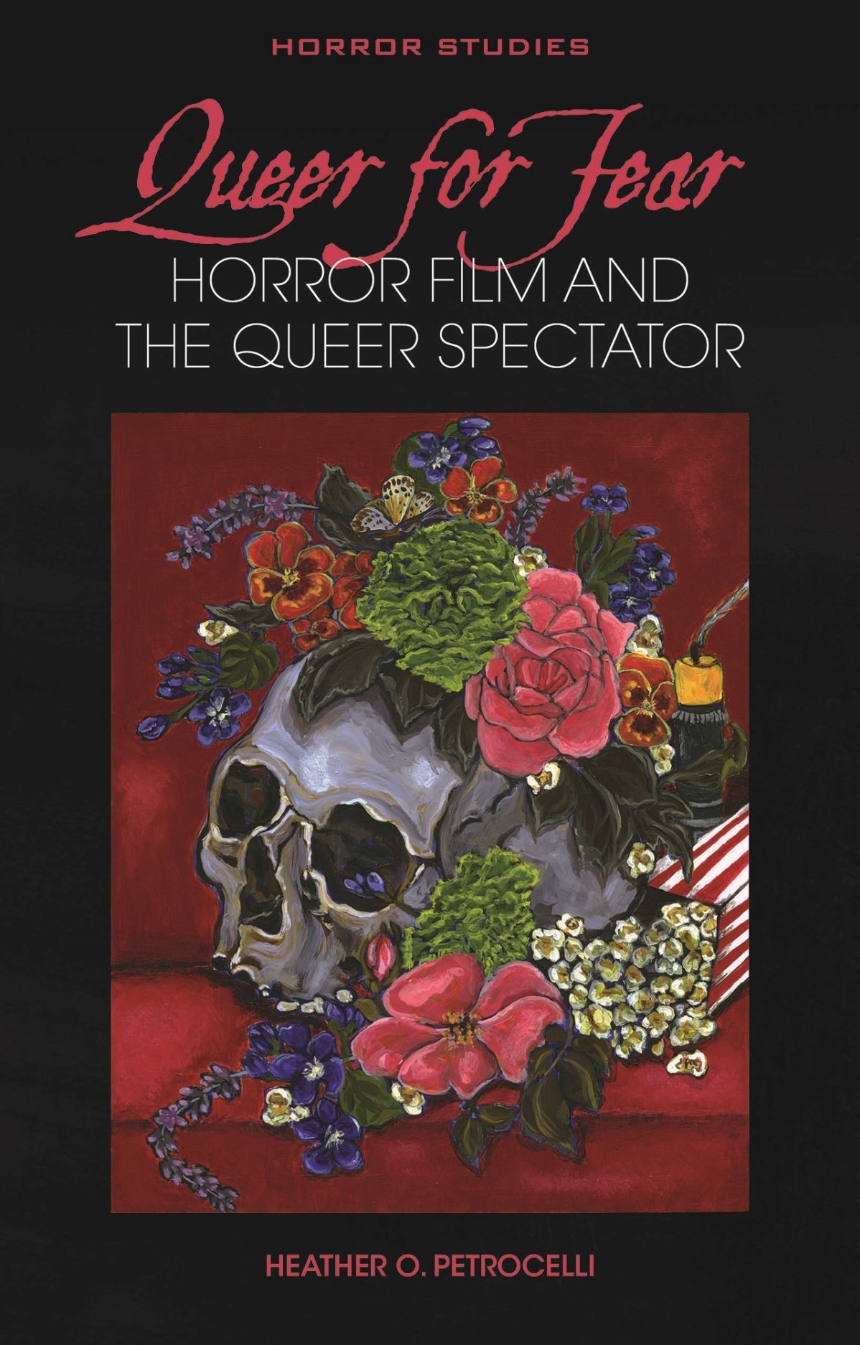
A recent book that should have helped with some of the problems of horror reception studies is Queer for Fear: Horror Film and the Queer Spectator by Heather O. Petricelli, the majority of which is based on a sixty-six question survey with responses from over 4,000 people, thus offering a uniquely comprehensive view of how queer spectators perceive their appreciation for horror films. The anecdotes, opinions, and data the book presents from the survey are compelling and sometimes quite surprising, bringing depth and nuance to our understanding of what attracts queer viewers to horror films and how those viewers use the genre as a tool for identity formation and community building. Thanks to the breadth of the approach and the impressive number of survey responses, the aggregated data and the quotations from individual people together allow us an understanding of horror as a genre that is powerfully attractive to and empowering for queer people. Most importantly, Petricelli’s data vanquishes any idea of queer spectators as passive receivers of meaning, a problem in a lot of reception studies (whether of queer viewers or not). Again and again throughout the quotations Petricelli mines from the survey, we see viewers actively using horror films to make meaning in complex, clever, and playful ways.
In addition to quotes and statistics gleaned from the survey, Queer for Fear offers quotations from an oral history project with fifteen queer horror film fans. The direct responses are some of the liveliest material in the book, whetting any researcher’s appetite for more. Unfortunately, Queer for Fear does not give readers access to the data itself.8This is understandable given the size of the survey — the written responses to any one question alone might be book length — but it is problematic for reasons Petrocelli in fact identifies in an endnote to the first chapter: “Future use of the data is important because, since this study stands as an important yet single subjective usage of the data, there are many more stories to be told and understandings to be made from the collected data sets.” The problem is that while Petrocelli’s PhD dissertation (the basis of the book) is available via Manchester Metropolitan University’s e-space repository, the data set does not seem to be available there, where Petrocelli says it is (or will be) housed. We can hope that it soon finds a publicly-accessible home, as it is clearly a valuable data set for anyone researching film audiences.
Queer for Fear’s weaknesses serve as a warning about how and why we approach horror from a queer (or qweird) standpoint. Petrocelli digs down into the survey statistics in some illuminating ways, for instance discovering that while a slight majority of survey participants agree that the common technique of “jump scares” is enjoyable, “queers who report that their queerness alters their reactions to or tastes in horror are less inclined to enjoy jump scares.” Similarly, while many horror fans generally enjoy depictions of violence and scenes of gore, this is less true for queer viewers who consider their queerness a lens. “This data indicates,” Petrocelli writes, “that the ‘obvious’ aspects of the horror genre, overall, hold less appeal to horror’s queer spectatorial majority who report a queer lens, which suggests that horror gives these queer spectators a more subtle and queer connection, such as coded or subtextual identification with the monster, the victim, and/or the final girl.”
What does attract queer spectators, then? Escapism and entertainment, certainly, but the survey also shows that for many queer fans, horror provides unique ways to process feelings about a real world that is often horrific, with such films becoming “a cathartic release valve and a trauma processor” to allow “queer horror fans [to] face and deal with their fears.” The survey responses and interviews repeatedly demonstrate that “queer spectators are less inclined to enjoy horror simply for the sex, violence and gore, and are more inclined to queerly, intellectually and imaginatively relate to the genre for its therapeutic functions, camp aesthetic, intentional (and unintentional) humour and relatable depictions of monstrosity and survival.”
These results unfortunately lead Petrocelli toward conclusions about horror and queerness that may be overstated, or at least worth questioning.
Petrocelli positions horror as an “intrinsically queer” genre and their emphasis on queer trauma’s connection to horror often seems to construct queers as inevitably traumatized. Arguing that queer “as both a term and an identity, is imbued with the painful ghosts of our collective traumatic past — a past that still haunts the present and future”, Petrocelli frequently links trauma to queerness, including by devoting one of the book’s four chapters to trauma and camp. Trauma has become a concept that is used so frequently and generally in contemporary discourse that it risks meaninglessness. (Petrocelli does not define trauma, nor do they determine how survey respondents define trauma.) This is not to deny that trauma is a common feature of queer life; certainly, even with a narrow definition of trauma, the experience of living in a homophobic, transphobic, heteronormative world increases the likelihood of a queer person being traumatized. However, queer people have various perspectives on the concept of trauma. I began to wonder if, in Petrocelli’s mind, a queer person who claimed not to be particularly traumatized would be discounted as dishonest or deluded. From such a perspective, any queer person who does not subscribe to the doctrine of trauma must be suffering not only trauma but false consciousness. There is no escape. If you admit to trauma, you are of course traumatized; if you don’t admit to trauma, you are also traumatized. This is a trap, not a liberatory theory.
Petrocelli also repeatedly insists on the idea that horror is an intrinsically queer genre, and is in fact “the queerest genre in cinema because both the aesthetics of horror and its representation of the Other are intrinsically transgressive. Queers find kinship in horror since their individual queerness transgresses societal taboos” and horror films both depict and, as items in a frequently-disdained genre, themselves are a form of social transgression. This, too, seems to me to be a hyperbolic claim that erases a myriad of nuance. I tend to be skeptical of claims of transgression, since too often such claims elide what is being transgressed and how, with a valorization of the vague concept of transgression replacing any analysis. An idea of inherent queer transgression needs to be able to account for queer fascists, for Andrew Sullivan, for gay Republicans, and even for the human embodiment of reactionary centrism that is Pete Buttigieg.9Perhaps Petrocelli would agree with me that calling any of these folks “queer” is a stretch — I distinguish gay and queer because the latter has, for me, a radical element to it, a commitment to indeterminacy and to opposing mainstream norms. But Petrocelli refuses to define “queer” because “categorisation and definition is the work of the white cisheterosexual male coloniser that aims to limit existence into what he can understand
and what he will legitimise” … which, okay, I’m the one who said above that overdetermined phenomena can only be described, not defined, so I’m very much on board with not defining things, but I also think that one cannot make claims without making definitions, even provisional ones. You have to set out parameters, even if only provisionally, so as to have an object of study. Petrocelli identifies all the survey respondents as queer, making no distinctions for ideology, but if they’re all queer, then so are the sexual minority reactionaries, fascists, and Republicans.
The survey participants testify that horror’s interest in monstrosity is an attraction. One interviewee said, “Because it explores the Other, obviously, in that regard, horror has been always super, super queer. The fact that the monster is always subjugated to dark small closet-y spaces — the basement, the attics, the closet. And just the fear of the monstrous body, too, speaks to queerness in a very visceral way.” This is a bit of questionable monster theory, at least if one wants to see queerness as a good thing. A lot of monsters are, in fact, truly awful and not anything I want my queerness associated with. (I don’t want to be lumped in with either Andrew Sullivan or Jeffrey Dahmer. The three of us may be white cis guys who are primarily attracted to bodies with penises, but that’s where the overlap ends.) Petrocelli unfortunately does not demonstrate the theoretical sophistication to probe these sorts of responses from the survey participants, and couches that lack of sophistication in anti-colonial queer relativism, but this leads to absolutely nothing except taking every survey statement as evidence for the thesis that queer is awesome, awesome is queer, horror is awesome, horror is queer.
Horror is certainly hospitable to queerness in a variety of ways, but Petrocelli wants to make a bigger assertion, one that appropriates horror for queerness. It is not clear what Petrocelli sees as the stakes in this claim that horror is queer, or why it matters for any reason except to propose a kind of queer supremacy, with queers as the most insightful and sensitive spectators for the genre. Sometimes it seems that Petrocelli forgets that horror has long been among the most popular of film genres, and if queerness is a minority identity, then horror as a genre cannot be intrinsically queer. (Even if horror were an unpopular genre, and thus queerer, the whole idea of something as “intrinsically queer” is a return to essentialism, which Queer Theory, at least, abjures.) Petrocelli’s interpretations demonstrate astonishing confirmation bias and selection bias. A lot of horror is not just conservative but flat-out reactionary, and cherry-picking one’s favorite queer expressions in horror to claim the whole genre is queer is absurd and even perhaps dangerous, proposing safety where there is none.
Ultimately, then, while Petrocelli’s survey does have value because of its large scale, Queer for Fear as a book demonstrates the pitfalls of a perspective trapped in a shallow, modish kind of Horror Theory.
*
They are looking for proof of the devil.
They have no interest in their kingdom’s architecture.
*
Is Horror Theory possible?
*
I continue to be interested in the fact that Weinstock’s Monster Theory Reader is so much more robust with theoretical writing than The Horror Theory Reader. Monster Theory thus seems to be more identifiable and philosophically fruitful than Horror Theory, at least for Weinstock.
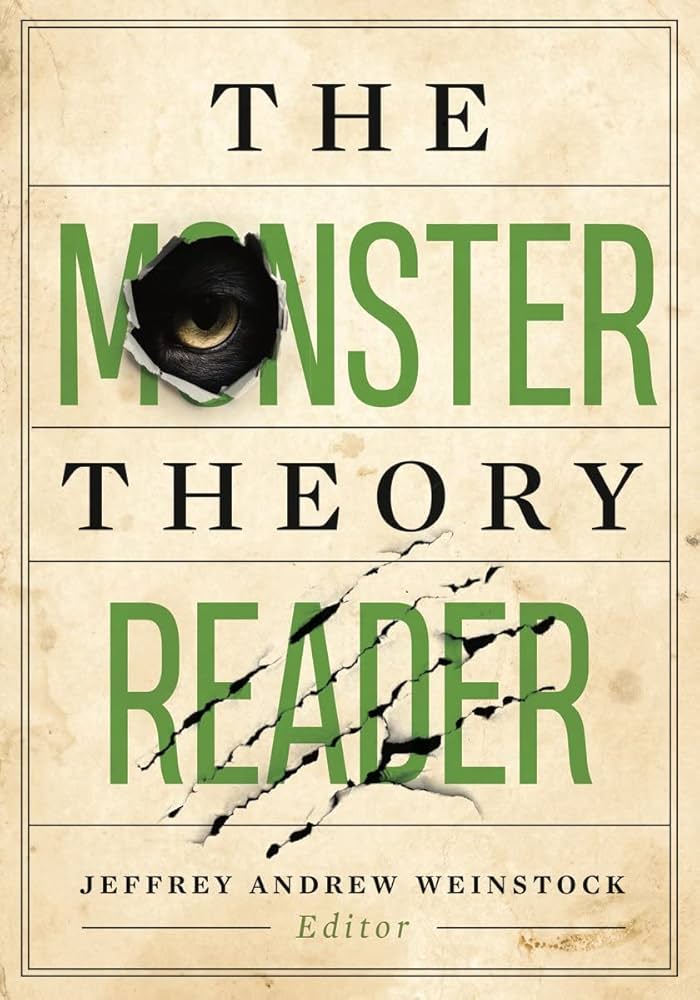
The first section of The Monster Theory Reader is titled “The Monster Theory Toolbox” (teachers of courses like Intro to Critical Theory might hear an echo of The Theory Toolbox there) and includes these pieces:
“The Uncanny” by Sigmund Freud
“The Uncanny Valley” by Masahiro Mori
“Approaching Abjection” by Julia Kristeva
“An Introduction to the American Horror Film” by Robin Wood
“Fantastic Biologies and the Structures of Horrific Imagery” by Noël Carroll
“Parasites and Perverts: An Introduction to Gothic Monstrosity” by Jack Halberstam
Great stuff! Hugely important! Later sections have chapters by Jasbir Puar & Amit S. Rai, Donna Haraway, Patricia MacCormack, and others. Serious, philosophically robust writing.
The problem for Weinstock, I suppose, is that any of those chapters would also be at home in The Horror Theory Reader (and, as I noted before, the Robin Wood essay is in both books). And that’s as it should be, since Monster Theory could be considered a subset of Horror Theory, or at least of Horror Studies. But I, the hater of taxonomies, work from a pretty capacious idea of horror; at the same time, I could imagine someone quite plausibly saying that monsters do not necessarily require horror. An interesting exploration might be made, for instance, of Sinners as a monster movie that is not a horror movie. (I don’t see it that way myself, but I can imagine the argument. I first saw Sinners with a friend who doesn’t think of herself as someone who likes or can even sit through horror movies, and she enjoyed it.)
Again, a major problem with The Horror Theory Reader is that it provides us with no context from which to launch such questions. It proceeds as if there is something called Horror Theory and spends hundreds of pages dithering over why people enjoy horror.
The missed opportunity nags at me.
What else might the book have included?
What else might it have explored, questioned, suggested?
First, there are a couple obvious omissions I feel compelled to note, even though I try to resist criticizing anthologies for what they don’t include — the reasons for omissions can be vast, and often not the editor’s fault. There’s limited space, limited budget, and sometimes reprint rights are impossible to track down or are exorbitantly expensive. Nonetheless, sometimes omissions are so obvious that the editor ought to address them in a preface or introduction.
Two omissions particularly stuck out for me for The Horror Studies Reader: Julia Kristeva and Carol Clover.
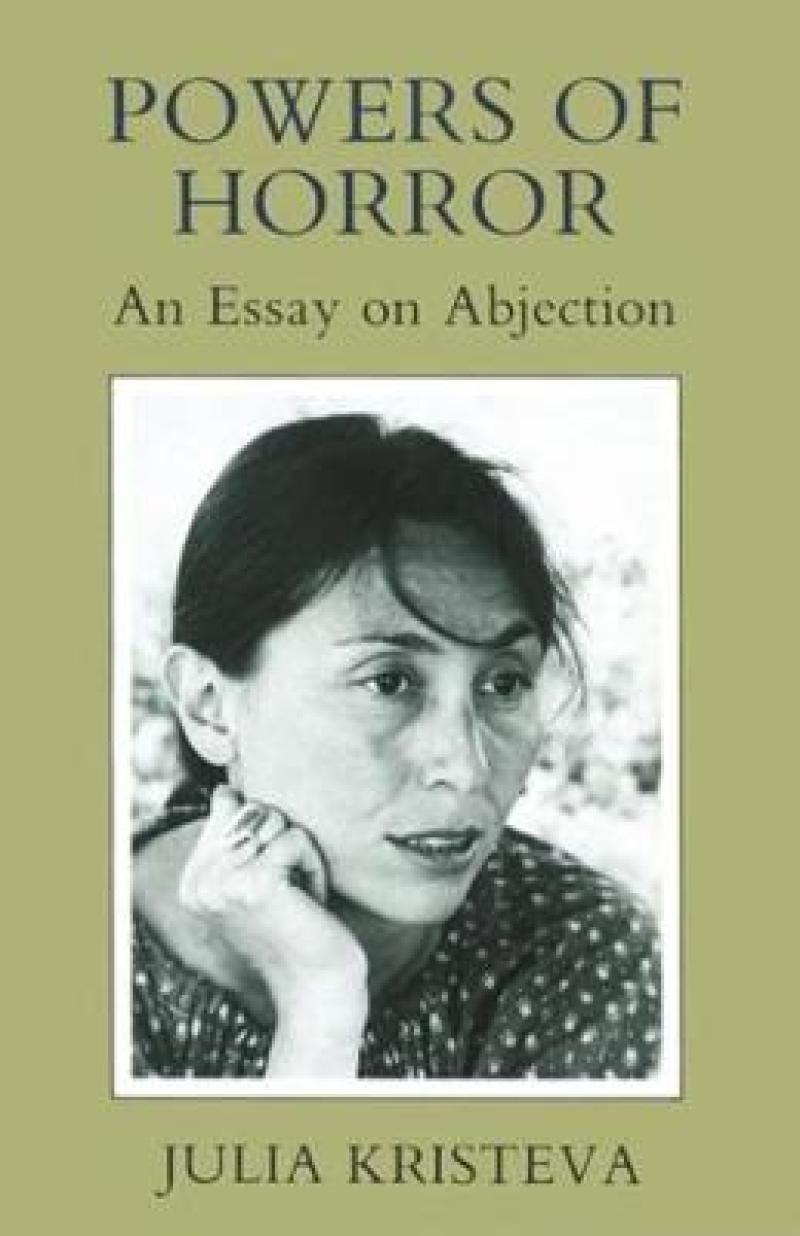
Kristeva does appear in The Monster Studies Reader, so it’s clear Weinstock knows the importance of her concept of the abject, and I’m sure he did not want to repeat more than one essay between the two books. However, it’s telling that Kristeva’s name never appears anywhere in The Horror Studies Reader. The author of Powers of Horror and Black Sun, the person who gave us one of the most powerful ideas for any sort of horror theory of the last 50+ years (the abject) … has no entry in the index.
Then there’s Carol Clover, who does appear as a reference in some essays, but is only really engaged with meaningfully in Brigid Cherry’s “Refusing to Refuse to Look: Female Viewers of the Horror Film”, yet another chapter drawn from a survey of horror film viewers, and one with its own problems of selection. While Clover’s Men, Women, and Chainsaws is older than Cherry’s essay, and Cherry is responding to and critiquing it, Clover’s work is simply more important and influential — indeed, more important and influential than almost anything else included by Weinstock from the last 75 years. And given the way that Clover’s concept of “the final girl” has entered the vernacular, allowing lots of people to use it who have no idea of the original context, it seems important that anything calling itself Horror Theory should return to Clover’s actual words, or else risk perpetuating misconceptions.
But it’s possible Weinstock couldn’t get the rights to reprint any of Men, Women, and Chainsaws; he could, though, have certainly found something that engages more meaningfully and effectively than the Brigid Cherry article.
Along with Bataille, another maybe-not-essential-but-truly-definitely-interesting French theorist shows what The Horror Theory Reader lacks: Antonin Artaud. Artaud is most famous for the essays in The Theatre and Its Double, but Artaud’s ideas — theories! — stretch across many realms. Artaud gave us the term theatre of cruelty. Surely, he is a member of Horror Theory’s shadow cabinet!10There’s nothing about horror and theatre beyond the early essays on tragedy, despite the fact that we get the term grand guignol from the name of a theatre and a lot of early horror cinema has its roots in the theatre.
In fact, I’ve referred to Artaud’s ideas when writing about the movies of Rob Zombie. Francois Truffaut used Cinema of Cruelty as a title for a collection of André Bazin’s essays that he edited. Stephen T. Brown uses the term in a chapter on Takashi Miike in Japanese Horror and the Transnational Cinema of Sensations. I’m sure it’s been used elsewhere, too.
*
Immersed in the underworlds of the Qweird, the reader might still retrace that primeval queer struggle whereby wresting imaginative liberation from personal stigmatization remains gravely inseparable from the psychodynamics of gay suffering, shame, and denial that gave rise to the need for such flight paths in the first place.
—Brian Johnson,
“From Qweird to Queered Weird and Back”,
in The Weird: A Companion
*
The more important omissions in The Horror Theory Reader are not of individual writers but of ideas. For something like Horror Theory to be possible, it would need to expand its range of inquiry far beyond the question of why people like horror.
Below are some possibilities, starting with perplexing thematic/philosophical omissions from Weinstock’s book, then working more broadly outward. This is not meant as a comprehensive list of possibilities for something called Horror Theory, but rather a set of directions that could be generative. Such a set is likely always incomplete.
Note: Being a taxonomy smasher, I don’t make much distinction between horror and weird fiction, so most and maybe all of what I write below seems to me as applicable to the weird [and The Weird] as to horror [and Horror].11Do I have a definition of the weird vs. The Weird and horror vs. Horror? No, of course not. Taxonomy SMASH! In the moment when I choose to capitalize them or not, I feel like there are differences, but such feelings are nothing I would ever insist on or go to battle for.
Horror and class analysis.
Weinstock more than once makes the claim that there’s very little written about horror theory and class. I expect he says this because his focus is on why people enjoy horror and it is true that there isn’t a ton written about class as a factor, at least that I’m aware of. But horror and class? Come on! It’s everywhere! Lauro’s Zombie Theory: A Reader has a whole section titled Capitalist Monsters — as it should, given that our contemporary idea of zombies comes primarily from the films of the always class-conscious George A. Romero.
Horror and class analysis go hand-in-hand in countless ways. Horror can be seen as a working-class mode of storytelling, because even if some of its creators are wealthy, and some of its products end up making huge amounts of money, its ideal audience is the working class and its allegorical and/or satirical power is at its best in attacking the rich and powerful.
Mark Steven’s Splatter Capital came out in 2017 (his next book was Class War: A Literary History). Jon Greenaway’s Capitalism: A Horror Story was published in 2024. Gothic Marxism is, in fact, a thing, going back at least as far as Margaret Cohen’s Profane Illumination in 1994. Marx loved his metaphors of ghosts, monsters, vampires, and countless people have written about this — in a 2010 article titled “Vampires of Capital: Gothic Reflections between Horror and Hope”, Amedeo Policante started an early footnote by declaring: “The literature on the ghostly/spectral is now too numerous to list” — and there are whole books such as Monsters of the Market: Zombies, Vampires and Global Capitalism by David McNally. Yes, a lot of this may be more Monster Theory than Horror Theory, but, again, Weinstock provides no way to differentiate.
(I think Das Kapital is one of the greatest horror novels of the 19th century.)
Joshua Gooch’s Capitalism Hates You: Marxism and the New Horror Film came out right around the same time as The Horror Studies Reader, probably too late to have an excerpt from it included, even if Weinstock had known about the book, as he could have, since both are from the same publisher. (Of interest: Jon Greenaway reviewed Gooch for The Ancillary Review of Books). There’s still plenty of room for exploration, but there’s also good material out there waiting to be built from.
X: The Man with the X-Ray Eyes (1963)
Horror and Speculative Realism, Object Oriented Ontology, etc.
This feels like the lowest of low-hanging fruit, and yet Weinstock includes nothing about the philosophers of Speculative Realism, Object Oriented Ontology, or the new wave pessimism of Eugene Thacker, who wrote a whole series of books called The Horror of Philosophy. (The Weird: A Companion also includes very little of this material, which is a bit odd, since these are even more appropriate to work on weird fiction over the last 15 years or so, but there’s at least mention of these things in passing in the introduction and occasionally in references in the text, and the book reprints a review by Eugene Thacker of Mark Fisher, which is far, far more than The Horror Theory Reader does.)
Citing Graham Harman, Thacker, Fisher, etc. when discussing horror feels almost like a cliché at this point, like citing Foucault when writing about sex or prisons, since these folks have dominated the space of philosophical writing about horror for over a decade now — but the very obviousness of it is what makes the exclusion so noticeable. To put together an anthology called Horror Theory and not include anything even referencing this stuff feels like either willful iconoclasm or utter malpractice. At the very least, it’s the kind of thing you’d expect to see addressed in an introduction. I don’t think it’s especially radical to say that any Horror Theory going forward is going to need to either build off of some of this stuff or otherwise acknowledge it even if only to reject it.
Horror and language. Horror of language. How does horror use language? What does horror do to language? As an area of theorizing, there are enormous possibilities here. Let’s start with written texts first. Aesthetic, rhetorical, and stylistic analyses of horror writing exist, but they aren’t as many, varied, or imaginative as the field of horror allows and deserves. We ought to attend more to the range of prose styles possible in horror, and to what those styles can achieve (or fail to achieve). There is plenty of talk among horror readers of “lyrical styles” and “purple prose” and such, but most of this talk is jejune. A meaningful analysis must dig in to particularities, it must identify effects of language and seek to show how those effects are achieved at the level of words, sentences, paragraphs. But to do so, we must attend to grotesqueries of grammar, demons of diction, and Satanic spells of syntax.
Beyond stylistics, horror could provide us with ways to explore the spectrum (and antinomies) of language from silence to screaming, from the absence of language to the overabundance (from absolute minimalism to word-vomit logorrhea). We might explore the intersections of horror and surrealist wordplay, or horror and LANGUAGE poetry. Think of Jack Spicer: my vocabulary did this to me. What does our horror vocabulary do to us? How are we infested with a horror-word virus?
Moving further out, we could think of cinematic language, of visual rhetoric, or the languages of music and how all of these are affected (and effected) by horror.
Inflections of horror via different media.
Literature, film, theatre, radio, fine art, and music are all areas where we can locate things we might want to call horror — but each of those media are different from each other. Do the differences between media create differences of horror? Reading Titus Andronicus at home, watching it in a theatre, and watching Julie Taymor’s film Titus are all quite different experiences … but are they different experiences of horror? What might this say about horror as a concept? Are different expressions of horror richer or more robust in some media rather than others?
We need more Bakhtin in Horror Studies. (We need more Bakhtin in most literary and cultural study.) In a chapter in The Routledge Companion to Gothic, Kelly Hurley links Bakhtin’s basically comic approach toward the grotesque with Kristeva’s basically horrific concept of the abject; further exploration of Bakhtin’s grotesque as applied to things like body horror could be fascinating. Bakhtin’s concept of the chronotope provides a way to discuss how narrative uses and unifies time and space, and potentially holds special power with horror for a few reasons. The concept was originally part of Bakhtin’s study of what genres are and how they come to be, making the concept of the chronotope useful for thinking about horror as itself a genre. More importantly, horror may benefit from careful thinking about how it uses space and time differently from other genres, modes, or styles (Deleuze might intersect nicely with that — cf. Deleuze and Horror Film by Anna Powell and Japanese Horror Cinema and Deleuze by Rachel Elizabeth Barraclough). I think here of Lovecraft’s phrase (at the beginning of “The Shadow Out of Time”) “the seething vortex of time” and of Benjamin Noy’s use of the phrase in his essay “Horror Temporis“, linking it back to Poe’s use of the vortex in so many stories (which perhaps could then be connected to the spirals in Junji Ito’s Uzumaki). The seething vortex of time … horror temporis … the horror chronotope…
Bakhtin’s ideas of heteroglossia, polyphony, and dialogism could be wonderfully fruitful for exploring horror’s penchant for embedded texts and frame stories. What insights might we discover by linking Bakhtin’s idea of carnival to certain types of horror (surreal horror, comic horror, folk horror, extreme horror, etc.)? Call it, with a nod to Ray Bradbury, Dark Carnival.
Bakhtin might prove useful, too, with regard to the Russian Formalist idea Zachary Gillen brings to bear on Weird Fiction: ostranenie (estrangement) — consider, for instance, Carol Emerson’s 2005 essay “Shklovsky’s ostranenie, Bakhtin’s vnenakhodimost’ (How Distance Serves an Aesthetics of Arousal Differently from an Aesthetics Based on Pain)”. So many possibilities!
Bodies, bodies, bodies.
Embodiment is not at all my field or interest — quite the opposite, as I would prefer to be a disembodied brain in a jar. However, bodies must be noted here, because horror, with all its monsters and slashers and zombies, is an obvious vehicle for thinking about bodies, about how they change, how they hurt, how they wound, how they rot. And, in fact, a lot of academic and non-academic writing about horror focuses on embodiment (often in conjunction with trauma theories) — it’s key to some understandings of torture porn, body horror, trans horror, etc. And bodies are central to studies of horror through a disability lens.
Horror’s extremes.
At least since the time of Seneca’s tragedies, questions of how and why extreme violence, extreme states of emotion, extreme situations should be shown have filled conversations about aesthetics and morality. Such conversations have always been part of horror discourse — to take just a few examples, think of the condemnations of Arthur Machen’s 1890s writings, the “video nasties” panic of the 1980s, the drawing of lines between the Splatterpunks and advocates of “quiet horror” like Charles L. Grant, the arguments over late-’90s/early 2000s Asian “extreme” movies and the New French Extremity and “torture porn” (Steve Jones’s book on the latter topic is fascinating). Theories of violence are common across all sorts of disciplines in the arts and sciences, and horror is uniquely positioned to offer an interdisciplinary, synthesizing approach to questions of extremity.
Salò, or the 120 Days of Sodom (1975)
Disgust. Repulsion. Repression.
Relatedly, horror is also uniquely positioned to explore questions of negative sensations and affects like disgust and repulsion. This could be part of, but perhaps not limited to, Affect Theory, a field that has become so broad and remained so persistent that it not only led to Melissa Gregg & Gregory J. Seigworth’s 2010 Affect Theory Reader but then their 2023 sequel (together over 900 pages of Affect Theory — and that’s just two of countless books on the subject). Queer Theory and Affect Theory have been dancing together for a couple decades now.12In the first paragraph of The Wallflower Avant-Garde: Modernism, Sexuality, and Queer Ekphrasis, Brian Glavey writes: “Following out what Michael Warner describes as queer’s ‘aggressive impulse of generalization,’ much important work in the field had turned since the mid-1990s to decidedly abstract questions of affect and temporality.” In a note, he references Tavia Nyong’o’s 2010 essay “Trapped in the Closet with Eve”, which reckons with Eve Kosofsky Sedgwick’s importance as an instigator of both Queer Theory and Affect Theory, and begins, “One of the problems with the turn to affect in queer studies is that, when we were talking about sexuality, everyone at least thought they knew what we were talking about, even those who felt we shouldn’t be talking about any such thing. after the affective turn, no one can quite agree what it is we are talking about, including, it seems, us.” How might Horror Theory unite with Queer Theory to expand on the ideas in work such as Heather Love’s Feeling Backward? What might horror have to say about cruel optimism?Look at all the areas to build from in Kristen Wright’s anthology Disgust and Desire: The Paradox of the Monster. Colin McGinn has said that disgust “belongs in the area of human experience most proteced by taboo and hedged with euphemism” — and horror is a genre obsessed with exploring taboos, a genre overflowing with tools to expose euphemism and return whatever is repressed to the surface of the world. No other types of storytelling are as consistently and coherently focused on depicting and dissecting psychological repression, and, as Robin Wood repeatedly pointed out, this focus on psychological repression also easily lends itself to an analysis of social and political repression (I think here of a film I’ve recently come to love, Eloy de la Iglesia’s astonishing La semana del asesino [in the US, Cannibal Man, a nonsensical title], which powerfully unites disgust and various types of repression.)
Horror for horror’s sake.
Horror texts are often used as objects of study within other theories, and even very horror-centric theories tend to propose an instrumental use for horror: horror as a way to work through trauma, horror as an allegory for any number of social ills, horror as excuse for something else. There’s plenty of validity to such approaches, but I can’t help but feel often that they are based on the idea that horror needs to be apologized for, that horror in and of itself is somehow shameful. (Shame and horror is another area to be explored.) This is linked, perhaps, to the idea that the arts and humanities need justification beyond themselves. I wonder if there is a way to valorize works of horror fiction, horror cinema, horror whatever in the same way I wonder if there is a way to valorize artistic and humanist inquiry and practice as valuable in and of themselves, for their own sake, regardless of whatever other qualities they have, whatever other benefits they provide to society. Or maybe we could even embrace the badness — what if horror is not edifying, what if it doesn’t do anything good for the world, what if it’s fundamentally awful … and that’s why we love it?
Horror as theory, horror after theory.
The final chapter in The Palgrave Handbook to Horror Literature is Lyle Enright’s “Horror ‘After Theory'”, which uses Nicholas Dames’s 2012 N+1 essay “The Theory Generation” as a foundation from which to build an analysis of Paul Tremblay’s A Head Full of Ghosts. I think Enright’s application of postmodernism to Tremblay’s novel is a bit off (Enright is really stretching to propose that the novel rejects and moves beyond postmodernism; it seems to me to be a pretty good example of it), but I also think he’s onto something to bring into the realm of horror publishing Dames’s question of what happens to literary production when a lot of writers have some, and maybe considerable, knowledge of abstruse academic theories. (That was, in some ways, a minor concern of my dissertation and first academic book as well, though I was looking at older generations of writers than Dames.) Writers such as Michael Cisco, Stephen Graham Jones, and John Langan (just to name three who are particularly prominent) have serious academic-literary-philosophical backgrounds. For that matter, Thomas Ligotti’s stories often work as a kind of theory-fiction.
Like science fiction or, probably, any genre with a strong fan community, horror can be a highly recursive and metafictional field, with writers riffing on the genre’s conventions and tropes, building off of each other ideas, and even, as with Lovecraft’s friends and then ultimately his fans (and even his critics), extending each other’s characters and settings. While lots of Lovecraftian fiction has been little more than reiteration (and watering down) of Lovecraft’s work, plenty has extended and detourned it in ways that produce a body of critical fiction. Victor LaValle’s The Ballad of Black Tom and Paul LaFarge’s The Night Ocean are, for me, exemplary here, but the list is long.
Similarly, there’s a growing genre of speculative memoir or what maybe we could call genre autofiction, ranging from the solidly memoiristic The Long Hallway by Richard Scott Larson to the fiction-with-a-touch-of-memoir Red X by David Demchuk to more fragmented, discursive, even collage-like work such as The Backwards Hand by Matt Lee, Blue Light of the Screen by Claire Cronin, House of Psychotic Women by Kir-Le Janisse, and Justin Philip Reed’s With Bloom Upon Them and Also with Blood.
Such thinking can challenge the assumptions of fictional horror, showing that a lot of what gets sold as scary in horror fiction pales in comparison to the horrors of the world we actually all inhabit. Santilli writes in his conclusion:
The human byproducts of modernity’s globalization, industrial catastrophes, and ethnic cleansings tend to be stripped of their social identity and placed, like the inmates at Guantanamo Bay, outside the scope of any nation’s system of rights and laws; and so they are the “monsters” for our time. But they are not the embodiments of evil or simply nonhuman. They are, in the deepest and oldest sense, our “neighbors,” and they could be any one of us at any time given the uncertainties and unpredictabilities of the risk society.
I think here, too, of Travis Linnemann’s The Horror of Police, which uses horror fictions to unsettle and reveal real-world assumptions and behaviors with consequences for us all.
Such very different works as these might show us some of the ways that Horror Theory could make new, powerful contributions to our understanding both of horror and of a world that grows more horrific every day.
*
A richly insightful essay by Daniil Koloskov, “Beyond the Reach: Horror and Phenomenal Life”, exemplifies more than one of the approaches I’ve sketched above. Koloskov writes:
Horror announces itself as a phenomenon at the cost of folding up the cultural phenomenality; being born out of the straining of the symbolic system of a given culture and pulling off its horizons, horror swoops directly against the very deployment of a given cultural phenomenal field. Thus, we could describe the phenomenon of horror as a counterphenomenon: a counter-phenomenon deploys its phenomenality at the cost of a foreclosing larger network of phenomena.3 It endangers, hunts down and exists as a constant reminder of the fragility of the cultural “phenomenal spectrum” (Koloskov). As such, it resonates with everything downgrading in a given culture. Horror lives in dirt and decay, it is malicious and violent, it thrives on blood, sufferings and disappears under the light. Monsters are, essentially, those “kings of flies” and the “great dukes of hell” who settle in the inversed settings living on what normally would be subjected to ostracism and suppression. It is this combination of what is un-combinable, the possibility of something that can live counter our life, that can enjoy what we suffer and suffer what we enjoy that freezes the blood in our veins.
*
And with that the phantasm went out.
—May Sinclair, “The Victim”
The Man Who Could Cheat Death (1959)
-----
- 1Granted, there isn’t much competition when it comes to collections of academic writing on HPL; the quality of the ones I’ve seen is, to my mind, generally not very high. But The Age of Lovecraft has some good stuff in it. ↩︎
- 2Kincaid’s critique of Delany’s idea of science fiction “as a language” is well explored in a review of Starboard Wine originally published at SF Site; now that SF Site is defunct, you can find the review via the Wayback Machine. It’s also in Kincaid’s excellent essay collection Colourfields. ↩︎
- 3Wood had a deep aversion to Cronenberg’s work, which is clear through multiple essays in the posthumous collection Robin Wood on the Horror Film. I’m glad he wrestled with his aversion rather than setting it aside with a shrug of, “Well, I guess he’s just not a filmmaker I can appreciate. C’est la vie.” We not only get some good, thoughtful, iconoclastic writing from his essays on Cronenberg, but we also get a better understanding of the strength and limitations of Wood’s often clunky uses of Marx and Freud. It’s one of the things that makes Wood such an interesting critic for me: his Marxism and Freudianism had all the subtlety of a battering ram, and yet, even as I frequently cringe whenever he brings out a Marxist or Freudian concept, I am then more often than not impressed by the insight he is able to glean from using those concepts so thunkingly. In fact, I’m tempted to say that Wood’s approach might be well described as thinking by thunking… ↩︎
- 4Here is that conclusion, in case my summary is too hasty: “[The] paradox rests on the claim that the enjoyment of negative emotions, understood as intrinsically unpleasant emotions, is impossible. The paradox seems to arise only because we construe the negativity in terms of these emotions being intrinsically unpleasant, whereas we should really construe their negativity in terms of the fact that the emotions essentially incorporate negative evalutions. But this entails that typically people will find the objects of these emotions unpleasant and the emotions themselves are typically unpleasant. Thus it is wrong to hold that whether people enjoy these emotions or not is a merely contingent, non-conceptual matter. But because there is only a conceptual requirement that people typically don’t enjoy them, that allows room for some individuals on some occasions to enjoy them. Moreover, this solution explains why it can seem so plausible to hold that these emotions are intrinsically unpleasant. For, while it is false that necessarily, if someone feels fear, she does not enjoy the experience, it is true that necessarily she or others of her community typically feel fear. It should be clear that this solution, being entirely general, also solves the paradox of tragedy.
“Of course, why any particular individual enjoys feeling fear, and another doesn’t, or why some horror films are enjoyable and others not, is an interesting and no doubt complex matter. But it is the proper subject of empirical, psychological investigation and it would be unproductive to engage in armchair speculation about why this is so. What I have shown here is that this empirical investigation is possible. For I have argued that there is no a priori, conceptual problem about the enjoyment of negative emotions in a real life, or in fiction. There is no paradox of horror.” ↩︎ - 5Here are his conclusions:
“Based on the literature from various disciplines, the following conclusions can be reached: (1) low empathy and fearfulness are associated with more enjoyment and desire to watch horror; (2) specific dimensions of empathy are better predictors of people’s responses than are others, but these dimensions are inconsistently predictive; (3) empathetic concern and personal distress are negatively correlated with enjoyment of horror involving torture; (4) there is a positive relationship between sensation seeking and horror enjoyment/preference, but this relationship is not consistent and may depend on the component of sensation seeking; (5) men and boys prefer to watch – and enjoy and seek out – horror more than do women and girls; (6) women and girls report experiencing more fear and anxiety generally than do men and express greater anxiety and fear when watching horror than do boys and men; (7) this sex difference may be attributable to women’s typical higher disgust sensitivity and anxiety proneness (both of which are inter-related); (8) women report more empathetic concern than do men, and this may be another explanatory mechanism; (9) no study to date has systematically explored disgust sensitivity as a mediator in horror enjoyment and preference, but the evidence would suggest that the former will predict the latter; (10) older children are more afraid of concrete objects/stimuli when very young but of symbolic stimuli when younger; (11) individuals tend to prefer horror less as they age, but there is little literature on this topic; (12) children use various coping strategies to overcome horror film-related fear and the success of these depends on the age of the child; (13) physical coping strategies are more successful in younger children; (14) priming with information about the feared object helps reduce fear and increase enjoyment when children watch a film featuring the feared stimulus; (15) the startle reflex is amplified in the presence of threatening stimuli; and (16) little is understood about the role of neuropsychology in the response to horror film generally although the understanding of the structures and regions of the brain implicated in fear and fear conditioning is well documented; the amygdala is likely to be involved in the reaction to (and enjoyment of) horror.” ↩︎ - 6Somewhat outside the fuzzy bounds of what I’m discussing here, but perhaps of interest, is a recent article by David C. Witherington and Naila V. deCruz-Dixon in the journal Emotion Review, “The Nature of Horror”, that looks at horror within emotion theory (an area of psychology distinct from the area of literary, media, and cultural studies that is affect theory). Witherington and deCruz-Dixon first survey “the relatively fragmented, sometimes conflicting, and sometimes confused conceptual literature on horror”, noting “the decided tendency toward over-intellectualization that marks most conceptualizations of horror”. They write that a “cursory review of theories and conceptualizations of horror within the emotion literature reveals marked heterogeneity of definition” and “whether horror is even a category of emotion at all has come into question”. In their conclusion they write: “Horror as related to real-world events and circumstances is beginning to enjoy empirical investigation in psychological science as a qualitatively distinct emotional experience.” This suggests some possibilities for what, at the end of my post here, I call horror after theory/horror as theory. Witherington and deCruz-Dixon’s own approach is one based in phenomenology, a field that I am only familiar with in a limited way, but which seems to me to hold a lot of potential for future explorations of Horror Theory. ↩︎
- 7Why Friday the 13th Part III? I’m not sure, though maybe the fact that it was originally released in 3D and does a lot to try to shock-scare the viewer makes it useful for such studies. It’s also the first of the films where Jason wears his hockey mask. But everybody knows Part IV (The Final Chapter) is a vastly better movie! ↩︎
- 8This is understandable given the size of the survey — the written responses to any one question alone might be book length — but it is problematic for reasons Petrocelli in fact identifies in an endnote to the first chapter: “Future use of the data is important because, since this study stands as an important yet single subjective usage of the data, there are many more stories to be told and understandings to be made from the collected data sets.” The problem is that while Petrocelli’s PhD dissertation (the basis of the book) is available via Manchester Metropolitan University’s e-space repository, the data set does not seem to be available there, where Petrocelli says it is (or will be) housed. We can hope that it soon finds a publicly-accessible home, as it is clearly a valuable data set for anyone researching film audiences. ↩︎
- 9Perhaps Petrocelli would agree with me that calling any of these folks “queer” is a stretch — I distinguish gay and queer because the latter has, for me, a radical element to it, a commitment to indeterminacy and to opposing mainstream norms. But Petrocelli refuses to define “queer” because “categorisation and definition is the work of the white cisheterosexual male coloniser that aims to limit existence into what he can understand
and what he will legitimise” … which, okay, I’m the one who said above that overdetermined phenomena can only be described, not defined, so I’m very much on board with not defining things, but I also think that one cannot make claims without making definitions, even provisional ones. You have to set out parameters, even if only provisionally, so as to have an object of study. Petrocelli identifies all the survey respondents as queer, making no distinctions for ideology, but if they’re all queer, then so are the sexual minority reactionaries, fascists, and Republicans. ↩︎ - 10There’s nothing about horror and theatre beyond the early essays on tragedy, despite the fact that we get the term grand guignol from the name of a theatre and a lot of early horror cinema has its roots in the theatre. ↩︎
- 11Do I have a definition of the weird vs. The Weird and horror vs. Horror? No, of course not. Taxonomy SMASH! In the moment when I choose to capitalize them or not, I feel like there are differences, but such feelings are nothing I would ever insist on or go to battle for. ↩︎
- 12In the first paragraph of The Wallflower Avant-Garde: Modernism, Sexuality, and Queer Ekphrasis, Brian Glavey writes: “Following out what Michael Warner describes as queer’s ‘aggressive impulse of generalization,’ much important work in the field had turned since the mid-1990s to decidedly abstract questions of affect and temporality.” In a note, he references Tavia Nyong’o’s 2010 essay “Trapped in the Closet with Eve”, which reckons with Eve Kosofsky Sedgwick’s importance as an instigator of both Queer Theory and Affect Theory, and begins, “One of the problems with the turn to affect in queer studies is that, when we were talking about sexuality, everyone at least thought they knew what we were talking about, even those who felt we shouldn’t be talking about any such thing. after the affective turn, no one can quite agree what it is we are talking about, including, it seems, us.” ↩︎
Discover more from Matthew Cheney
Subscribe to get the latest posts sent to your email.
