
The Substance ends with voices calling out:
So beautiful!
We love you!
You’re irreplaceable!
These words are what everyone who seeks fame and attention wants to hear and can never hear enough of. Narcissism is a bottomless pit — no attention, no love, no praise is ever enough. Nor could it be. Narcissism is a misdirecting curse: it sends its hosts looking for relief and comfort in every direction except the causes of their actual suffering, creating a perpetual sense of victimhood and martyrdom, where all blame is cast outward, where all suffering is somebody else’s fault.
The curse of the celebrity may be the curse of narcissism, or it may be some related malady. If your sense of self-worth is based on physical beauty, you’re doomed. Even the most beautiful people suffer their bodies changing over time. The hallmarks of conventional beauty are fragile. Old age devours youth. Love is ephemeral: our feelings shift with time, the people who love us die, we die. We’re all temporary, all replaceable. The quest for fame and uncomplicated love is a quest like that in Robert Bloch’s classic story “That Hell-Bound Train”: to stop time at exactly the right moment, preserving for eternity the moment of beauty, joy, fulfillment. It’s a delusion, but a seductive one.
Writer and director Coralie Fargeat’s first feature, Revenge, I admired for its visceral, single-minded focus. The Substance is even more visceral, but less single-minded, making it a richer film overall. It tells the story of an Oscar-winning actor, Elizabeth (played with both bravery and wit by Demi Moore), who in her fifties is now a Jane Fonda-esque workout star — but the executives at the network that broadcasts her show have decided to find somebody younger. An Oscar won years ago doesn’t mean much, especially if you’re a woman in Hollywood. Elizabeth gets access to a mysterious new drug called The Substance, which allows a younger self to split off physically from an older one, following certain rules. Predictable results follow, but Fargeat only stays predictable as long as she needs to to establish and briefly fulfill viewer expectations for the purpose of then completely exploding those expectations. An hour in, I thought I knew where the film was going, then looked and saw it had almost an hour and a half left still to go (the direction I thought it was headed in would have only taken another 30 minutes at most). In some ways, I think The Substance might have benefited from some trimming, but I also think the things it lingers on are what make it distinct, so it’s hard for me to say with any real conviction that it is overlong.

The smart, sharp achievement of The Substance is not so much that it puts its ideas about fame and beauty into a caustic dark comedy filled with truly repulsive special-effects (which it does!); rather, its achievement is that it does not pigeonhole its material into a single allegory. Much of what is most vaunted in contemporary cultural products is unambiguous allegory. Though we — by which I mean primarily us folks in the United States — are in many ways a secular society, especially within the culture industry, we share with our strongly religious fellow citizens a deeply moralistic, even prudish outlook. This is regardless of political affiliation. The left is as rife with scolds and purity testers as any Christian fundamentalist church. (A historian might interject that this is basically the American character: Puritan in its inclinations, with the differences between people being differences in what they are puritanical about.) Moralistic cultures venerate moralistic art, and thus the American fondness for simple allegory and for morality plays — forms which we could argue are the dominant ones in European-influenced drama and fiction throughout history (especially if popular forms are taken into account). I think once again of Guido Mazzoni’s insight that didacticism is an expression of class dominance: the ruling class seeks didactic art to teach the subject classes how to think, how to behave, how to worship. Nondidactic art (in Mazzoni’s formulation) is produced by an elite who feel comfortable talking to the elite; didactic art is the elite passing instructions down to the unwashed masses. The simplistic moralism so dominant in American culture recently doesn’t map easily onto an income-based class structure — not in a world where fascist dolts like Elon Musk and Peter Thiel are among the richest people — but it very much fits a cultural class system: not only are the ruling cultural classes afraid that the uneducated outsiders will use the wrong language and express the wrong ideas, but cultural social climbing requires obeisance to whatever prejudices of language and viewpoint are hegemonic.
Such relationships have perhaps always true. To capture the hearts and minds of any group of people, you must follow whatever conventions make your communication sensible to that group. Art that does not at least superficially utilize some group’s familiar conventions will either have to wait to be appreciated by a future hegemony with different conventions, or will remain as inscrutable as the Voynich manuscript.
While I dislike didacticism and moralism, allegory itself is not something I sneer at: not when two of my favorite writers, Franz Kafka and J.M. Coetzee, wrestle with it throughout their work. But the key is something Coetzee learned from Kafka: the best allegory is a kind of anti-allegory, a form without easy referents, a solid structure that evaporates into dream.
All of which is a long way of saying: The Substance does dramatize a core, moralizing allegory about beauty, youth, and celebrity … but it has many other allegories and implications dancing around that core. This is all to its benefit. The satire remains sharp and clear, but the story cannot be reduced to a message. You actually have to experience the film, in all its gaudy and repulsive glory, to “get” its meaning. Summary simply can’t give you the experience of watching something like Requiem for a Dream reimagined by Herschell Gordon Lewis after he awoke from a dream that Joan Didion wrote him a script.
It’s not that The Substance has anything especially original to state about the ideas of beauty, fame, motherhood, isolation, etc. that it dramatizes, and some less sympathetic reviewers have considered this a knock against it, but this is to mistake the film as a whole for a message. The Substance is not a message, it is a collection of images and sounds shaped into a narrative. Satire tempts us to elevate the moral of the satire above the aesthetics, but this is a temptation we ought to resist, because many of the most effective satires are not effective as fables, they are effective as forms.
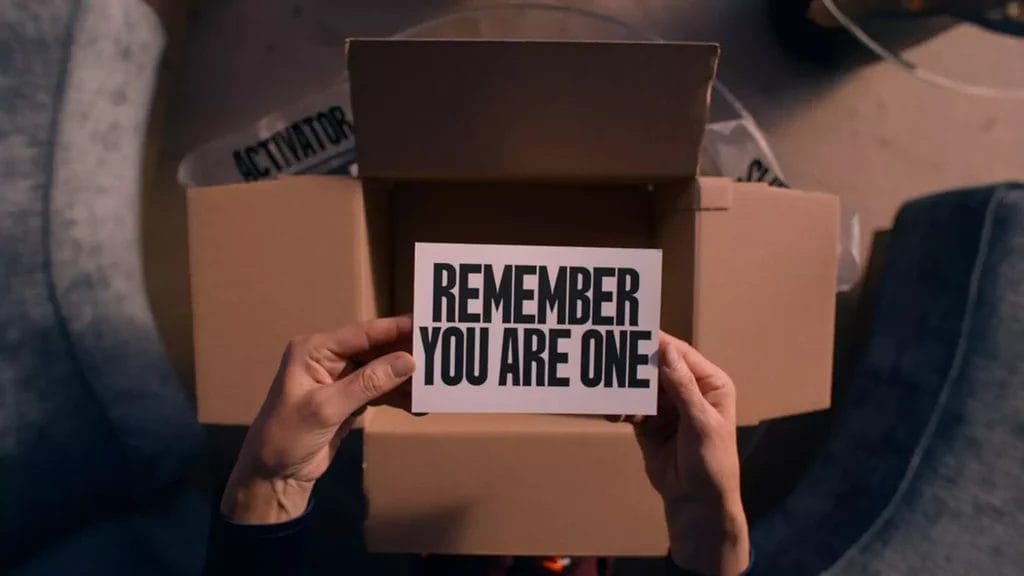
I don’t here want to dig deep into the formal methods of The Substance and how the filmmakers’ aesthetic choices make it what it is, but I think it’s important to look at the editing, cinematography, sound design, and special effects as key to how this film (or, really, any film) makes meaning. Additionally, it’s important to think about what the film is trying to do to us as viewers. Films are a kind of sensory assault, horror films especially so. The Substance is at least as much affect as message — indeed, I could imagine an argument that the affect is the message. (Someone more committed to Affect Theory than I ought to take it on!) As I said above, a summary cannot get at the experience of watching the movie, and it is the experience that matters.
For a viewer really interested in delving into The Substance, a good question might be: What is the purpose of repulsion? How does repulsion serve this story? How is repulsion a cultural, social — even political — force (or counterforce)? Why is Dennis Quaid eating shrimp made to be as stomach-churning as the monster effects?
The Substance is a gross-out horror movie, but to call it that feels reductive. It is employing gross-out effects for other purposes of the story, not just to attract gorehounds, though it will definitely satisfy such folks. (A brief side note: This is the difference between genre-based work that has more than genre conventions on its mind and work that self-consciously seeks to transcend a genre by elevating itself above the grubby conventional stuff. The former is one of my favorite types of art, the latter something I am wary of. You can watch The Substance as a gross-out movie and be probably pretty happy with it. But, while you cannot avoid the gross-out elements, you don’t have to be satisfied only with that. This is what sets it apart, for me, from some of the more prestigious horror films of recent years, films which have their moments but seem to determined to escape the fundamental responsibility of horror to unsettle, disturb, and, well, horrify.)
A friend who recommended The Substance to me first saw it in a movie theatre. After I watched it streaming, I texted him: “I have no idea how you endured it in the theatre — I had to fast-forward through some of the longer body fluid / injection-into-fesering-wounds stuff!” (He said he did have to cover his eyes. But also looked through his fingers.) I’ve rarely, if ever, been as nauseated by special effects. Some of that may just be me. I’m happy to watch a dozen kids get slaughtered by chainsaws, but medical things and gooey body things really get me. It’s not just the effects, though: it’s the long, lingering shots, the sounds, the actors’ fierce commitment. All the elements together remind me of what it felt like to watch Hellraiser when it first came out. Though the passage of time and the rise of ever-more-realistic effects have dulled the shock of Clive Barker’s masterpiece, I remember how utterly nauseating the gore felt in the late ’80s and early ’90s.
*
The Substance feels rich with unobtrusive allusions to other movies (All About Eve, 2001, The Elephant Man, The Shining, Possession, Tootsie, Society, plenty more), but I have no idea if this is intentional or if it is a product of the film being set in Hollywood and a satire of the media industry, and thus inevitably evoking other films with similar concerns or settings. Probably a bit of both. I would be shocked if the filmmakers hadn’t thought of The Elephant Man and Society because some make-up effects are just too similar for those films not to have been in their mind; my frequent thinking of Tootsie was likely just me making an amused connection to a very different film about a performer changing their body to appeal to the prejudices of the entertainment machine.
But the movie I kept thinking of was a small Norwegian film from 2022, Sick of Myself.
The two films are quite different in style. The Substance is as carefully designed as a Wes Anderson movie, its colors as pop art as Spring Breakers, its rhythms sometimes as amphetamined as later Tony Scott productions. I’m a sucker for wild color and austere design inflected by highly controlled chaos, so in many ways I’m kind of a target audience for The Substance. (Kubrick’s control-freak production design makes me swoon, while Scott’s hyperactive methdream Domino is among my favorite films.) The Substance makes no pretense to realism. It is a world of its own.
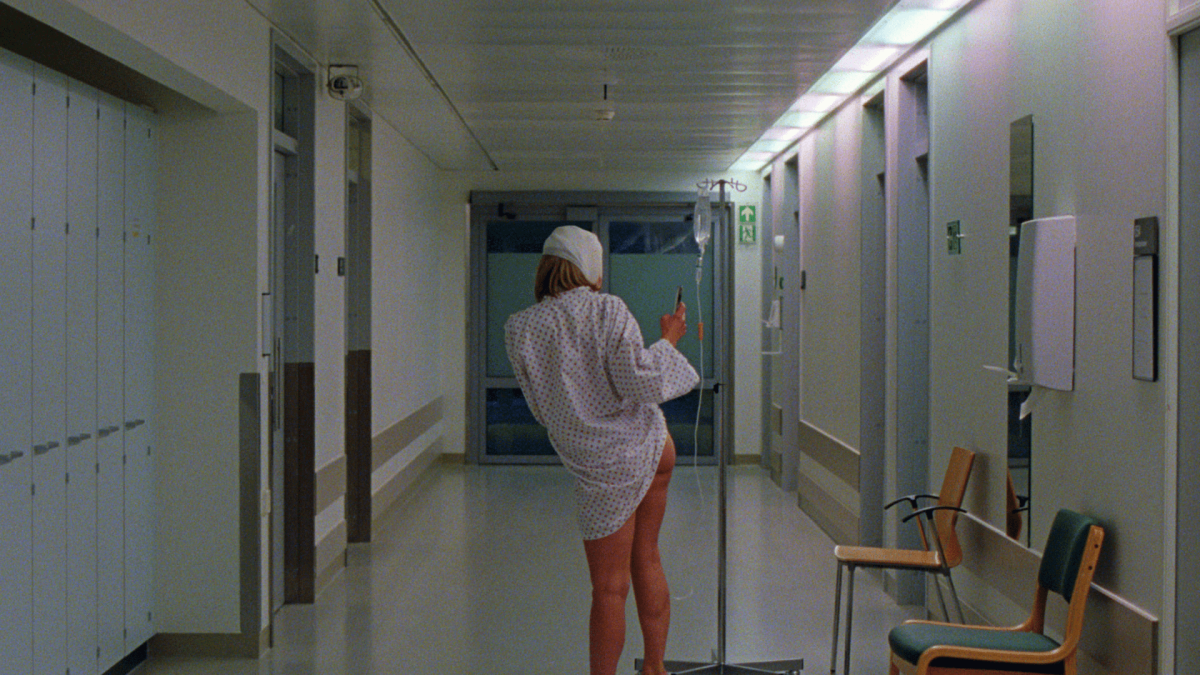
Sick of Myself is a simpler story and its surface is entirely realistic in presentation. The style is controlled, but it’s the control of indie arthouse movies circa 2015. There is nothing ostentatious in the presentation. The genius choice made by writer-director Kristoffer Borgli was to film a ridiculous, over-the-top story (with more caricatures than characters) as if it were a serious drama. Another director would have turned the material into something closer to a Mel Brooks movie, and it would have been terrible. Borgli’s actors, particularly Kristine Kujath Thorp as lead character Signe, commit to the reality of even the wildest moments, and this is what makes the film’s rather obvious satire powerful and, in its expression through the film’s form, complex.
Signe is a person who must always be the center of attention, a person for whom international fame would not be enough, because she has a hole in the center of her self that will never be able to be filled. She is compelled to seek any and all attention wherever and whenever possible, even though no attention in the real world is ever satisfying or fulfilling for her. Borgli makes the smart choice not to dig deep into Signe’s reasons for being a complete and total narcissist. She has some feelings of abandonment from her father, but that’s about all we know. But there is no such thing as a sufficient explanation for such a person. We may scrape through the details of their childhood and psychoanalyze them for centuries, but that does not explain why someone with similar or even the same upbringing becomes a functional and empathic person and another becomes a psychopath or narcissist. At their worst, such people are fundamentally unknowable, even alien. Signe is that alien, both to the world and to herself.
Signe dramatically and permanently disfigures herself for the sake of keeping people looking at her and feeling sorry for her. She is the poster girl for performative victimhood, and smart enough to recognize that some people will happily use her victim position to provide her with attention in service to their own quest for attention. Toward the end of the film when she gets an agent who will market her as a model for “inclusive” photo shoots, we at first might (rightly!) cringe at what seem like cheap jokes at the expense of disabled people, but if you watch and listen closely you’ll see that the disabled people are, in fact, rendered absurd not by themselves but by the agent’s own self-regard and obliviousness. The shallowness of the agent’s commitment to social progress is made quickly clear as Signe’s health fails: instead of concern for Signe, her concern is for herself and her reputation, a fact foreshadowed by her complete obliviousness to the needs of her blind assistant.
Sick of Myself has its gross moments, but they are nothing in comparison to The Substance — and this is to both films’ credit. Sick of Myself uses its deadpan realism to challenge our response to Signe and her world just as The Substance uses its meticulously controlled pop gothic design to create a world different enough from anything we would recognize as reality to get us to wonder what the relationship between the film and reality actually is.
For instance, consider the two films’ polar differences in representing characters’ friendships. The characters in Sick of Myself exist in social systems. They have parties, go out to meals with friends, talk to each other in ordinary and informal ways. This is important for the story of Signe because ultimately her most horrifying behavior is the way she manipulates friends. She doesn’t actually want friends, she wants worshippers and caretakers. She wants everyone to be subservient to her desires, needs, whims. This includes her boyfriend, Thomas (Eirik Sæther), who has plenty of his own personality flaws (flaws which might explain why he was attracted to Signe in the first place, and why he stayed with her despite her complete inability to be an equal partner in a relationship), but who seems more or less normal. As do all of Signe’s friends. And they grant her the benefit of the doubt, until in the later scenes of the movie her behavior becomes so obnoxious and alienating, and then she finally tells the truth to one of her friends, a journalist, and expects that she will be celebrated for the bravery of her performance art, her molding of herself into an object of pity. (It doesn’t go as she imagined!)
Nobody has friends in The Substance. The only social structures apparent are the structures of Hollywood business. The world presented is the logical result of hypercapitalism. Everyone is either a commodity or nothing. Social bonds are meaningless. Social relationships are predatory. I saw one response to the film that seemed to think Elizabeth’s apparent lack of friends or family was an oversight by the filmmakers. That’s sloppy thinking, about as useful for this film as wondering about the exact formula for the The Substance or the business plan of the company that makes it.

The point of the ostentatious visual design of The Substance is to highlight the artificiality of the movie, to let viewers know from the first scenes that the choices of what is in and out of frame (and in and out of story) are more than deliberate, as they are in anything that’s not just completely improvised. The choices by the writer-director, by the director of photography, by the designers, byt the actors — their choices are part of a highly determined construction. Within that construction, friendship does not exist. The question for viewers is not, then, “Is it realistic to believe an Oscar-winning actress has zero contact with friends and family?”, but rather: “What does it mean to posit a world in which a person like this lives a life like this?” It’s the difference between the speculative and the journalistic.
Again, that’s where The Substance excels. I don’t have quick answers to questions such as what it means that Elizabeth is constructed as a person without any contacts beyond her workplace, or what it means that the film lingers so long over so many disgusting moments, or what it means that the sets are designed the way they are. There are not single answers to these questions. The film is an experience, not a standardized test.
The endings of Sick of Myself and The Substance are quite different, but both allow their protagonists some moments of bliss, moments where they achieve a little bit of what they want. Signe finds it among people who are nearly as obsessed with themselves as she is, and they are in a place where they are given permission to obsess over themselves, which is perhaps the only possible way a narcissist can find some peace, however fleeting it may be. Elizabeth’s final transformation is one of the great monster effects in the movies, and a powerful visual correlative to the film’s themes, but the end result — which quite wonderfully calls back to one of the first shots in the movie — is something outside of monstrosity, something that has escaped monstrosity and found a bit of beauty and peace in the moments before what we can only assume will be a few last moments before suffering the fate of everything that gets smeared on a sidewalk, every gooey remnant of the material world, every passage into decay and entropy — the fate of all impermanent things, regardless of fame or fortune, love or hate, contentment or narcissism. Beauty fades, becomes insubstantial, as do we all, substances that we are.

Discover more from Matthew Cheney
Subscribe to get the latest posts sent to your email.
