Before we are aware of it, we all of us find we are talking about Shakespeare.
—Lytton Strachey, “Words and Poetry”Yet Shakespeare is a very queer case.
—Virginia Woolf, “Personalities”
1.
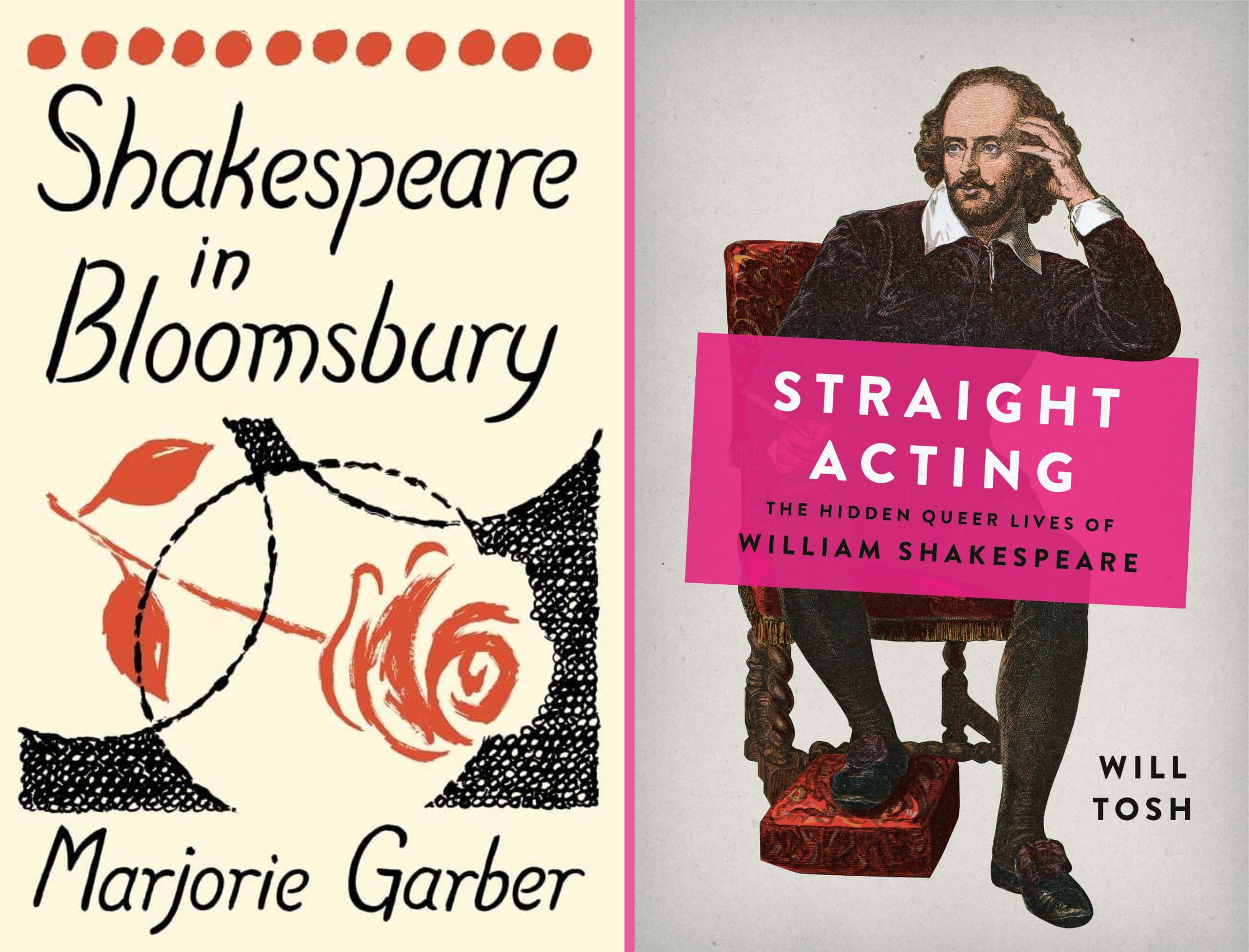
Reading Marjorie Garber’s Shakespeare in Bloomsbury and Will Tosh’s Straight Acting: The Hidden Queer Lives of William Shakespeare, I couldn’t help but keep thinking to myself: Shakespeare is useful. Useful for exploring history, useful for aesthetic appreciation and argument, useful for creating community. Both of these books illuminate those uses and others, with the effect of leading us back to Shakespeare via quite different eras, people, and routes.
I am very much in favor of uselessness, but I also believe that any work of art that finds an audience for longer than a few minutes is demonstrating some sort of usefulness to that audience. One of the things that most fascinates me about literary history is the way that readers have used what they read, the ways they made sense of it within the contexts in which they lived, the ways they found to bring the literature into their lives, to make it part of their thinking and being.
Garber’s book chronicles the ways that members of the Bloomsbury Group (and some affiliated personalities) alluded to Shakespeare, thought about Shakespeare, read Shakespeare, argued Shakespeare, designed sets and costumes for Shakespeare productions, directed those productions. For Virginia and Leonard Woolf, Lytton Strachey, Vita Sackville-West, Roger Fry, John Maynard Keynes, Lydia Lopokova, T.S. Eliot, Desmond MacCarthy, George Rylands, etc. Shakespeare’s words were the stuff of life, always familiar and ready to be put into use in conversation, writing, arguing. Partly, this was the result of education, class, and culture: these were mostly middle-to-upper-class British people in England living at a time when Shakespeare was venerated as a cultural icon. But the extent of education especially may not be quite what we expect. In our time, Shakespeare is mostly consigned to school curricula. Yet when the Bloomsbury Group men who were members of the Cambridge Apostles society were in school, Shakespeare was not part of the curriculum. English as a discipline was quite new (Cambridge didn’t get an English Tripos until 1917, nor an actual English faculty until 1926). Garber notes that from 1886 into the first decade of the 20th century, there was no production of a Shakespeare play on the Cambridge campus. The Marlowe Society was formed to address this lack in 1907, and though by then most of the Bloomsbury Group members associated with Cambridge and the Apostles had graduated or otherwise left the school, George Rylands became an important contributor to the work of the Society, continuing to contribute once he became a Cambridge professor, and consequently the Bloomsburies stayed abreast of its activities and saw quite a few productions. (Along with Virginia Woolf and Lytton Strachey, Rylands is the most important person for Garber’s story, and was in many ways the conduit for Bloomsbury’s idea of Shakespeare to flow into British culture — particularly theatrical culture — throughout the rest of the 20th century.)
That Shakespeare was not an academic topic during the time when the members of the Bloomsbury Group were students of one sort of another did not at all hinder — and may have helped — their appreciation for Shakespeare’s words. Only Rylands became a lifelong academic; everyone else had at least a healthy skepticism, if not outright contempt, for academic work. Had Shakespeare been primarily the property of schoolmasters, he likely would have held less appeal to at least some of the Bloomsburies, and Lytton Strachey and Virginia Woolf in particular had little use for most of the Shakespeare scholarship of the age.
What Strachey, Woolf, and the others loved was Shakespeare’s words. This is one of the valuable insights that Garber brings forth, and it ends up having implications for the entire 20th century history of Shakespeare interpretation and performance in England. For the Bloomsbury Group, Shakespeare was less a writer of scripts to be performed than he was a supreme poet who ought to be appreciated primarily for his language. This was a very Cambridge position, one evident in (and in some ways inspired by) the philosophy of G.E. Moore (beloved of the Bloomsbury Apostles) and the “practical criticism” of I.A. Richards (who began working at Cambridge as a tutor for the original English Tripos). But it was also very modern and very Bloomsbury: smart and intellectual, but also contrarian, skeptical, ironic. The Bloomsburies rejected the Shakespeare of their parents’ generation, the Shakespeare of the Victorian theatre, where great effort was put into ornate set design and actors performed in big style: stentorian, histrionic, self-consciously poetic. For two centuries, Shakespeare plays on the English stage had tended to be cut and adapted, puffed up with spectacular sights and sounds, molded to the sensibilities of egomaniacal stars and directors, chopped and chiseled to fit assumptions about what audiences would sit still for.
In a 1919 essay, “Shakespeare at Cambridge”, Lytton Strachey wrote:
The actors at Cambridge were obviously amateurs in the fullest sense of the term. They had never learned to act, and therefore their acting had the charm of unself-consciousness — the charm of primitive art and the drawing and poetry of children. But as soon as the amateur becomes the professional — as soon, that is to say, as he makes a serious and continued practice of his art — self-consciousness necessarily arises, and with self-consciousness the way is opened to the preposterous conventions of the modern stage. The young actor begins to “act,” and all is over. But is this inevitable? Is there no means of arriving at self-consciousness without the fatal accompaniments of a bad tradition? It is plain that what is needed is a new tradition, and the conclusion suggests itself that the best hope for a new tradition lies in the deliberate development of the instinctive style of the amateur. If the young actor could only be taught that he has to unlearn nothing, that he must preserve at all costs his natural enunciation, his economy of gesture, his sobriety of emotional expression, that it is his business, not to “interpret” Shakespeare’s words, but to speak them, that the first rule for acting Shakespeare is to trust him—how incalculable would the improvement be!
Garber quotes a 1902 letter from Leonard Woolf to Strachey, complaining that the older generation of Apostles “don’t really know what literature is of course. They read a novel for the story & poetry for ‘a criticism of life’ … They know they don’t understand it & that it bores them unless there’s something indecent in it to tickle their pruriency or something ‘good’ to tickle their lickerish sense of moral responsibility.” Readers and audiences seeking primarily a good plot and moral instruction had ruined not only the appreciation of Shakespeare but also of all literature. This feeling was at the core of the high modernist revolt against Victorian aesthetics, and can be traced through the writings of the Bloomsbury Group throughout the first half of the century. (Our own culture in the United States today seems to me far more Victorian than Modernist.)
The idea that Shakespeare needs to be freed from the accumulated weight of theatrical conventions was one that would be taken up by young Rylands, who, though a few decades their junior, came to be close friends with Strachey and Virginia Woolf. When Rylands directed productions for the Marlowe Society and elsewhere, he was famous for exhorting actors to “Just say the words!”, often to the annoyance of people like John Gielgud who wanted more direction with regard to the characters they were playing. (Though Garber presents Rylands as unquestionably successful, theatrical anecdotes suggest some tension between his very academic approach to directing and that of mid-century actors; see, for instance, Jonathan Croall’s biography of John Gielgud.) The Rylands approach would be tremendously influential not only because of his own teaching and productions, but because of the many directors and actors he worked with, including the most famous of 20th century British directors of Shakespeare (and much else): Peter Hall, Peter Brook, John Barton, and Trevor Nunn. It might not really be hyperbole to say that George Rylands taught the British theatre how to return to Shakespeare as a poet, and how to put that poetry on stage. (An especially interesting study might be made of the traces of Rylands in Barton’s book and tv series Playing Shakespeare. Barton’s approach to Shakespearean textual analysis remains useful both for readers and actors.)
In many ways, the language-centered approach to Shakespeare of the Marlovians and Bloomsburies seems self-evident. After all, the one distinguishing element in Shakespeare is the language. His plots are usually adaptations of other stories and his dramaturgy, though often innovative, is hardly unique. What makes Shakespeare special is nothing other than — and nothing less than — how he uses words, sentences, syntax, metre. Yet this self-evident insight is often missed, even today.
Garber offers a particularly fascinating insight about this via Woolf: “For Virginia Woolf, the plot was not what was Shakespearean. In her novels, there are no Shakespeare characters — no avatars of Shylock, Falstaff, or Lady Macbeth…. Shakespeare is present in Woolf’s fiction instead through her use of haunting leitmotifs, allusions, and lines of verse, together with sketches of gently mocked enthusiasts and equally gently mocked detractors, versions of the self-avowed Shakespeare lovers and Shakespeare haters she records so vividly in her diaries.” Woolf would never stoop to write Mrs. Dalloway and Juliet. Instead, as in her life, she wove the words, rhythms, and images from Shakespeare through the tapestry of her own writing in ways that became more and more complex and subtle from her first book to her last.
Aside from Rylands and maybe Desmond MacCarthy, the Bloomsbury Group members preferred to read Shakespeare rather than to see performances. Partly, this was from the fact that good (or even bearable) performances were rare at the time, so for anyone who actually appreciated Shakespeare as a writer, seeing performances was often a torturous experience. But because Woolf and others appreciated Shakespeare primarily as a poet and writer, even a great performance was more a dessert than a main course. The feast of Shakespeare was, for them, on the page. They cherished reading alone, but also together — friends and partners would read the plays and poems to each other, groups of friends would get together for an evening’s entertainment of reading a play aloud, and Shakespeare became a kind of lingua franca among them. What the Bible was for religious communities, Shakespeare was for the Bloomsbury Group. In many of their writings, Garber says, they “tended to see the world, instinctively, through and with Shakespeare.”
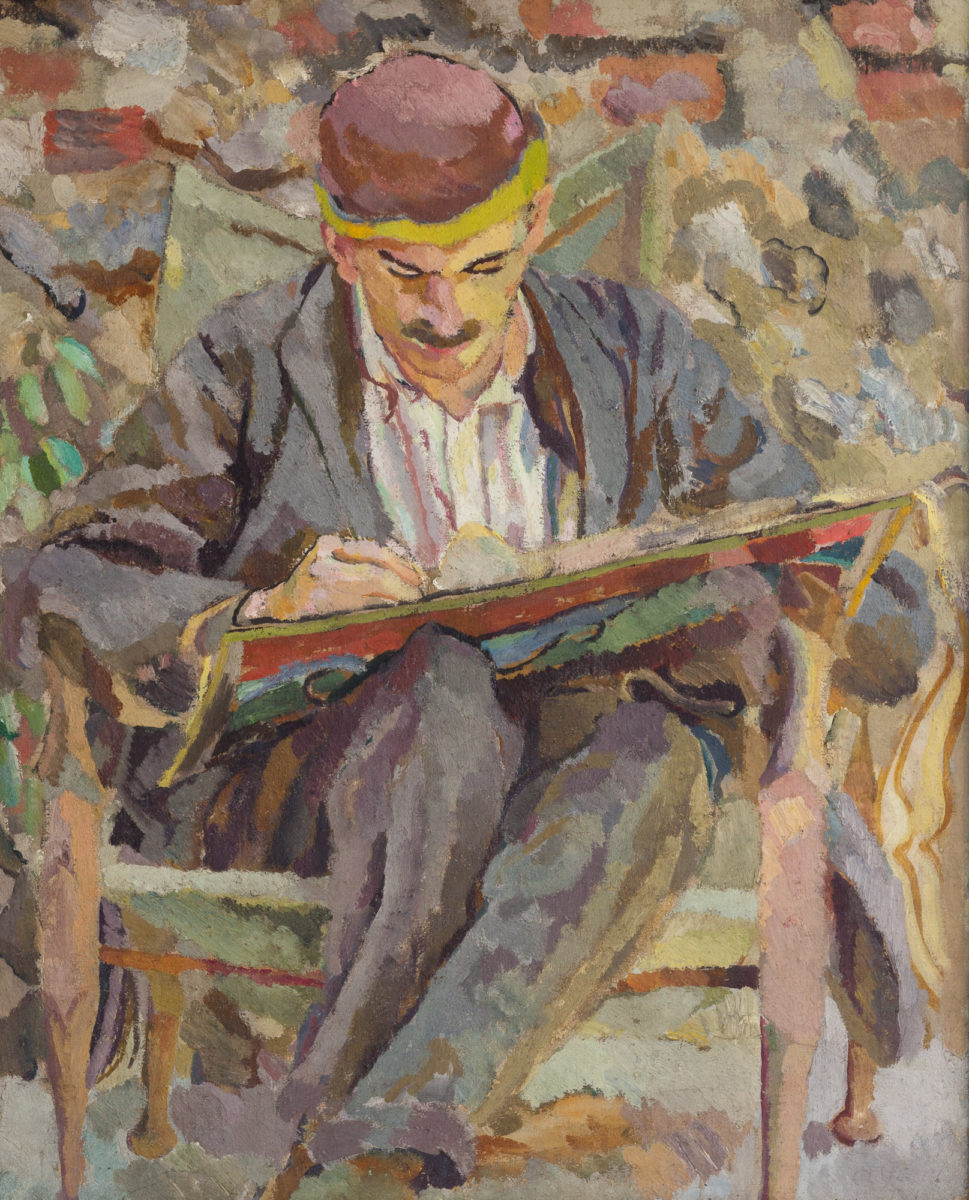
It may not be a surprise that highly cultured British writers and artists lived and breathed Shakespeare’s words, but one of the more interesting tales in Shakespeare in Bloomsbury is that of the economist John Maynard Keynes. It’s often forgotten that Keynes was a longstanding member of the Group, and that his interests ranged far beyond economics. Keynes worked with Rylands to develop and fund the Cambridge Arts Theatre and was later the founding chairman of the Arts Council of Great Britain. For Keynes, the point of making money and strengthening any economy was to increase leisure time and allow people the freedom to pursue their interests and to invigorate the culture. Garber quotes Rylands remembering Keynes: “I do not recollect the word ‘economics’ ever passing our lips. A friendship of twenty-five years was cemented by mutual devotion to Theatre, English Literature, and King’s [College, Cambridge].”
Keynes is a model of interdisciplinary, humanist enthusiasm for Garber, a kind of figure we no longer value and, indeed, may have lost in a world sundered by utilitarian and anti-intellectual ideologies, grotesque wealth inequality, and the veneration of ruinous tech gods. “We are a long way from the time,” she writes, “when the world’s best economist, ill in bed, could listen with pleasure to a radio broadcast of As You Like It because he knew the play by heart.”
2.
Bloomsbury was famously (or notoriously) a queer group. And Shakespeare’s work was for them an important reference point for queerness.
The queerness of Shakespeare has been a scholarly topic for a long time, but, despite the obvious presence of queerness throughout the ouevre, it has been actively suppressed in the public imagination. “The un-gaying of Shakespeare has a long history,” Will Tosh writes in Straight Acting, and right from the introduction he works to show how determined this de-queering has been and how at odds it is with what we know both from the texts and from the history. “For far too long, the burden of proof has been on scholars and biographers to provide ‘evidence’ beyond reasonable doubts that esteemed men like Shakespeare were anything other than robustly, swaggeringly heterosexual. Well, I don’t accept the terms of a methodology that has homophobic distaste baked into its requirements. Why prove something that is manifestly evident to anyone with the wit to see it?”
Tosh’s book focuses on Shakespeare’s life and work before the coronation of King James I in 1603, providing a vivid and highly readable account of male sexual fluidity in Elizabethan England. It is a wonderful example of accessible, popular writing deeply informed by scholarship — I found myself mining the notes and bibliography throughout, impressed by the richness of material Tosh draws from.
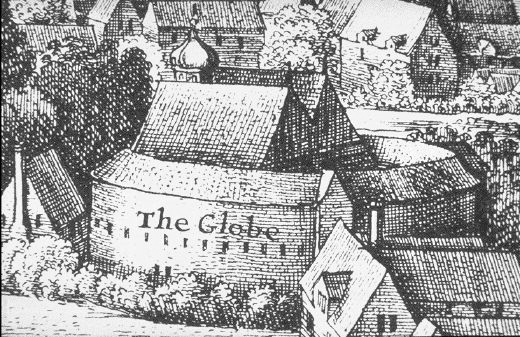
Everyone who approaches Shakespeare biography is condemned to speculation. (In addition to the ordinary ravages of time on archives, the fire at the Globe in 1613 and the Great Fire of London in 1666 destroyed untold numbers of documents, scripts, and books that would likely have solved many mysteries.) The Bloomsbury Group knew this and it is a part of what led them away from such an approach. Even today, when new methods and technologies of research have allowed us a clearer view of the past than was possible 100 years ago, most of the details of life in Shakespeare’s world require some educated guesswork. Criticisms of Shakespeare biography typically condemn the author’s necessary reliance on maybe and possibly and might have. Tosh of course must do the same, and he does not shy away from taking some big leaps of interpretation, but he also makes clear that some things really can be known, and some of what can be known has been deliberately obfuscated by homophobic responses over the centuries. “Presenting a narrative of Shakespeare’s childhood in Stratford-upon-Avon, his relocation to London, and his development as a writer and actor in the vibrant theatre industry of the 1580s and 1590s means primping the documentary record with inference and deduction, but never against the grain of probability.”
Tosh’s work doesn’t simply point to queer elements in Early Modern England or in Shakespeare’s works; it also consistently situates Shakespeare in theatrical and literary communities. Scholarship in recent decades has done a wonderful, sometimes dizzying, job of undoing the myth of Shakespeare the lone genius. Occasionally, this has led to claims that there’s nothing particularly special about Shakespeare’s writing, but that hardly required historicists — Virginia Woolf’s nephew Julian Bell called Shakespeare a writer “utterly lacking in all notions of construction, half whose lines mean nothing at all, and who has only the vaguest sense of meter.” What the vogue for material and historical research in Early Modern studies has revealed is the ways in which Shakespeare was typical of his age and the ways in which he was innovative, transgressive, and unique.
Because Tosh is a scholar who works at Shakespeare’s Globe, where he is head of research, his scholarship is informed by theatrical practice and history. But the Globe has generally done an excellent job of using research into history and practice as a tool for illuminating textual analysis, so while the texts themselves are not the focus of Tosh’s book, he nonetheless sprinkles through the pages intriguing and persuasive readings of the plays and poems. He is especially good on the sonnets, a particular favorite of queer readers through the centuries, but Tosh finds a possible influence on Shakespeare’s writing and publishing of the sonnets that has often been missed: the work of Richard Barnfield (1574-1620). In the mid-1590s, Barnfield’s writing, Tosh says, “made male same-sex desire the central theme of the two most up-to-the-minute genres of late-Elizabethan love poetry, the pastoral lyric and the sonnet.” Shakespeare’s sonnets echo phrases and images from Barnfield’s, and despite some careless critics claiming that men writing sonnets addressed to other men was a convention of the genre at the time (and thus no indicator of homosexual desire), Tosh notes that only two writers of the era did so consistently: Barnfield and Shakespeare.
Most of Shakespeare’s sonnets were likely written in the 1590s. There are references in contemporary writings to some of those sonnets being circulated privately. Shakespeare first became famous when he wrote Venus and Adonis and Lucrece during the early-1590s closing of the theatres because of plague. These were both published quickly and to great acclaim. Sonnets were hugely popular in the 1590s, a book of Shakespeare’s would have sold briskly, and yet he did not publish his until 1609, by which time they were seen as a bit passé. The reasons for the delay are lost to history, but Tosh makes a tantalizing speculation: William Shakespeare saw what happened to Richard Barnfield.
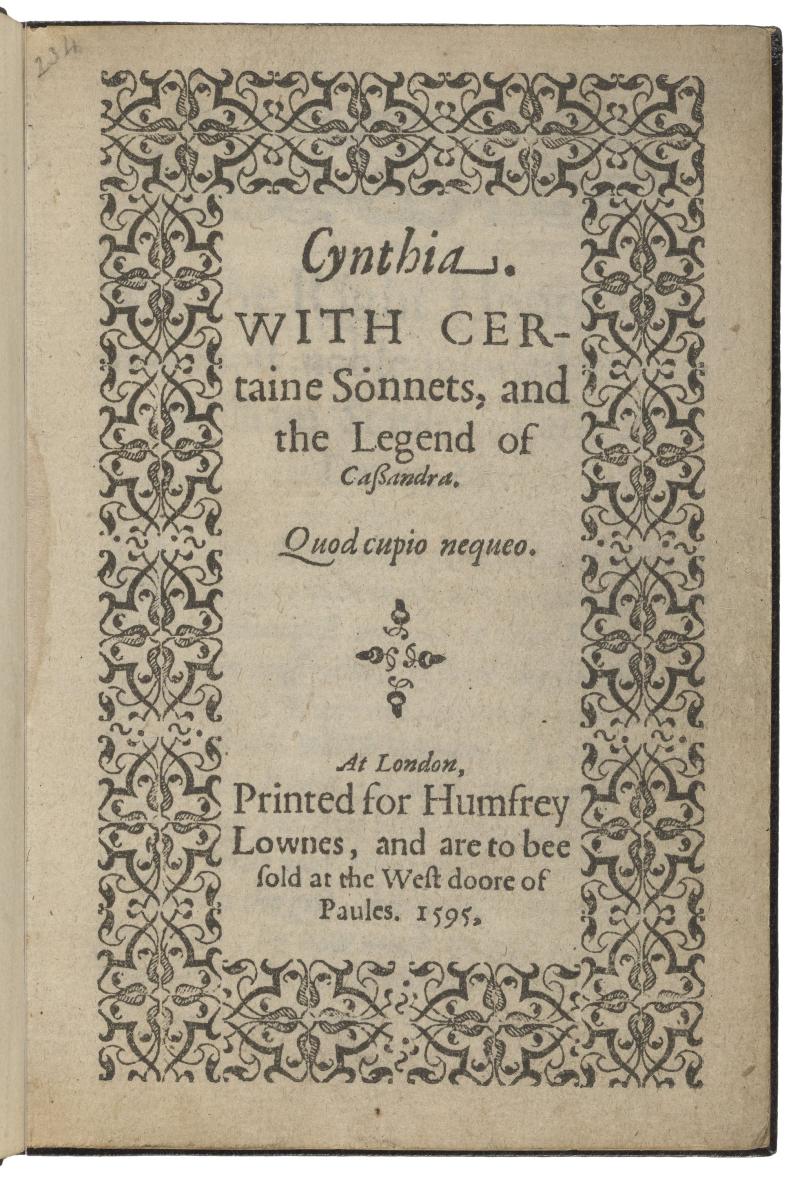
This is perhaps Tosh’s greatest imaginative leap, but he does an impressive job of presenting what bits of evidence there are. The fact is, nobody knows for certain what happened to Barnfield. His final appearance in print was a reissue in 1605 of his 1598 Encomion of Lady Pecunia. For a long time, his father’s death in 1627 was mistaken for his own, now known to be in 1620. That mistake led the few scholars who even knew his name to assume he got tired of the literary world and retired to the life of a married country gentleman. Documentary evidence now strongly suggests that the younger Richard Barnfield was disinherited by his father. He would have quickly been impoverished. There are no records of a marriage or a will.
The reason for Barnfield’s ostracism could, in truth, have been anything. But nothing suggests that he was a drunk, or mentally ill, or that he had married beneath him or converted to Catholicism (all sins that a Protestant patriarch might consider merited the “unnatural, injurious, and ungodly” step of disinheritance). His only known trespass is the “fault” he both admitted and denied in the epistle to Cynthia, with Certain Sonnets: “the love of a shepherd for a boy”. With his open acknowledgment of authorship and queer intent, Barnfield made his name, and lost his fortune.
He had reached — and breached — the extent of early modern England’s tolerance for queer desire.
As Tosh tells the story, the mistake Barnfield made was allowing too deep an identification of the same-sex desire in his poetry to his own self as author. With youthful brashness, he was as out as it was possible to be in the late 16th century. This was briefly and deliciously scandalous, but soon the public’s tastes turned. “Barnfield’s reputation, so dazzling for a few years in the 1590s, collapsed. His poetry was forgotten, and when it wasn’t forgotten it was deplored in the strongest possible terms.”
Since they traveled for a few years in the same literary circles, Shakespeare would likely have known about Barnfield’s fate. By the end of the century, association with Barnfield’s “Certain Sonnets” was more a liability than a boon. Shakespeare could circulate his openly homoerotic poems among friends and trusted readers, but publication would have been something else altogether, even for the writer of Venus and Adonis. There is no evidence that Shakespeare was a radical willing to sacrifice his livelihood for a principle; quite the opposite. By 1609, when the sonnets finally were published, Barnfield was forgotten and, in any case, the book does not seem to have met with much success. “The younger man’s ostracism must have been a profound shock,” Tosh writes. “If Shakespeare was taking something of a risk in publishing his queer sonnets — with their ‘infidel’ sensibility and revealingly homoerotic ‘I’ — then it’s possible he greeted their failure with something like relief.” This is unknowable, but also plausible. At the time when his sonnets were published, Shakespeare had a well-established reputation, income, property. He did not need his collection to be a bestseller, and he certainly did not desire scandal.
“By 1609,” Tosh says, “Shakespeare’s queer world, and his attitude to it, had been transformed.” It was the king’s own openly homosexual relationships that made life more difficult for queer people who were not royalty — accusations of sodomy were leveled against people more than before: “Far from leading by example, James gave a new language to moral crusaders who charged others with that which they dared not indict the king.”
The effect in Jacobean literature is not difficult to delineate; queerness didn’t disappear, but it did have to develop new delicacy of expression.
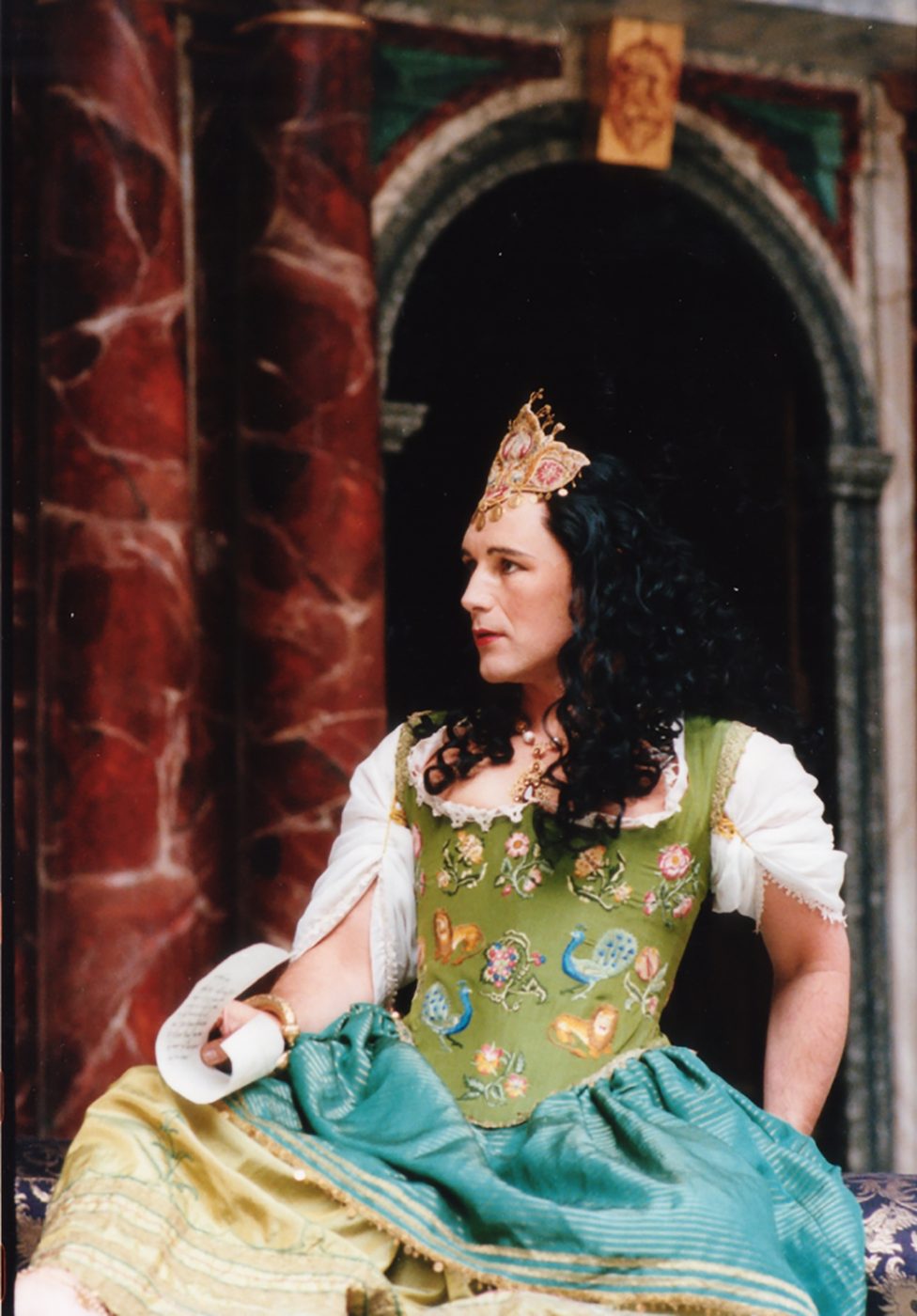
Some of Shakespeare’s most subtle explorations of sexuality and gender can be found in Jacobean-era plays: consider Imogen’s performance as the sexually vulnerable page Fidele in Cymbeline, or Cleopatra’s astonishing acknowledgment of her character’s embodiment by a young man [since women were prohibited from performing on public stages] when she reflects on her future mockery on stage by a ‘squeaking’ adolescent. The queer themes and relationships that had proved so compelling in his younger years continued to inspire Shakespeare’s writing.
But the conditions that created a queer environment for Shakespeare and others in the 1590s were gone. Erotic verse was more policed, allusions to Greek and Roman sexual desires were suppressed, religious intolerance gained new power.
Would-be Shakespeares or Barnfields in the following decades — men desperate to express their queer love in plays, lyric poetry, or sonnets — faced the most violent opposition from a straight establishment newly primed to detect transgressions of gender presentation and sexual behavior. Frightening new institutions — societies for the reformation and protection of “manners”, a popular press keen to fashion sodomites and “mollies” as public enemies, and a conservative social elite giddy with the proceeds of imperial plunder — filled the vacuum of surveillance that had once kept early modern English queer desire thriving as a cultural force. … The queer dramatists and sonneteers of the seventeenth and eighteenth centuries — and beyond — wrote in secret and in fear. Our hidden canon of queer love still awaits recovery.
Thus, Tosh’s focus is understandably on Shakespeare’s Elizabethan years. His book is so engaging, though, that I couldn’t help but wish he continued it for a few more chapters, delving into the queer resonances in Shakespeare’s later work. Plenty of scholarship exists that does that work, however, and with luck its insights will find their way to the general public over time.
3.
In his summing up of Shakespeare’s later plays, Tosh specifically mentions the two that were among Virginia Woolf and Lytton Strachey’s favorites: Woolf mentions or alludes to Cymbeline frequently, and Strachey’s letters and essays demonstrate a lifelong interest in Antony and Cleopatra. Their love of these plays was not for obviously queer resonances, despite both writers being well-known for queer desire, but rather for the complexity and strangeness of the language — the later plays are ones that for both Strachey and Woolf exhibited a poetic purity, and even abstraction, that Woolf at least felt to be powerful and beguiling, though Strachey seems to have preferred the work up to Antony and Cleopatra, finding plays like Coriolanus and The Tempest a bit too removed from the world and its concerns. (This view is made clear in one of his earliest essays, and one that garnered quite a lot of attention, “Shakespeare’s Final Period”, but I’m not aware of evidence that he changed his mind about the later plays significantly as he got older.)
What is clear from both Garber’s and Tosh’s books is the extent to which Shakespeare’s work can serve as a beacon and a touchstone for community. Tosh shows how the plays and poems came from and contributed to a homosocial male world that was playful with gender and sexuality, and how these works could be experienced and enjoyed by a large audience while also speaking differently to a specific audience.
Their ability to speak in such a way carried through the centuries. In November 1896, when Lytton Strachey was a 16-year-old boarding school student, he fell in love with an older student, the first homosexual feelings he wrote about (with some code) in his diary. He brought Shakespeare along for the ride: “And then I began to talk to him, and at last reached his mind a little through — indecency. Measure for measure, Venus and Adonis, Lucrece (I remember his curious pronunciation). We came through this to other things — we touched lightly the very foundations almost; but lightly, and then he went, leaving me with a heart leaping with excitement.”
There is another book to be written, a book that would be partly like Tosh’s and partly like Garber’s, about the history of queer uses of Shakespeare. The Bloomsbury Group offers one clear example, but there must be many others. The absence of a queer documentary record much before the end of the 19th century is a hurdle for any study of queer reception, but at least as far back as Wilde’s “Portrait of Mr. W. H.” there is plenty of evidence for Shakespeare’s comfort and inspiration to queer readers and audiences.
I am thinking about this now during a time of great chaos, intolerance, authoritarianism, and despair. In particular, nonbinary and transgender folks are under relentless attack by cruel and craven people. During the last month or so, I have mostly been reading Shakespeare. Partly, this was inspired by these two books, but the hunger had been there for a little while, as I realized that where I had been reading at least one Shakespeare play a year since high school, I had gotten out of the habit in the last decade. (I have acted in a dozen Shakespeare productions and when I was a high school teacher I taught the plays and sonnets regularly, so this always kept me going back to them, but when I was a teenager I also developed a taste for just reading the plays and poems for my own pleasure and interest.) Suddenly, I felt a great urge to return to my old friends Hamlet, King Lear, Macbeth, 1 Henry IV, and Twelfth Night and to brush up my knowledge of work I’ve spent much less time with like Richard II and 2 Henry IV, the three Henry VI plays, and Woolf and Strachey’s beloveds, Cymbeline and Antony & Cleopatra. I have also been reading through the sonnets, reveling in their complex, perhaps even cynical, depiction of love and its limits.
This reading has been a buffer against the pains of our time, the wounds the world inflicts. Chaos and misery flood our days. Everyone seems to be in crisis. Aside from the cascade of horrors in the world’s political realms, most of my friends and family right now are dealing with serious struggles of one sort or another: deaths, disease, divorce, career disasters, the many challenges of elder care, financial loss, debilitating mental illness…
In some ways, I suppose, reading Shakespeare now is an escape from the current reality — reading 400-year-old plays about societies with significantly different structures from our own does allow some escape, and even if we are tempted to seek out connections to our era, it’s difficult, because the utter stupidity of our reality makes the foibles of even the most clueless of Shakespeare’s characters seem like genius. His villains are at least eloquent in their villainy, his fools satiric foils for the world’s inanity. We live in a world where eloquence is lost, a world that cannot be satirized because it is its own satire. For all the terrors of the past, the murderous vapidity of the current reality feels unique. We have plenty of our own terrors, plus we have sentient vomit running the world.
For me (an inveterate modernist), the consolations of Shakespeare exist exactly where the Bloomsbury Group identified them: in the richness of the language. This raises the question of what reading complex expression provides to us, how the thorny and fulsome entanglements offer a balm. In a shallow culture that venerates ease and speed, reading Shakespeare reminds us of the pleasures and satisfactions of slowing down, contemplating, wrestling with ideas and images, holding sudden insights in mind, letting those insights blossom over time. It also encourages humility and a tolerance for ambiguity. There are plenty of lines in Shakespeare that remain opaque even after much study, and many more lines that have numerous and equally legitimate interpretations. Sitting with those opacities and ambiguities can be unnerving, but overall I find it to be a comforting reminder that language, history, and the world are far more complex and literally wonder-full than the slings and arrows of daily existence often suggest.
When so much suffering surrounds us, when we are weighed down with worry and heartbreak, when we may have to reimagine the path of our life suddenly as old plans get tossed to the winds and even a few weeks from now feels impossible to predict, all our best guesses smothered in lost possibilities … then the complexities and obscurities of Shakespeare’s lines invigorate our attention and provide not mere distraction, but encouragement toward reflection on the ways of our worlds, the flaws and triumphs of humanity, the age-old struggles to make merry in the face of ever-impending disaster.
I may not be able to do anything to relieve any of the suffering in the world right now, I may not be able today to bring to my own life the glitter and affection I yearn for, but here, now, this moment I can read and reread a sonnet or a page of one of the plays, I can feel my mind expanding itself toward those words, and I can imagine something more, something wondrous, something rich and strange.
And more often than you might expect, that is comfort enough.
—–
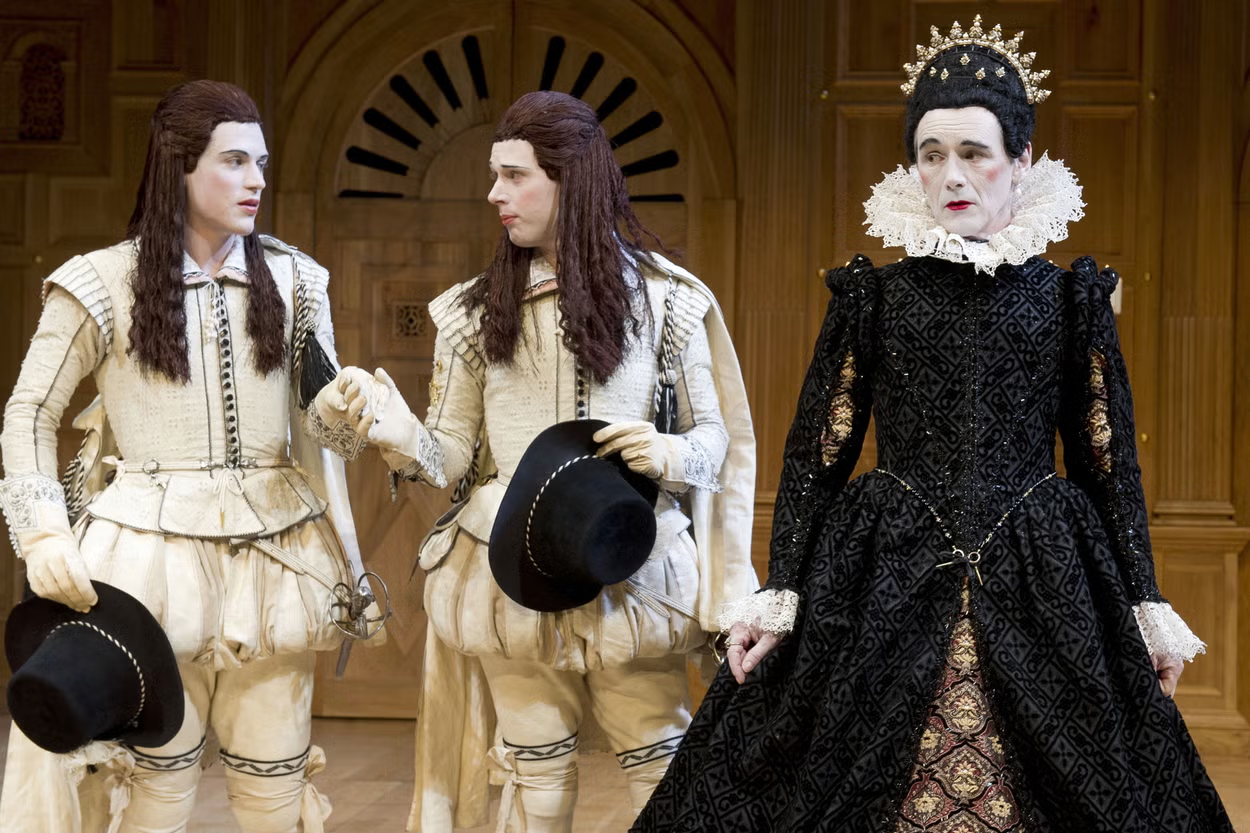
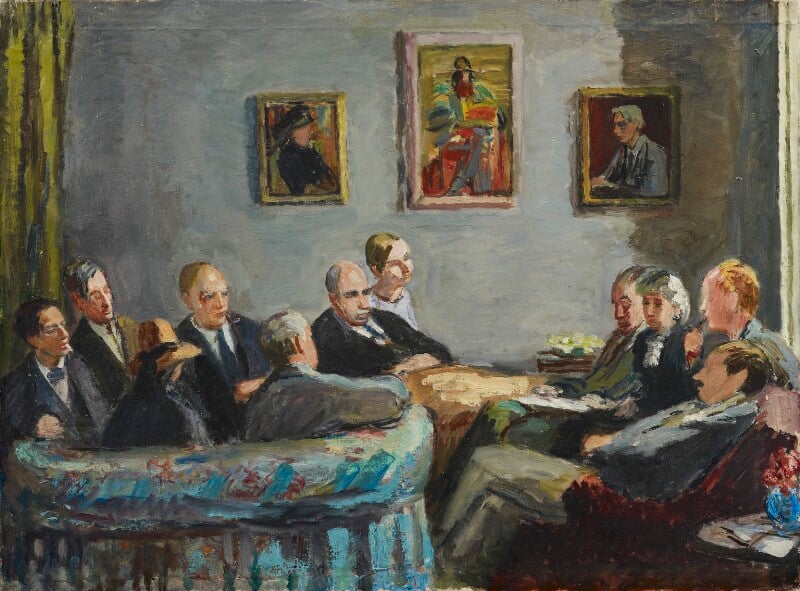
images: Samuel Barnett, Johnny Flynn, and Mark Rylance in Twelfth Night (2012) by Geraint Lewis, via The Independent; Vanessa Bell, “The Memoir Club”, via National Gallery; Duncan Grant, “Portrait of Keynes”, via Charleston; title page of Cynthia, With certaine sonnets, and the legend of Cassandra by Richard Barnfield, via Folger Shakespeare Library; Mark Rylance as Cleopatra (1999) by John Tramper, via Shakespeare’s Globe; Globe Theatre by Wenceslas Hollar, via Wikimedia.
Discover more from Matthew Cheney
Subscribe to get the latest posts sent to your email.

