
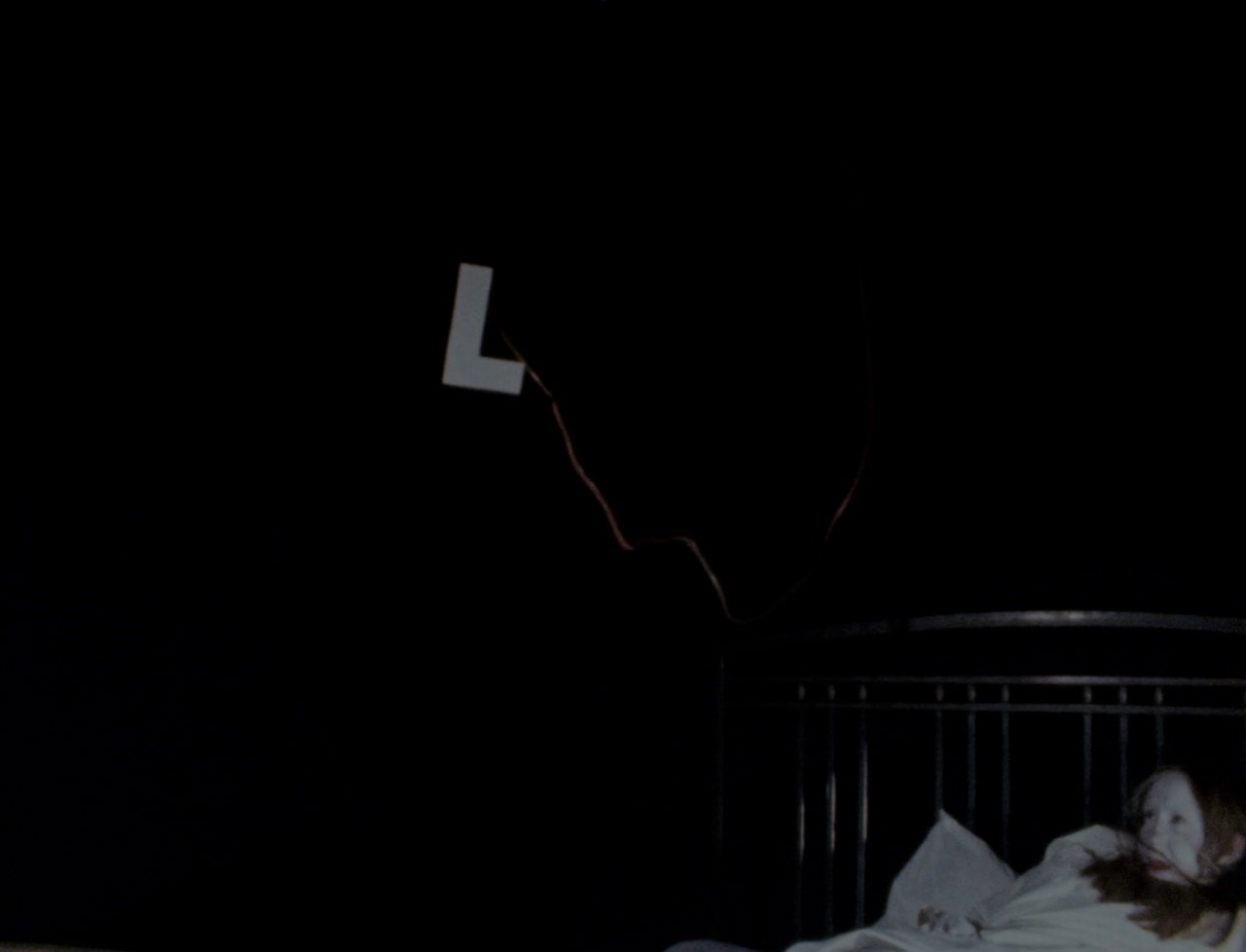
“Please remember — you are dealing with the human form.”
Those are the first lines of dialogue spoken in a David Lynch film, his 1968 short “The Alphabet”.
*
While working on Blue Velvet, David Lynch tried desperately to get the rights to This Mortal Coil’s then-recent version of Tim Buckley’s “Song to the Siren”. Lynch had fallen in love with Elizabeth Fraser’s ethereal vocals and the slow, dreamy approach the band took to the material. But the rights owners asked for far more money than the film could afford. Finally, having just introduced Lynch to composer Angelo Badalamenti, producer Fred Caruso suggested that Lynch send Badalamenti some lyrics and have him write a new song with a similar feel. Skeptical and reluctant, Lynch did so. The result was “Mysteries of Love”, the first collaboration between Lynch, Badalamenti, and singer Julee Cruise, who together would create much of the music most closely associated with Lynch’s work.
The ghostly dream-pop sound of This Mortal Coil is an obvious fit with Lynch’s aesthetic, but “Song to the Siren” fit better (lyrically, at least) when Lynch was able to use it a decade later in Lost Highway. There, played over a sex scene, “Song to the Siren” serves as a warning, one poor Pete (Balthazar Getty) can’t hear, but we can. It’s a sad, even suicidal, story of the singer pleading to be loved by someone toying with them, a song of open love that is both encouraged and refused. It would have fit some of the sadomasochistic elements of Blue Velvet, since it’s a tale of one person suffering from yearning for someone who plays with that suffering, and Frank Booth (Dennis Hopper) certainly plays with all the pain he inflicts on Dorothy (Isabella Rossellini). She herself finds some sort of refuge in that pain, though I’m not sure whose rocks she’s broken on. For all its disturbing sadomasochism and abusive relationships, though, Blue Velvet overall is about the passionate love story of Jeffrey (Kyle MacLachlan) and Sandy (Laura Dern), and it has an ostensibly happy ending: The two kids find stereotypical small town bourgeois happiness together. Even Dorothy seems to recover from the abuse she suffered and is shown reunited with her son. The film’s style at the end suggests all the trauma has been patched over and repressed rather than worked through, but still, everybody seems pretty happy.
Lynch’s work is most emotionally powerful as tales of love — sometimes, love triumphing despite the horrors of the world (Wild at Heart is the most full-throated fairy-tale expression of this), but from beginning to end in Lynch’s career there are also deeply moving tales of love that fails (Eraserhead, Mulholland Drive), of yearning unfulfilled, desires destroyed. Lost Highway is not one of these stories, either happy or sad. Instead, its world is one in which anything like real love is absent. Maybe Fred (Bill Paxton) and Renee (Patricia Arquette) loved one another once with passion, but it seems gone by the start of the film. Pete feels a lot of lust and maybe something like puppy-dog love for Alice (Patricia Arquette), but she’s a siren whose shore will break him.
Lost Highway is fascinating because of its world’s singular lack of love. Aesthetically, it’s very much a David Lynch movie: off-kilter acting, scenes that are just a mite long for comfort, complex use of sound and music, images of fire and roads… But it is also a film of very specific absences. For instance, Lynch and the designers worked hard to keep the color blue out of the film, whereas it’s a prominent color in all of his other work (that isn’t in black & white), clearly a favorite. It’s the absence of love, though, that makes Lost Highway a particularly difficult, cold, even cerebral film. It has some stunningly eerie scenes, an iconic and creepy performance by Robert Blake, a hilarious scene of how to deal with tailgating drivers, and a phenomenal soundtrack album … but while it’s a film I generally enjoy watching, it is not one I feel much connection to, not one I have found a way to care about, given how blank its characters are. I value it, then, as a clarification of what most appeals to me in so much of Lynch’s other work.
*
J.G. Ballard described Blue Velvet as “like The Wizard of Oz re-shot with a script by Franz Kafka and decor by Francis Bacon.” In one sentence, Ballard identified three of Lynch’s biggest admitted influences.
Interviewer Chris Rodley, citing that review, asked Lynch about Kafka. Lynch responded: “The one artist that I feel could be my brother — and I almost don’t like saying it because the reaction is always, ‘Yeah, you and everybody else’ — is Franz Kafka. I really dig him a lot. Some of his things are the most thrilling combos of words I have ever read. If Kafka wrote a crime picture, I’d be there. I’d like to direct that for sure.”
One of Lynch’s unrealized projects was a film of Kafka’s “The Metamorphosis”. He told Rodley he had completed a script of it. “It needs a little bit of work, but I like it a lot. Unfortunately, it’s expensive and it won’t make any money.”
Rewatching Eraserhead recently, I realized that there are scenes in it and in Orson Welles’s film of Kafka’s The Trial that I swap in my mind, mostly images of the landscapes. Both Lost Highway and Inland Empire have scenes that evoke The Trial and “The Metamorphosis”. One of my favorite Kafka stories, “First Sorrow”, contains many of the most powerful emotions I find in Lynch’s work. Lynch has filmed in Poland in places close to Kafka’s real and imagined landscape, and he used the Prague Film Symphony Orchestra (later renamed City of Prague Philharmonic Orchestra) for the scores of Blue Velvet, Lost Highway, and Mulholland Drive.
*
Some years ago, I said to a friend that I hoped my fiction might feel a bit like queer David Lynch.
“David Lynch is already pretty damn queer!” he replied.
True — and in lots of ways. Lynch himself seems to have been an unambiguously heterosexual person, and his work is (in)famously full of naked women (his interest in male bodies as male bodies is limited at best). He did make one overtly queer film with Mulholland Drive, a lesbian love story.
Lynch’s films’ sympathies are always with the marginalized, the outsiders, the freaks. He is obsessed with ideas of transformation and transcendence. These sympathies and obsessions are what have endeared him to so many of us who find our own desires different from Lynch’s. Queerness to me is less about the type of object of one’s sexual desire as it is one’s sympathies and obsessions. Queer is not about bland normality. There are gay people (Pete Buttigieg and his ilk) I do not think of as queer, and there are more-or-less heterosexual people I think of as being so (filmmaker Guy Maddin, who has lots of overlaps with Lynch, would be an example).
*
I do not know how I convinced my parents to let me watch Blue Velvet when I was about 14 years old. Now, I shiver thinking of a child of that age watching that film, but for me it was one of the most important artistic experiences of my life, an experience that influenced much of my later sense of aesthetics and being. My father, a Dennis Hopper fan, had seen the film when it first came out on videotape in 1987 and spoke of it as a highwater mark of horror, which I’m sure is what attracted me to it. I expect my mother protested. (She was so against my seeing Psycho that I never did, in fact, watch it until college, despite at that point having watched far, far more disturbing films.) I know I saw Blue Velvet before April 1990, when Twin Peaks premiered, because I have a specific memory of hearing about the upcoming show and wondering how on earth the guy who made Blue Velvet would be able to make something that could be on network TV, and then of rushing home from whatever I was doing to be able to watch the first episode.
In his excellent book on Lynch, Dennis Lim describes an experience that fits well with my memory of seeing Blue Velvet for the first time:
…Blue Velvet … was released on VHS in 1987, as home video was entering a period of rapid growth thanks to the plummeting prices of video players. (By then more than 50 percent of U.S. households had a VCR, up from 6 percent five years earlier.) It is not insignificant that many who came of age in the 1980s and 1990s — a sizable swath of Generation X — discovered Lynch in the intimate sanctums of their own living rooms or bedrooms, via a videotape of Blue Velvet or an episode of Twin Peaks. Even on a pan-and-scanned VHS cassette that cropped out more than a third of the widescreen image to fit a boxy television screen, Blue Velvet had an unnerving power. The intensity may in fact have been heightened for these unsuspecting, possibly furtive spectators, drawn to the movie’s aura of taboo, not quite knowing what they were in for.
Lim also identifies a quality in Blue Velvet that likely protected me from being scarred by it and allowed me to access its sublimities: “Blue Velvet does more than take its cue from its hero’s stunned naïveté; it instills in the audience the vertiginous sensations of discovering and moving through the adult world as a precocious and suggestible kid might.” It’s a coming-of-age story, a tale of innocence encountering the corruptions of the world. All of Lynch’s work around that time was: Blue Velvet, Twin Peaks, Twin Peaks: Fire Walk with Me, Wild at Heart. Stories of pure young people facing the challenges of a world ruined by impure adults, sometimes triumphing over those challenges, sometimes — most vividly in the figure of Laura Palmer — being destroyed by them. Perverse as it may sound, I think of these as Lynch’s young adult stories. (When I was a young adult, they meant the world to me.)
My parents and I watched Twin Peaks throughout the first season, though my mother soon found something else to do on those nights, as it wasn’t really her thing, and after four or five weeks, my father got bored with it. I was obsessed, though, beginning to end. After he had given up, my father kept asking me if this week they’d revealed who killed “that girl”. Not this week, I would have to tell him. I remember him shaking his head, his face offering an expression familiar to me, an expression of confusion and contempt. I realized then that whatever it was he liked in Blue Velvet was not what I liked, because for me Twin Peaks was an astonishing and addictive extension of everything that captivated me in Lynch’s film.
My father would actually return to Twin Peaks in the second season (I remember we watched episode 14 together, since that was the one that revealed Laura’s killer). He liked some of the goofier Season 2 episodes that felt like a slog to me.
*
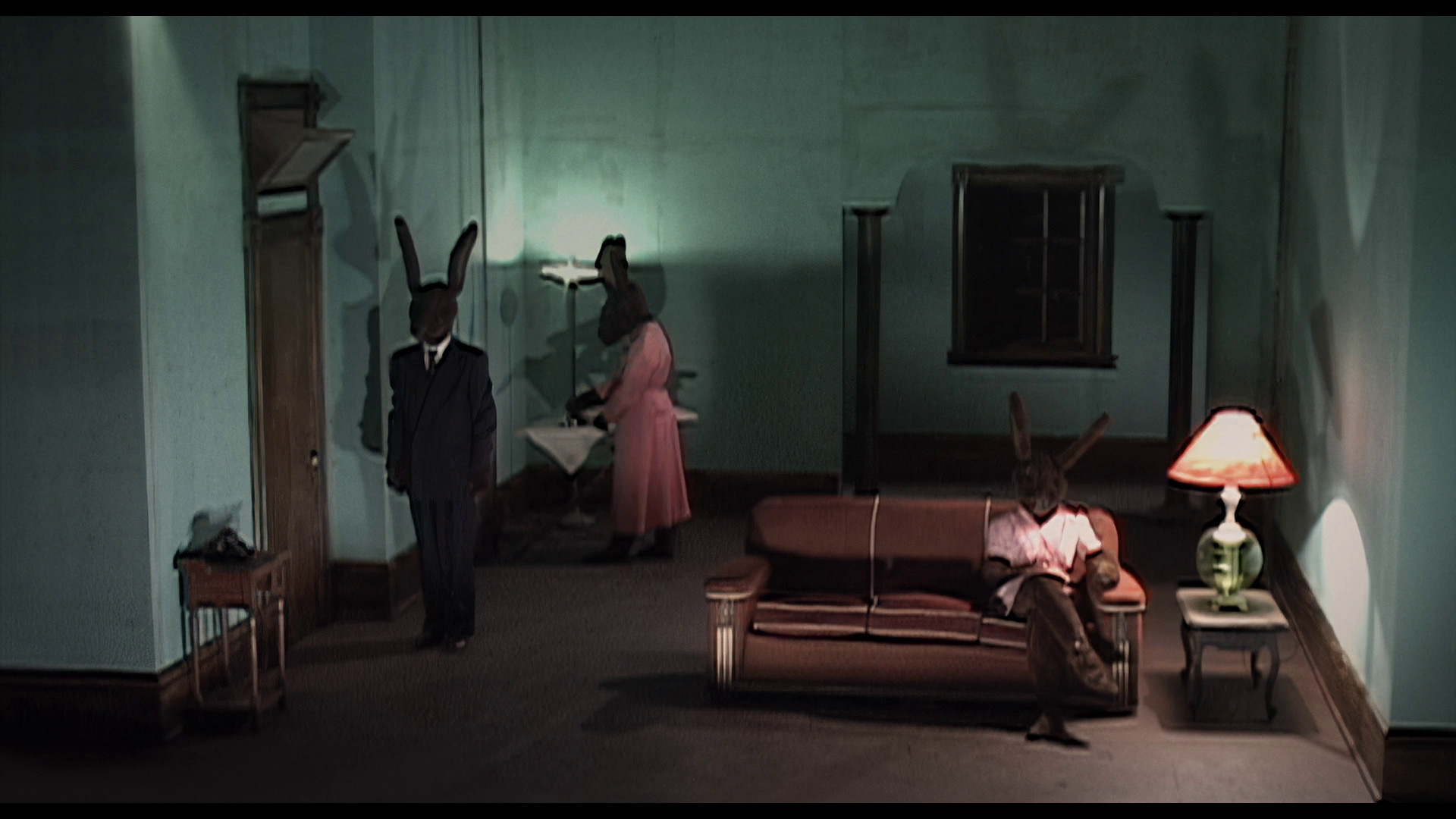
Reflecting on Inland Empire, editor Noriko Miyakawa said, “The parts of the film you don’t understand point to places in yourself that need examining.”
*
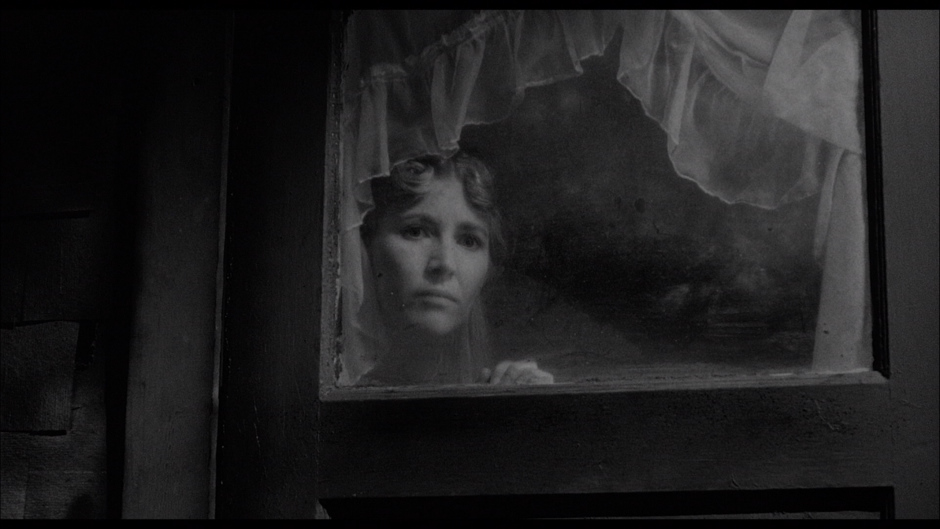
I have no idea when I first saw The Elephant Man, but it must have been in high school, because for a little while I was obsessed with the story of Joseph Merrick, reading every book about him that I could get from libraries, and I tried writing my own theatrical adaptation of the story. Even though I’m sure I saw The Elephant Man around the same time I saw Blue Velvet and was watching Twin Peaks, it did not register as a David Lynch film for me until much later.
(The Elephant Man is very much a David Lynch movie, even though it’s perhaps his most easily accessible in narrative and emotions. Watch it alongside Eraserhead and you will get a masterclass in the adaptation of avant-garde sensibilities to conventional form without loss of integrity.)
After hearing of Lynch’s death, The Elephant Man is what I immediately chose to watch. It is perhaps the most emotionally devastating film I know. The scene I wanted to watch in the moments of Lynch’s death is one rarely discussed and very brief, but central to my understanding of his work: After John Merrick has been kidnapped by his old “owner” Bytes (Freddie Jones) and taken to Europe, where Bytes beats him terribly and locks him in a cage with screeching monkeys, the other freaks in the traveling show band together to help Merrick escape. This moment of solidarity is powerful, but there is something in the moment of the group walking together through the night that I find overwhelming and comforting. Nobody else will save them as well as they save themselves together. For all of the good intentions of a few of the normal people, ordinary folks will never really understand John in the way other outsiders do.
That scene was a balm, but I had forgotten one other that destroys me every time I see it, a scene that in many ways sums up the element of yearning that runs through Lynch’s work: the scene of John having tea with Treves’s wife. Hannah Gordon’s performance as Mrs. Treves is astonishing in its control — she and Lynch understood that the scene needed immense restraint, and it is that restraint that makes it so devastating when Mrs. Treves begins to recognize the depth of suffering and loneliness John has experienced, and it dawns on her that the only love he has encountered has been that of his mother, whose picture he carries with him.
“I must have been a great disappointment to her,” John says.
“No, Mr. Merrick, no,” Mrs. Treves replies. “No son as loving as you could ever be a disappointment.”
“If only I could find her, so she could see me with such lovely friends here now. Perhaps she could love me as I am. I’ve tried so hard to be good.”
*
Lynch’s work is famously, even obviously, concerned with dualities. Good/evil, innocence/experience, light/dark, blondes/brunettes, etc. Twins and doppelgangers fill his stories, many of which are structured around doublings (Lost Highway and Mulholland Drive most clearly). His vision of the universe can often seem Manichaean.
Philosophically, I resist dualism (I’m too fond of Spinoza and Buddhism for it), but I have never felt a struggle with Lynch’s polarities because they always seem to be opening — or at least yearning for — a third way, a unification. None of the dualities are adequate on their own, and Lynch’s ambiguities and narrative openness suggest to me that the dualities are not sufficient to describe the universe, that they are clumsy human approximations, weak but perhaps comforting templates pressed against the seemingly chaotic or undifferentiated stuff of existence. In Lynch’s work, mystery is always primary, always triumphant. Like any good engineer, he includes schematics, but they are never comprehensive, there are always spare parts and weird widgets, contradictions, holes, filler, and out-of-left-field puzzlements.
Lynch’s dualism is at least as much a fascination with contrast as with philosophy. In many of his interviews and writings, he expresses his obsession with texture, and contrast is related to that. Though his protagonists are (mostly) conventionally beautiful white people of the type Hollywood specializes in, all his stories are filled with contrasting body types: the many small people, but also very large people, both wide and tall (most memorably, Carel Struycken in Twin Peaks). One of the qualities that makes Eraserhead so visually striking is its high contrast black and white — the black is very black, the white very white, and there are few if any greys. Similarly, Lynch’s soundscapes, which mix quiet noises (sometimes only vaguely discernable with the volume turned up high) and sudden loud eruptions. He’s drawn to soft, dreamy music generally but also quite happy to toss in the hardest of rock and wildest of jazz. Everything is texture and contrast in Lynch’s sights and sounds.
*
My father died a few days before Christmas in 2007. My mother and stepmother had come down to New Jersey to spend the holiday with me, as I was working at a yeshiva high school and only got one day off for Christmas, so couldn’t return home. Less than an hour after they arrived, I got the call from the New Hampshire state police that would change my life forever.
For something happy to do that evening, we opened Christmas presents. Mine was a recently-released DVD box set of Twin Peaks. My memory of the weeks following my father’s death is quite spotty, but throughout those weeks, I watched the show for the first time since it had aired. Being in that world again was a great comfort, an escape into memory but also, with the best episodes especially, into one of the safely disconcerting worlds David Lynch was the master of creating. I was shellshocked, confused, scared — trapped with ever-changing emotions I didn’t know what to do with, I found Twin Peaks to be the perfect companion and balm, a vision of a world of pain and loss (and a father deeply evil but also somehow pitiable) alongside deep caring and love and fun and beauty.
*
For most of the first half of his career, Lynch drew deep inspiration from memories of living in Philadelphia while attending the Pennsylvania Academy of Fine Arts for a few years in the 1960s. In Room to Dream, Lynch’s co-writer Kristine McKenna described it as “a broken city during the 1960s.” Lynch and his best friend, Jack Fisk (who would later go on to be production designer for many of his, and other directors’, films) moved into a house that McKenna reports Fisk describing as “across the street from the morgue in a scary industrial part of Philadelphia”.
One of the apartments that Fisk and Lynch lived at was on 13th Street. Dennis Lim writes: “Lynch himself has pointed out that his Thirteenth Street apartment was not far from where Edgar Allan Poe lived during his most productive years, cranking out macabre fictions like ‘The Murders of the Rue Morgue’ during an earlier crime wave.”
David Lynch’s birthday is one day after Edgar Allan Poe’s.
*
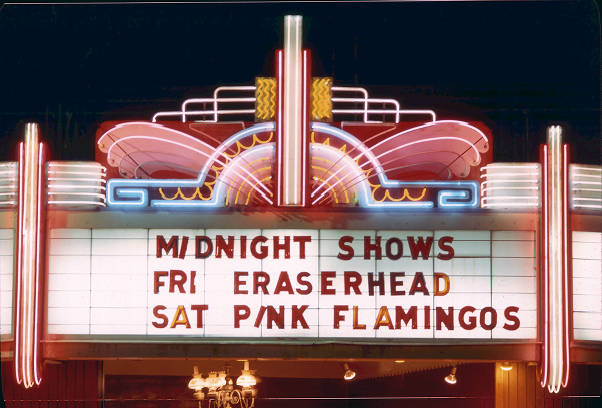
Eraserhead often appeared on midnight movie showings alongside John Waters’s Pink Flamingos. The two visionary writer-directors knew and admired each other, though their work is vastly different. Waters’s movies are full of camp, irony, and satire. They’re punk. While certainly there is irony in Lynch’s work, I’ve never been convinced that it’s a useful lens by which to find meaning in it. Even in his humor, Lynch is deeply earnest. Waters has his own earnestness, which is what I think has made him so endearing for decades now, but the earnestness sneaks out around the tongue buried deep in his cheek.
Lynch has fun — by all accounts I’ve seen, being on set with him was a real joy — but he doesn’t make fun of his subjects, doesn’t distance himself from them.
When I think of the type of world I might like to live in, I am often puzzled, but I know it would be a world where Eraserhead and Pink Flamingos were still playing together at midnight every week.
*
From about the age of 18 to 20, I suffered a rare disorder, persistent solid facial edema, which caused my face to swell. I woke many mornings unable to open my eyes until I had sat up for a while. Combined with fairly severe acne, the condition noticeably disfigured me during my last days of high school and first two years of college. (Ultimately, a dermatologist at NYU Medical Center was willing to put me on a pretty rough course of drugs that gave me my face back, at the cost of side effects that likely took some years off my life and caused mental health struggles for the next decade. The cost was worth it.) You don’t know how cruel, or just weird, people can be about physical differences unless you’ve lived with one — I vividly remember a stranger in an elevator flat-out saying to me, “What happened to you? Get stung by a bunch of bees?” I looked nobody in the eyes, I fiercely avoided being photographed, I internalized a sense of being repulsive that had already been stoked by queer identity.
Now and then I thought I was becoming the radiator lady in Eraserhead. Kafka’s “The Metamorphosis” became a text I returned to again and again. And I thought endlessly of The Elephant Man. It was many years until I could watch the film again, and once I did, I had a felt understanding of it that helped me recognize that I had always sympathized with the most vulnerable and abused of David Lynch’s characters. I think he did, too.
*
In 1987, David Lynch was the presenter for a BBC program about early surrealist films. In that program, Lynch says: “If surrealism is the subconscious speaking, then I think I identify with it, and I could say that I was somewhat surrealistic. I think that films should have a surface story but underneath it there should be things happening that are abstract. There are things that resonate in areas that words can’t help you find out about, and these are subconscious areas.”
*
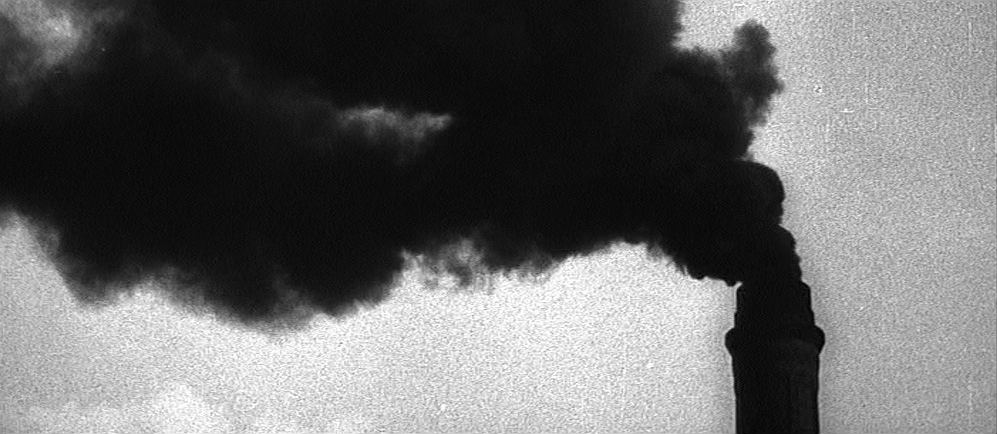
I was in college at New York University when Lost Highway came out. I saw it at, I think, the Angelika. I remember being a bit disappointed in it. It was interesting to think about, but I had a hard time connecting to it. I bought the soundtrack on tape at Tower Records and often listened to it on my walk to work at a high school on the Lower East Side. For a long time, I knew the soundtrack better than the movie.
That year, I lived in an apartment on Sixth Street with some friends, one of whom worked at a sleep clinic. He was struggling because though the clinic job paid well, it meant he had to stay up all night, which made it hard to get to classes. He felt constantly in a fog. He was in a relationship then with a blonde woman; it was a difficult relationship, one that a mutual friend of ours described to me as codependent, which I remember still because it was a word I’d never encountered before and had to look up. It fit. Time and again, I would hear her screaming at him in his room, then weeping while he quietly consoled her. (He was one of the gentlest people I have ever known.)
My friend who worked at the sleep clinic loved Lost Highway. He went to see it multiple times. He copied my tape of the soundtrack so he could have it himself for his walks to work. We talked about the film and I tried to get him to help me appreciate it more fully, but he could not, because his experience of it was too deeply personal. He kept going back to see it. “Every time I leave the theatre,” he said, “I am in tears.”
*
David Lynch embraced coincidences, synchronicities, and accidents. He always encouraged his actors and crew to take advantage of them, and his philosophy of creativity was based on holding close to a basic idea while allowing serendipity lots of room to play. The manifold mysteries of the universe are far too big to be solved, but, in his view, if we held on to some sense of purpose we could ride the surprises toward something like satisfaction and meaning. The repeated images, sounds, and motifs in his work are like hooks on which he hung all that he could not predict or control.
His entire career was the product of moments of great luck and coincidence. If the AFI had not started a grants program and the Center for Advanced Film Studies, Lynch would have had a much harder road to becoming a filmmaker, and he would not have had the luck of being able to use the old stables on the AFI’s estate for years to make Eraserhead. If Eraserhead had not found its way to Mel Brooks, who was wild and smart enough to recognize a unique artist who might also be able to make a commercial film, Lynch would not have directed The Elephant Man, which garnered the most unified and strongest acclaim of his career. Without The Elephant Man, there is no Dune, and though Lynch was deeply unhappy with Dune, the contract for it is what allowed him to make Blue Velvet. If any of those moments had gone differently — if Lynch had simply missed a phone call or two early on — he would still have been some sort of singular artist, but he almost certainly wouldn’t have had access to the kinds of funding and resources he did, and so he would have been much more marginal.
*
Has any major filmmaker had as narrow an aesthetic as David Lynch? Limited not in the sense of limiting — it is quite the opposite — but of constrained, like formal poetry. The limits were key to his creative strength. Most of his work can be seen as variations on themes going back to his first short films of the 1960s. Elements of “The Grandmother” carry through for the rest of his career, not just the concern with the weirdness and terror of family life, or the droning sound, but also, for instance, the white make-up all the characters wear, which will carry through to Ben in Blue Velvet and the Mystery Man in Lost Highway. Or think of Pierre Tremond and his grandmother in Twin Peaks.
As complex and multilayered as the sound mixes of Lynch’s films from Eraserhead onward are, they are also quite similar. Wind, industrial drones and chugs, electric buzzes, roaring fires. Figures and images return again and again: matches lighting, skin festering or rotting or bruised, detectives and investigators, logs, dance clubs, yellow lines on highways, billowing curtains, insects (Lynch’s father studied entomology at Duke University), etc. And of course all the detritus of the 1950s American myth, its fashions and props and tall tales and nightmares.
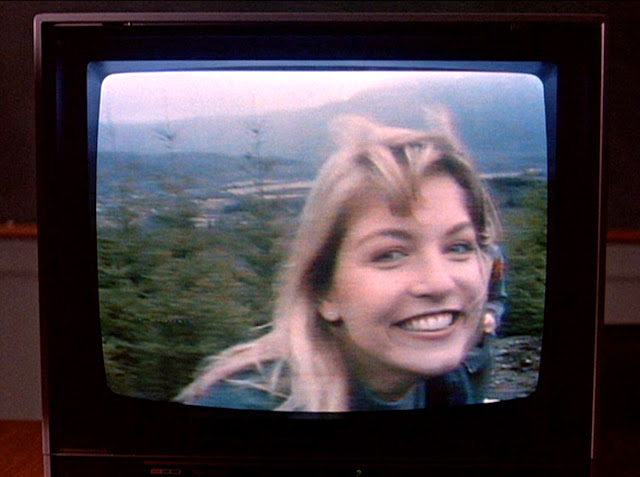
These consistent, recurring images, sounds, and figures are the building blocks of Lynch’s cinematic imagination. He was an avowedly intuitive creator, seeking out whatever his subconscious wanted to bring forth. The characters in his films feel like archetypes more than psychologically rounded portraits, and as any Jungian would tell you, archetypes are where it all begins. Even when Lynch and his actors do manage to create psychological complexity, it’s from archetypal foundations. Think of Laura Palmer, who begins as the very familiar figure of a beautiful dead blonde girl, someone we’ve seen in countless films and stories. Once Lynch found form for that archetype in actor Sheryl Lee, he continued to imagine and reimagine the person within the form, ultimately creating his most devastatingly complex character.
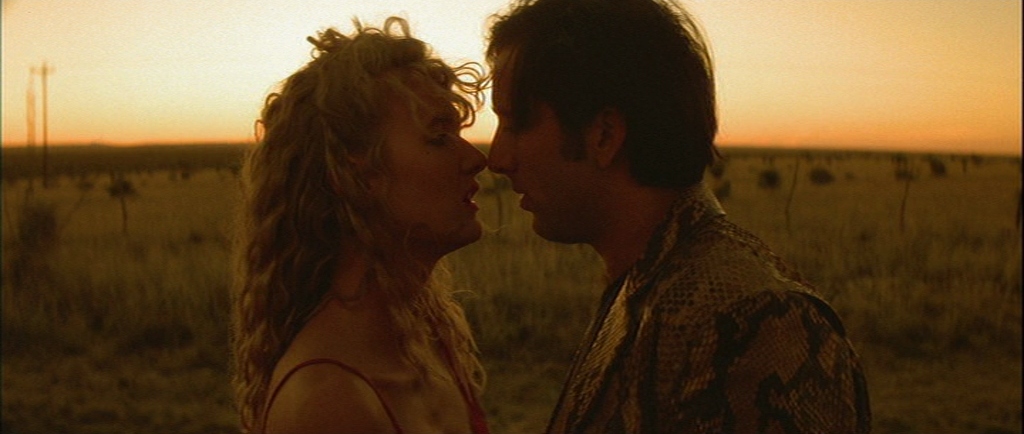
Lynch’s archetypes always get complicated, either through digging into the details and complications within them, or, most commonly, through contrast with the other archetypes around them. Wild at Heart pushes this to the greatest extreme, with Sailor and Lula as prototypical good kids pushed into bad situations, their basic innocence in contrast to the grotesque, gothic evils surrounding them. Nicholas Cage and Laura Dern make Sailor and Lula so endearing by embracing Lynch’s idea of their simple, prelapsarian innocence. The sex scenes bring this out most fully: Sailor and Lula are endlessly horny (hot for each other, as they might say), their sex full of joy and pleasure. This is contrasted to the manipulative lasciviousness of Lula’s mother and the truly horrifying lechery of Bobby Peru. The sweet beauty of Sailor and Lula’s loving lust is rendered vivid against the negative canvas of the world they inhabit.
*
When I was in high school, I got to know the writer Calder Willingham a little bit. This was shortly before the film of his novel Rambling Rose was released, a film he had written the script for. It was shortly after Wild at Heart came out. Both films starred Laura Dern and her mother, Diane Ladd, playing her character’s mother. I saw Wild at Heart soon after its release and I loved it. My adolescent weirdness and angst was drawn to the melodrama, grotesquerie, uninhibitedness of Lynch’s film.
Getting to talk with Calder Willingham shortly before Rambling Rose came out and then afterward, I was especially excited to feel one step away from people who had starred in a David Lynch movie. I don’t think I told Mr. Willingham this. He would not have approved — he told me he detested David Lynch’s films. (He detested most films. The only directors I remember him saying good things about were David Lean and Bruce Beresford.)
Rambling Rose deserves to be more remembered than it is now. It made Laura Dern and Diane Ladd the first mother-daughter pair to be nominated for Academy Awards for the same film in the same year, though neither won. It was Ladd’s second consecutive nomination as Best Supporting Actress, as the Academy gave one of its rare nominations for a Lynch film to her in 1990 for Wild at Heart. Like almost everyone ever nominated for an Oscar for work in a Lynch movie, Ladd did not win.
*
The violence and depravity in Lynch’s work has been controversial since Blue Velvet, with Roger Ebert famously denouncing it and remaining hostile to Lynch’s subsequent work. Lynch’s imagination was perpetually drawn to images of white women being abused. (The whiteness is important — Lynch’s imagination is that of a white man influenced by a culture of whiteness. The fears he experienced in Philadelphia, which inspired much of his later work, were inevitably racially inflected, given what was happening in the city at that time. His aesthetic does not seem to me often to descend to racism, but it is undeniably white-centered. Less so as it progresses — he seemed to enjoy the diversity of people he found in Los Angeles.)
In many other artists, this obsession with women’s abuse could lead to — has led to — shallow, exploitative depictions. Lynch’s work always had this potential, since he was so deeply inspired by archetypes of purity and goodness being attacked, but some part of him seems to have recognized this and worked to dig deeper, to go as fully into his obsessions as he could and pull out both sympathy and meaning. This makes his depictions of abuse harrowing, not trivializing.
Critic Willow Catelyn Maclay is one of the best writers on Lynch, and of Laura Palmer and Fire Walk with Me, she wrote:
…as cryptic as Lynch can be in terms of narrative, mysteries, riddles, and clue-making, he is very obvious about emotional intent in any given scene. He never hides how he wants his audience to feel, and he never intellectualizes something as blunt as an emotional reaction. Fire Walk With Me proved too difficult at the time for a multitude of factors, and all of them only barely scraped the surface. Making a movie that deals directly with incest in the family home is an uncomfortable proposition, and because Lynch is so adept at pulling from the larger-than-life emotions associated with melodrama, watching Fire Walk With Me can almost be too much to bear. But in making this film, he, Sheryl Lee, and Jennifer Lynch (who wrote The Secret Diary of Laura Palmer in 1990, which gave Laura her voice) created a character suspended in time, and who is so evocative, complex, and understood that it stands to reason Fire Walk With Me is one of the only useful films ever made about abuse and trauma in the family home. It is a grand spectacle of empathy and brutal violence, and Lynch’s most harrowing picture, but it is also his most hopeful.
*
“I’ve tried so hard to be good.”
*
For the end of Blue Velvet, Lynch needed a robin. (Earlier in the film, Sandy tells Jeffrey one of her dreams: “In the dream, there was our world, and the world was dark because there weren’t any robins and the robins represented love.”) This proved difficult for reasons of animal regulations and robin behavior — director of photography Fred Elmes told Kristina McKenna that the production found someone who supposedly had a trained robin, but it “was a molting robin in a cage that looked so sad; plus, there’s no such thing as a trained robin.” But then they heard of a robin that had been killed by a schoolbus, and which was being stuffed for the school’s biology department. They contacted the taxidermist and borrowed the robin, which Lynch then set about turning into a puppet. Elmes said, “I think you got the puppetry down as good as it can get, but it still looks kind of mechanical,” to which Elmes says Lynch responded, excitedly, “Yeah, yeah, that’s it!” The uncanny quality was exactly what Lynch wanted: a dead bird as a puppet, chewing on an insect, to represent love at the end of the film.
Dennis Lim links the weird, forced happiness at the end of Blue Velvet to Douglas Sirk’s endings in films like All That Heaven Allows, endings so conspicuously artificial that we can’t help but ask ourselves whether the happiness is real or forced. Like much of Lynch’s best work, Blue Velvet is both at once. The ending is truly cathartic in contrast to all the horrors that led up to it, but it is also artificial and ridiculous. How do you not laugh when you look at that robin? Maybe you even suspect it’s a dead, stuffed thing being manipulated with wires … but it is also, within the context of the film, a touching representation of love.
There is a brief but clear callback to Blue Velvet in Lost Highway. Pete sprawls on a lawnchair in the yard of his house like Jeffrey at the end of Blue Velvet. He hears a bark and looks over the neighbor’s fence to see a little dog run away from a garden hose lying quiet on the grass. The dog is very much like the dog in Blue Velvet that attacks the fierce stream of water coming from the garden hose near Jeffrey’s father, who lay injured on the ground. This is a more realistic scene, a scene without stylistic heightening, but also, like so much of Lost Highway, a depiction of the dull and empty drone of life in a world absent of love.
*
I am writing this on David Lynch’s birthday, which is also the inauguration day for a new president, a man returning to the White House with corrupt, fascist legions in tow. One of the new administration’s goals is to torment, terrorize, and torture queer and trans people.
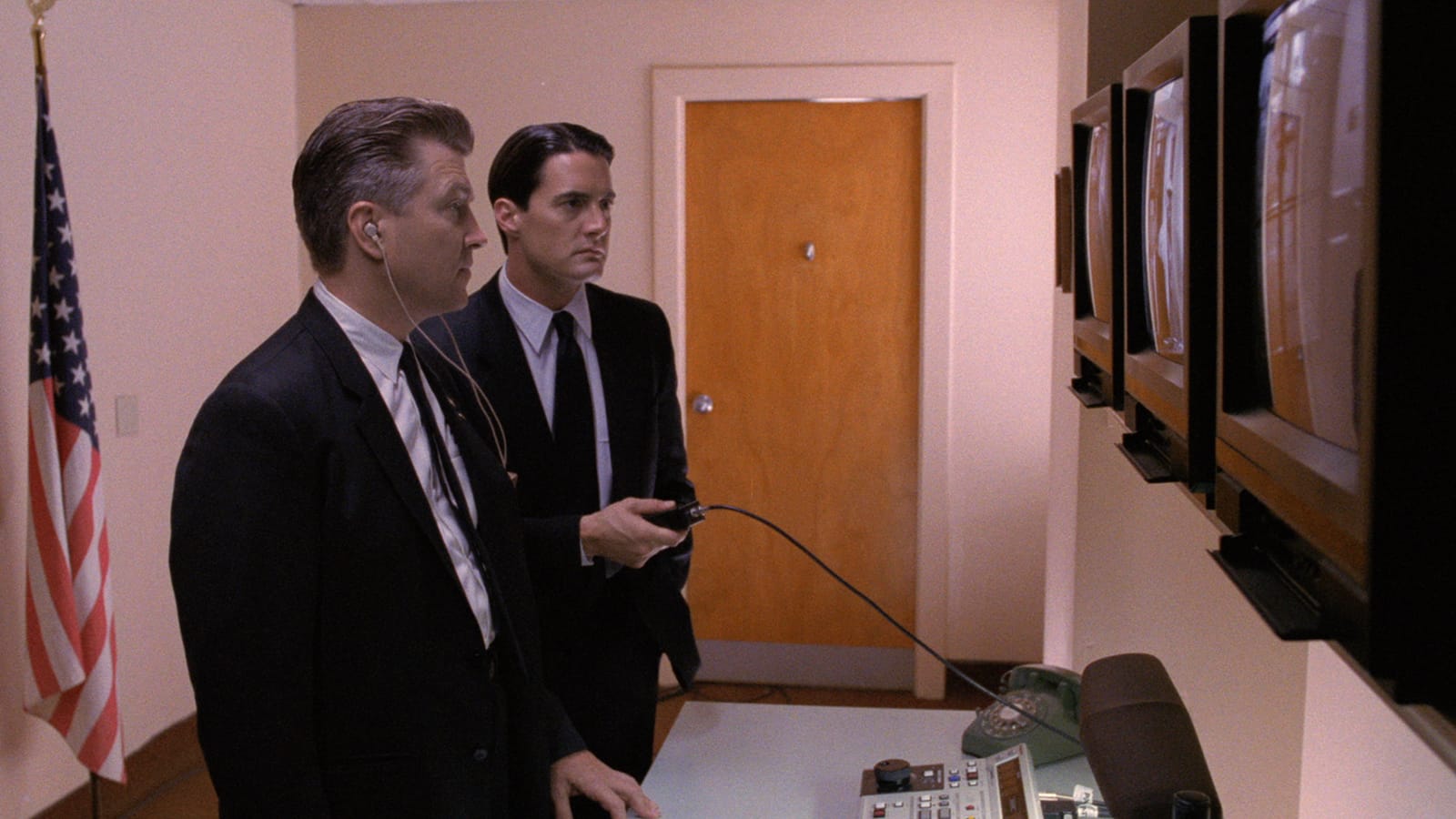
In a brief memorial for Lynch at Them, Lex McMenamin writes about the relationship in Twin Peaks between Lynch’s own character of Gordon Cole and FBI agent/chief of staff Denise Bryson, played in both series by David Duchovny:
Eyes glued to the screen, as they were every Sunday night that summer, not yet aware I would come out as trans, I watched Gordon and Denise discuss their more than 25 years of knowing and supporting each other. Speaking of their history, Cole tells Denise, “When you became Denise, I told all of your colleagues, those clown comics, to fix their hearts or die.” It’s delivered by Cole-slash-Lynch with little fanfare, but it immediately touched my heart. The line has become a trans rallying cry circulating on social media every few months since it aired — an increasingly necessary injunction as state governments seek to legislate us out of existence.
Fix your hearts or die has been repeated in many appreciations of Lynch, often without noting that this was Lynch’s own character standing up for a trans character. It’s a great line. Its context should be remembered.
*
(I have not written about Inland Empire.
How does one say anything about Inland Empire?)
(Dune I have left out because it’s hard to talk about Lynch in Dune.
Certainly, there are plenty of Lynchian elements, and despite everything he succeeded in imposing some of his sense of design on the film, but there’s not much to say about Lynch’s work from it.
For all its many faults, I much prefer it to the recent borefests by Denis Villeneuve.)
(Also absent in my account is The Straight Story.
It’s the one Lynch film I’ve never warmed to in any way.)
*
I have written hardly anything here about Twin Peaks: The Return, Lynch’s great final masterpiece, an 18-hour film that was excruciatingly parceled out week by week on Showtime in 2017, one of the greatest and most tantalizing viewing experiences of my life. I have watched the whole of The Return twice and certain episodes more than that. I have only recently begun to be able to think about it in any coherent way. It seems to me one of the towering artistic achievements of my lifetime.
I don’t know that I could talk about art or life with someone who didn’t feel similarly about Lynch’s achievement in The Return — it feels like such a threshold, a paragon, an exemplar of what I seek in art that someone who could only respond to it with indifference or dislike would likely be someone I just have no shared language with. That is not something I would say about almost any other artwork I cherish, including Lynch’s other films.
Writing about the show at The Mumpsimus soon after the final episode aired, I said something that still seems to me true:
In the end, I can’t tell you what Twin Peaks means to me, because what it means to me is an accumulation not only of my experience of these many hours of TV watching, but my experience of watching the original series when it first aired, of rewatching the series in the weeks after my father’s death, of watching and thinking about David Lynch’s other works for many years, of watching and thinking about so much else — that’s what I bring to the experience. And experience is exactly what it is. You will bring out of it a lot of what you bring into it — which may be nothing. Or it may be, like Roger Ebert with Blue Velvet, anger and disgust. Or it may be something outside of words, a new feeling of life that you could not, alone, have imagined.
*
By following his intuition and dredging up his subconscious imaginings, David Lynch created unique works that sing to us, bringing those of us open to their songs to strange and wondrous shores. Sometimes, we crash there, broken, lovelorn. Sometimes, we sail in on quiet seas and discover sharp crags and burning sand. But always, there is the sound of singing.
*
Each substance of a grief hath twenty shadows,
Which shows like grief itself, but is not so;
For sorrow’s eye, glazed with blinding tears,
Divides one thing entire to many objects;
Like perspectives, which rightly gazed upon
Show nothing but confusion, eyed awry
Distinguish form…
*
Toward the end of The Elephant Man, John Merrick says, “My life is full because I know I am loved.”
—–
images: David Lynch in his studio, 2002, by Chris Weeks/WireImage via Billboard. Marquee of the Nuarts Cinema, 1979, via Claremont College. All other images from the films of David Lynch.
Discover more from Matthew Cheney
Subscribe to get the latest posts sent to your email.
