1.
In the early morning hours of October 19, 1998, the Two Elk Lodge and other structures at the Vail ski resort in Colorado burst into flame, the result of an arson attack soon claimed by members of the Earth Liberation Front (ELF) movement. It was one of many arsons carried out by a small group of people mostly based out of Eugene, Oregon. All but one of the people associated with this ELF cell would eventually be captured by the FBI, mostly in the 2005-2006 Operation Backfire arrests, and prosecuted as domestic terrorists. Most received federal prison sentences of between three and thirteen years. One, William Rodgers, who was known to everyone as Avalon, and who was also facing child pornography charges, killed himself in his jail cell.
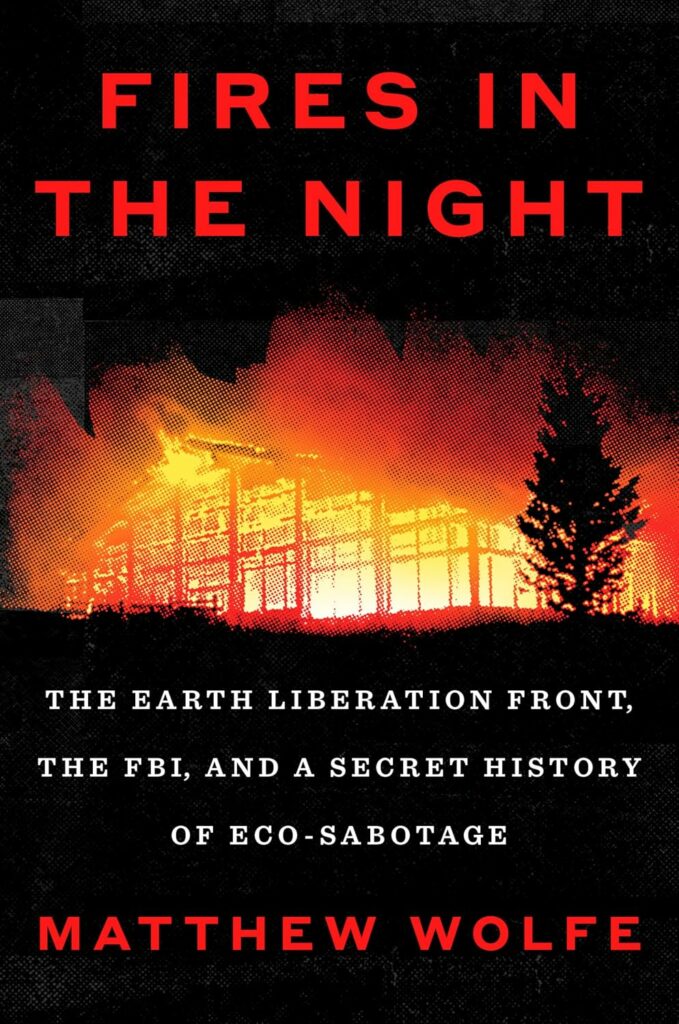
In journalist Matthew Wolfe’s new book, Fires in the Night: The Earth Liberation Front, The FBI, and a Secret History of Eco-Sabotage, Rodgers is the primary culprit for the Vail fires — other members of the group had helped assemble the incendiary devices and haul some of them up the mountain, but a first attempt had been called off, and only Rodgers and a young woman he had been a mentor to, Chelsea Gerlach, were determined to try again. Gerlach remained below as a lookout and getaway driver while Rodgers carried out the arson.
Wolfe draws most of this information from police and government records, as well as interviews with some of the participants, but points out in his notes for the Vail chapter that while “in the case of most actions, witness accounts tended to roughly line up, with Vail, perhaps due to the high altitude or collective lack of sleep, there is an unusually high degree of divergence, including who was present and in what order events occurred. … I have produced the reconstruction from the version of events that makes the most logical sense.” Wolfe’s careful notes and sifting of the evidence are a hallmark of his approach, which is remarkably evenhanded. While he clearly has some sympathy for the idealism, if not the tactics, of the ELF members, he also presents the law enforcement side of the story with care and attention to nuance
Fires in the Night is a book about the lives, thoughts, and actions of two groups of people — a small group of radical environmentalists and a larger group of law enforcement officers and agencies. Wolfe offers some contextualization, as necessary, to make motivations clear, and at the end he offers some hints for how we might think about these actions in the present time, but his goal is not to write a large, comprehensive history. This is the story of certain people doing certain things in a relatively short time, and the consequences for those people of doing those things then. It’s well written and an often gripping narrative, but at the end I ached for more context.
I suppose I couldn’t help but feel that way; I’ve been paying attention to radical environmental actions for most of my life, and my own history nearly overlapped with some of the events in Wolfe’s book.
I remember where I was when I heard about the Vail action. It was my first year in my first full-time job, just a few months out of college, at a private school where skiing was a major sport and, in fact, one of the founders of the Vail resort was an alumnus (and maybe a member of the Board of Trustees; I don’t remember). Our assistant headmaster was a Vail devotee who brought students there every winter, and I remember his absolute horror at and scorn for the action.
My own feelings were more complex.
Mostly, I thought the attack on Vail was likely to accomplish nothing positive for the environmental movement. I was impressed by the spectacle but frightened for how law enforcement would now probably crack down on lots of people who had nothing to do with it. What, ultimately, was the point of such an action? Could it possibly accomplish anything that would be worth people’s lives getting upended?
What I most wondered, though, was if I knew anybody who had been involved. Unlikely, I thought, but not impossible.
Only a few years before, when I was a student at NYU, I had been a regular at the Wetlands nightclub in New York, not paying much attention to the bands playing upstairs but rather attending the radical environmental programming downstairs. Most of the best friends I made in New York were associated with Wetlands. We carried out protests at the headquarters of corporations in and around the city, and we also hosted activists from places where far more consequential actions were happening, encouraging them to come and talk with us about their causes.
Wetlands was the closest thing I’d found to a home in the city, but my interest in radical environmentalism went back to high school, where I’d borrowed Christopher Manes’s book Green Rage and Edward Abbey’s The Monkey Wrench Gang from a young biology teacher who kept them in his classroom. “It’s wild stuff,” he told me, “but if you take it all with some big grains of salt, it’s worth thinking about.” Something in the books connected with me more deeply than almost any other politically-focused writing ever had. A few years before, I’d gotten the book 50 Simple Things You Can Do to Save the Earth and I remember tossing it aside with disgust: “This,” I said to myself, “will not save the Earth.” (I didn’t yet have an understanding of systemic problems vs. individual problems, but I knew there was no way that I could have any meaningful impact on actually improving things by being a better recycler.) I’d been reading Thoreau and had begun thinking about problems like pollution, deforestation, species extinction, and global warming as problems of worldview, of values, of politics. I’d seen the 60 Minutes segment about Earth First!. I knew my allegiances lay with the forests, not the bulldozers.
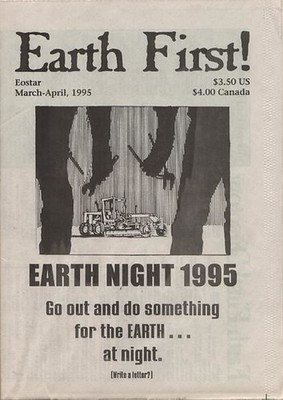
But I more or less stopped thinking about any of this when I went to college. After all, it was Manhattan. What sort of environmentalism was I going to be able to get involved with there? (Instead, I sought out ACT UP, as I’ve written about before.) Then one night I went to Wetlands to see a show … but once there, got distracted by the various literature and merchandise available not far from the stage, much of it from or related to Earth First!, a group that, thanks to 60 Minutes and Green Rage, held mythical status in my mind.
Soon, I became a regular at weekly meetings and various protests. One summer during college I even went to activist training in Vermont, which was where I ultimately decided I was not cut out to be a serious eco-warrior, as I loathed everything about camping and found most of the actions people speculated about carrying out to be more likely to get them sent to prison than to do much of anything to help the planet. I had to face up to the sad fact that at heart I am, alas, a 19th century upper-class white lady lying on a divan, not a grizzled hippie ready to live in a commune or blow up a dam. Still, then as now, my sympathies were with the grizzled hippies.
I did not, it turns out, know anybody involved in the Vail attack or any of the ELF actions. But at least once I may have been in the same room with one of the people arrested as part of Operation Backfire, Daniel McGowan. I learned from the 2011 documentary If a Tree Falls: A Story of the Earth Liberation Front that McGowan entered into radical environmentalism via Wetlands, and that he started going there right around the time I stopped. Watching the film when it first came out, I was shocked to see brief video clips from the club. It all came back to me stronger than it had in many years: the sounds, the textures, the smells (mostly pot and incense), and the people. (My god, I loved those folks, even the nutjobs.) One of the people briefly glimpsed in a clip was, I think, one of my roommates my last year in the city. Another person seen clearly in a photo with McGowan is, I’m pretty sure, a guy we all thought too volatile to be trusted with anything sensitive, though he was fun at a party or a protest.
When the FBI arrested the ELF cell members, they had all moved on with their lives and few were involved with activism anymore. The cell had fallen apart for all the predictable reasons (and a few unpredictable ones) by the end of 2001. Reading about their responses to the moments of their arrest in Wolfe’s book, I probably had a greater sense of sympathy and compassion than many readers would. I had gotten out of radical environmental activism to avoid their fate. I’ve always thought of myself as something of a coward for doing that, but it never felt like much of a choice — I got close enough to see this kind of life was not for me, and I just couldn’t overcome my doubts about the effectiveness and usefulness of such actions.
Finishing Wolfe’s book, I had feelings similar to those I had when, years ago, I saw those grainy video clips of Wetlands in If a Tree Falls, a feeling of great fondness for my naive younger self and the world he stumbled into (and bumbled through) — but also, and primarily, a nagging question about what, if anything, it all added up to.
In their general analysis of what was and is happening to the planet’s biosphere, it seems to me, the radical environmentalists were obviously correct. I am writing this during a summer where deadly heatwaves have hit Europe and North America, heatwaves impossible without anthropogenic global climate change. Tens of thousands of people die every year from heat alone — and climate change produces many other types of extreme weather events that cause illness and death, and which also lead to billions of dollars in property damage each year. Climate change alone would be reason enough to get radical. But I have always been attracted to this way of thinking primarily because of its core commitment to ecocentrism: the belief that the non-human world has intrinsic value of its own, regardless of any apparent usefulness to human life and profit.
The problem is not in the general analysis. The problem is in how to respond to the obvious truth that human actions are making the planet unliveable. To be blasé about the fact of climate change, or the massive destruction of natural habitat, or the extinction of countless species — to say little more than, “Well, maybe I can write a letter to my representative in Congress about this” — has always seemed to me delusional and murderous. Focusing on individual solutions like carefully recycling my trash or not using straws has felt even worse, a type of head-in-the-sand denialism and narcissistic response to the enormity of the problem. Finding other options, though, is difficult. What strategies and tactics are effective against all the money that stands on the side of extraction, exploitation, and extermination? What strategies and tactics have any hope of achieving any good result? What might last?
Environmental activism has always been difficult to organize into any sort of mass movement. “The environment” is just too big and nebulous a thing for most people to rally around in the consistent, pressure-building way necessary for a movement to succeed. Successful environmental campaign have focused on particular locations and events, stopping individual mines from being built, forests from being clearcut, endangered animals from being eradicated. These are not small achievements, but they have clearly never turned the tide. Even without the triumph of Trump, in the U.S., environmental issues have had few sustained victories. The one environmental issue that should unite everyone —global warming, which is an existential threat to us — has not found anything like the passion and commitment appropriate to the threat. Nowadays, there isn’t even much enthusiasm for climate politics among liberals. Politicians and business leaders have resigned themselves to letting the future burn. Though we have all the knowledge and resources to slow, halt, or even reverse global warming — which not only promises more extreme weather but literally threatens all human life over the next 100 years or so — there is no coherent organization or even, apparently, much political will to do anything except complain about the weather. We’ve known about this threat for pretty much my entire lifetime. And yet here we are.
Is it any wonder that some people have wanted to commit criminal acts to try to bring more attention and more solidarity to environmental issues? I don’t know how anybody can honestly look at the state of the world and not feel a sense of desperation. Desperate times inspire desperate measures. What surprises me is not that people have committed acts of ecotage; what surprises me is how relatively few people have done so.
Fires in the Night helps explain, at least in the U.S. context, some of the reasons why ecotage has not been more common here. One of the reasons is that law enforcement is very good at destroying movements when they choose to do so. Aside from a time in the 1980s and 1990s when the FBI was interested in domestic terrorism committed by rightwing groups and succeeded in weakening those groups significantly, the history of American law enforcement is the history of progressive and leftist movements being ferociously suppressed.
We could go back to the Pinkertons or to various Red Scares throughout U.S. history, to the FBI’s attacks on civil rights leaders, to COINTELPRO, etc. — but let’s just consider one person within the current century: Jeff Luers, who in June 2000, when he was in his early 20s, joined with an accomplice to cause three pickup trucks to catch fire at a Chevrolet dealership in Eugene, Oregon in a symbolic protest seeking to bring attention to global warming. Luers was quickly caught by police and after a trial was sentenced to 22 years and 8 months in prison as a domestic terrorist with no chance of parole.
Eventually, on appeal, his sentence was reduced, and he was released after spending ten years in prison. Ten years.
Two of the three trucks he injured were repaired and sold.
4.
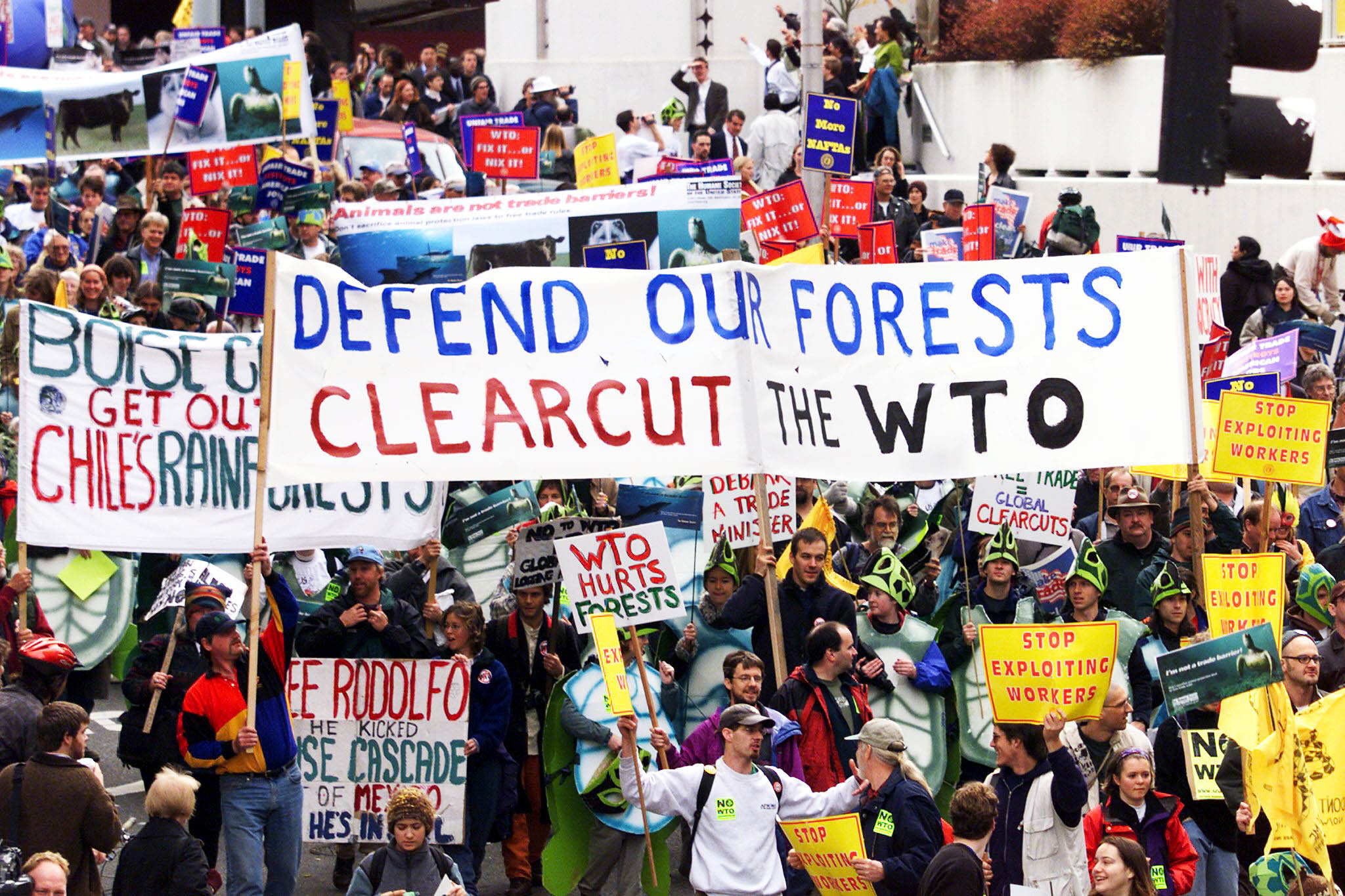
Even now, I think often about the fact that I decided not to go to Seattle for the protests against the World Trade Organization in 1999. I was still connected enough to activist networks then to know about the protests, to have offers of rides out there and floors to sleep on. But I had a job, friends, life. I was settling into a bourgeois identity I had long feared was my fate. It wasn’t a terrible fate.
I followed the news from Seattle obsessively. I felt real regret about my decision to stay away. It seemed to be a revolutionary moment and I had chosen to let them start the revolution without me. In the next year, I participated in some demonstrations in Boston and Washington, D.C. against the WTO and the International Monetary Fund, and it was nice to feel part of a meaningful movement, but I was also skeptical of any of it leading to any real change.
I was also beginning to have some doubts about various positions taken by radical environmentalists, particularly their positions on genetic testing and engineering. I had gotten interested in ecology and conservation biology because they seemed like ways to bring science and politics together. I never had any desire to remove science from politics or to demonize science. Science was the basis of my passion for the environment: though I’ve never had a head for numbers or for designing experiments, I was a science fiction nerd and casual reader of science journals. For better or worse, I’ve always been an intellectual fellow-traveler of the Enlightenment. There were real issues to be dealt with in questions of genetic engineering, but most of them seemed to me to be questions of governance and capitalism. I felt deep cognitive dissonance while marching alongside people screaming against “Frankenfoods”. At one point, listening to somebody rant about such things in a way that seemed mostly informed by movies from the 1970s, I said, “You really don’t have any idea what you’re talking about,” and walked away.
Not long after the Seattle protests, I drifted away from the movement entirely.
But still, I look back with regret that I did not go to Seattle in the fall of 1999.
5.
Seattle was a galvanizing experience for many activists. The Oregon ELF cell had already committed their biggest, most attention-getting action at Vail, but Vail plus Seattle inspired many activists to keep fighting and brought new activists into the fold. A new millennium was coming, leftist activism of all sorts felt revitalized, and a new world might yet be born.
Then came September 11, 2001. Matthew Wolfe notes what a seismic moment the terrorist attacks on New York and Washington, D.C. were for both the radical environmental community and for law enforcement:
After 9/11, many political groups active in the United States set the FBI’s nerves on edge. There were right-wing militias, who, only five years after the Oklahoma City bombing, were still committed to bringing down the despotic federal government. There were antiabortion zealots who, since the 1980s, had carried out numerous assaults against clinics and physicians. And then there was a rude collection of hate groups, advocating for racially pure societies that would, ipso facto, require the deportation or annihilation of millions. All these entities had repeatedly shed blood in the name of their political beliefs and appeared all too eager to do so again. Any could, in theory, be responsible for the next September 11. But it would instead be a set of political actors that had killed or seriously injured no one — radical environmentalists and animal rights activists — whom the FBI classified under the broad heading of “ecoterrorists” — that was placed at the very top of bureau’s list of threats and against which much of its new army of agents would be marshaled.
Wolfe is correct in his description of the effects of 9/11 on activism and policing, but the picture he sketches is incomplete.
A fuller story starts with the 1988 Fort Smith sedition trial, where the government lost one of their biggest opportunities to slow or even halt the spread of rightwing extremism. The acquittal of all fourteen white supremacists, including members of Robert Mathews’s militia group, was a fiasco with repercussions lasting at least a decade. Then came Ruby Ridge and Waco. With increased pressure from the surge of far right Republicans in Congress after the 1994 election, there was significant pressure on the FBI and ATF to stop paying attention to rightwing extremism. With George W. Bush’s election, the Justice Department made such pressure a matter of policy. 9/11 provided a perfect excuse for law enforcement to turn away from rightwing extremism — which had led to deaths of abortion clinic workers and nearly 200 deaths in Oklahoma City — and toward Islamic extremism.
It is really only in the 1980s that environmentalism became primarily a leftwing cause. Indeed, the history of conservation, in particular, is riddled with racists, misogynists, and eugenicists. The right romanticizes tradition (which can be applied to landscapes) and is committed to ideas of biological hierarchy that sometimes get expressed in ecological terms. Some prominent radical environmentalists, including Edward Abbey and Dave Foreman, clung to truly heinous anti-immigrant positions. But once free market ideology and the worship of business values became the be-all and end-all for conservatives, environmentalism of any form had no home on the right. Wolfe does a good, brief job of showing how rightwing activist Ron Arnold in particular shaped conservative ideas about the environment, especially via his “wise use” movement. Wolfe writes of a speech Arnold gave around the time the ELF activists were being prosecuted: “What won a debate, Arnold said, was power — power as measured by money and measured by supporters. But, Arnold cautioned, it wasn’t enough to maximize your own power. Just as importantly, you had to strive to reduce that of your enemies, to crush them into nothing.”
Arnold was right. With the help of corporate money, the Bush administration, and the FBI, he won. The basic principles of his movement didn’t always win in the overall cultural conversation, but his ideology triumphed in legislatures and courts, which matter more because they are the places where prohibitions are created and permissions granted. It is politicians, police officers, lawyers, and judges who determine what is allowed and what is not, what is criminalized and what is valorized. And so, in the early 2000s, while the actually homicidal terrorists of white supremacy got to build up their arsenals and prepare their militias, the people who hadn’t killed anybody moved to the top of the Most Wanted lists because they were a threat to property. People who formed militias to start a race war and overthrow the government — even to the point of armed standoffs — were seen as honest patriots; people who smashed the window of a Starbucks or burned down an empty ski lodge were equated with al-Qaeda.
6.
Wolfe does a good job of showing how a term Ron Arnold spent a lot of time promoting, ecoterrorism, fueled panic about and animosity toward radical environmental activism. Arnold started promoting the use of the term in a 1983 article in the Libertarian magazine Reason, and Wolfe shows how Arnold was especially motivated after the Unabomber killed his friend Gilbert Murray, a timber industry lobbyist. (Arnold’s efforts to make the word ecoterrorism salient and scary gained a lot of help from the actions of Ted Kaczynski.) Wolfe writes that “labeling a political adversary as a terrorist had the convenient effect of placing their ideas beyond the fringes of reasonable discourse. If a group was a terrorist group, it meant you didn’t have to listen to what they were saying.” Ron Arnold knew that and it was why he pushed so hard for ecoterrorism to become a common term for activism rather than a description of what, for instance, polluting industries do. It doesn’t matter that corporations kill tens, hundreds, thousands, millions of people — the kid who fills a bulldozer’s fuel tank with sugar is the real ecoterrorist.
Wolfe’s focus on the late ’90s and early 2000s causes him to leave out some information that would be helpful context for readers around ideas of terrorism and environmental activism. Two especially odd absences nagged at me. The first is the lack of any mention of the FBI’s arrests of five Earth First! activists in 1989. The FBI successfully infiltrated an Arizona EF! group that was associated with Dave Foreman (though he was on his way out of the movement at that point) and prosecuted members for conspiring to topple a power line to a nuclear plant and for sabotaging ski lifts. In letters to the media, the group had jokingly dubbed themselves EMETIC: the Evan Mecham Eco-Terrorist International Conspiracy (Evan Mecham was the Republican governor of Arizona, impeached in 1988). The idea of “ecoterrorism” had been attached to Earth First! from early on — enough for this group to use it as a tongue-in-cheek designation for themselves. The FBI had more luck prosecuting these activists than it did prosecuting white supremacist murderers. Mark Davis was sentenced to six years in prison, Peg Millet to three years, Marc Baker to six months, and Ilse Asplund to 30 days. Dave Foreman, against whom the evidence was weak, took a plea deal for, essentially, probation.
It’s especially odd that Wolfe does not mention the Arizona 5 because part of what they were prosecuted for was damaging ski lifts — worth noting, at least, as something of a prologue to the ELF’s Vail action a decade later. From Wolfe’s narrative, a reader might get the sense that FBI interest in environmental activists began in the late 1990s, but the bureau had their eyes on Earth First! in particular from the early 1980s onward, and the ELF activists were not at all the first monkeywrenchers to go to prison for their actions.
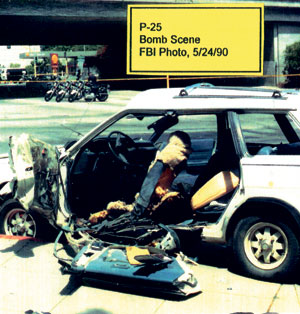
Odd, too, is the absence in Fires in the Night of any mention of Judi Bari and Darryl Cherney. Bari and Cherney are among the most famous examples of how physical violence is committed against environmental activists, not by them. Bari was especially well known in the Pacific Northwest for trying to link labor activism with environmental activism, uniting loggers and tree huggers against corporate management. She and Cherney were driving in her Subaru on May 24, 1990 in Oakland, California when a pipe bomb under her seat exploded. Cherney escaped with minor wounds, but Bari was badly maimed and nearly killed. The FBI immediately blamed Bari and Cherney for blowing themselves up because the government assumed these radical ecoterrorists must have been driving around with a bomb they planned to leave at a logging company or the home of an upstanding citizen. Bari died of breast cancer in 1997, but Cherney carried on with a civil rights trial against the FBI and the agents who blamed the victims for getting blown up, ultimately winning a $4.4 million judgment against the government. (The actual bomber remains unknown, the bombing unsolved.)
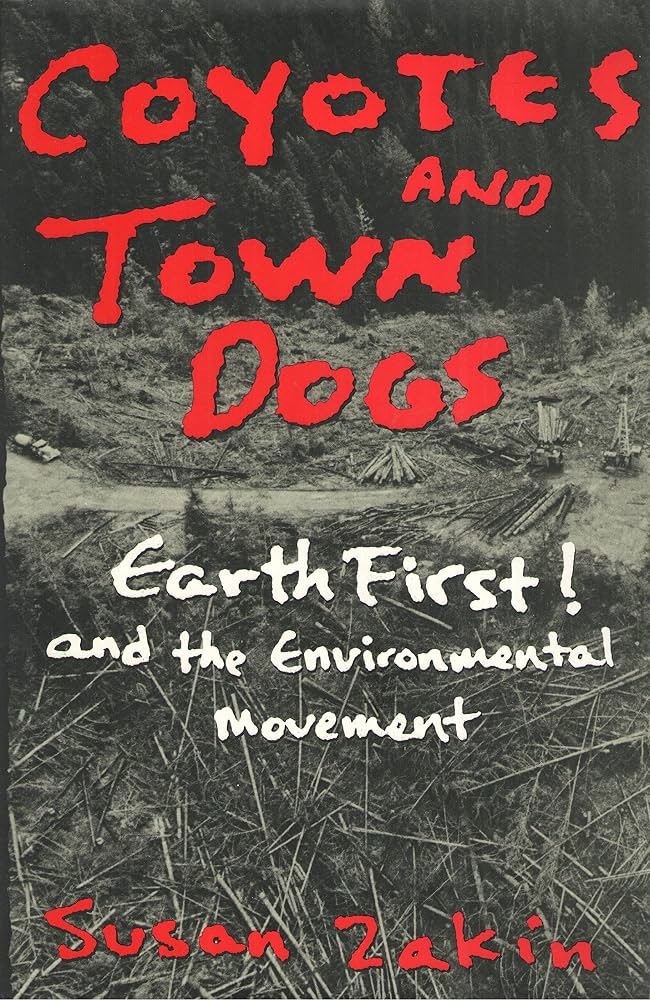
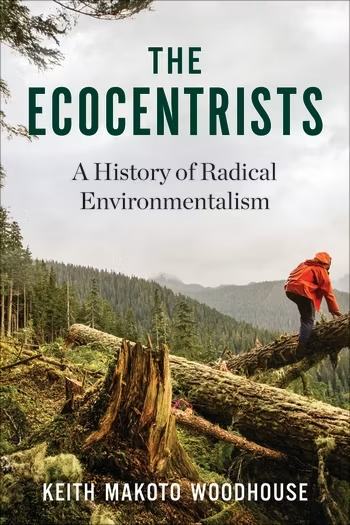
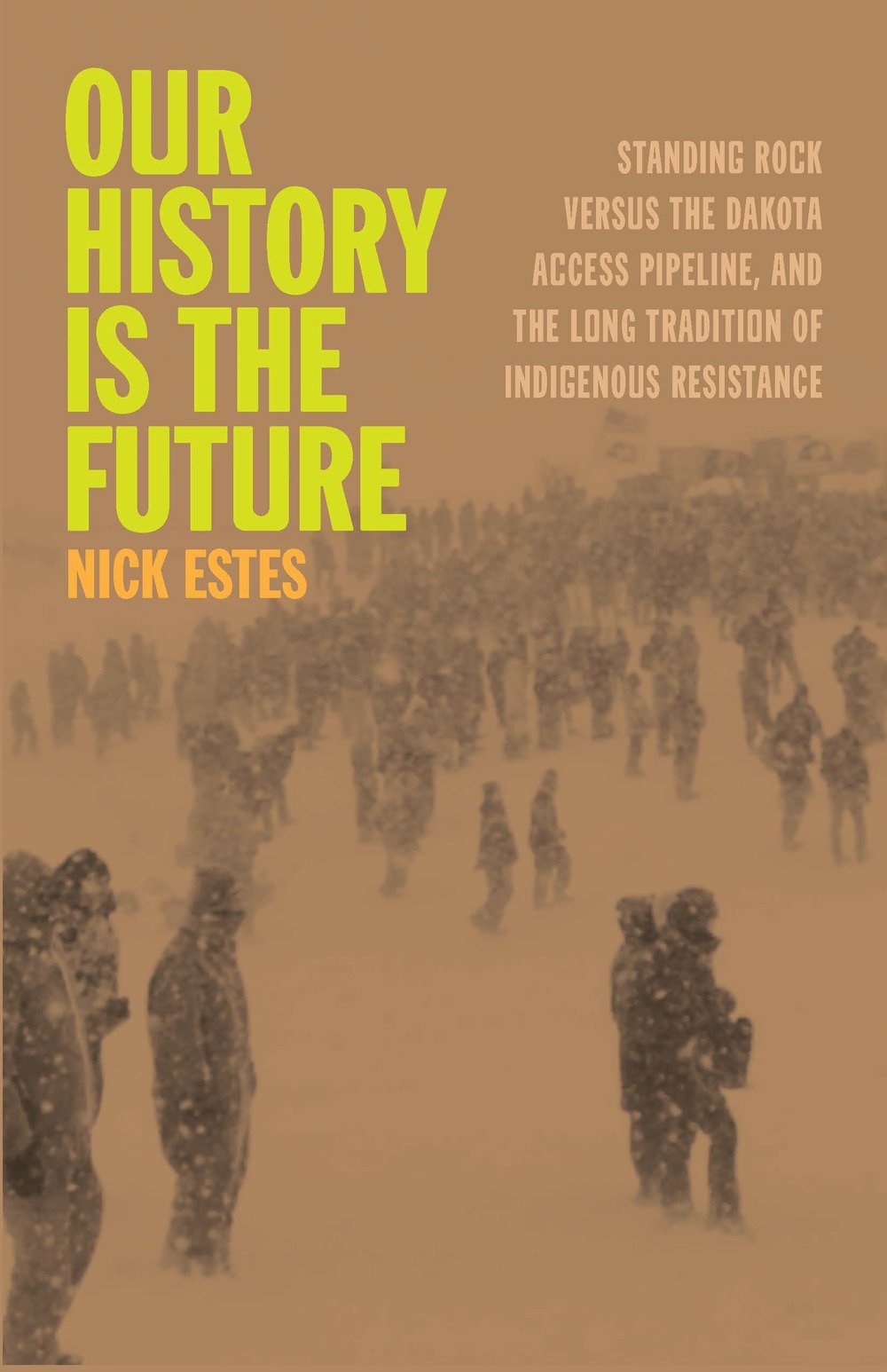
Wolfe’s concern is, clearly, to focus on the Eugene ELF members. But that story has more power and sense of continuity when placed within a fuller context. Readers would be well served by considering Fires in the Night to be a sequel of sorts of Susan Zakin’s excellent and essential chronicle of the first decade of Earth First!, Coyotes and Town Dogs. Also useful is a book Wolfe cites a few times, The Ecocentrists: A History of Radical Environmentalism by Keith Makoto Woodhouse, which is more of a bird’s-eye-view history and analysis of radical environmentalism from the 1960s into the 1990s than either Wolfe’s or Zakin’s more narrative histories are, making it a useful supplement. Also of value as supplements, for various reasons, are Deborah Blum’s chronicle of animal researchers and animal rights activists, The Monkey Wars; John Ganz’s lively history of 1990s politics, When the Clock Broke; and Nick Estes’s Our History Is the Future: Standing Rock Versus the Dakota Access Pipeline, and the Long Tradition of Indigenous Resistance, which shows another type of radical activism in defense of the Earth, one also hated by the American government. (In its early years, as Zakin shows, Earth First! had some alliances with another target of the FBI: the American Indian Movement.) Fires in the Night does an excellent job of narrating what happened to the Oregon-based Earth Liberation Front, and it’s truly a valuable story, told well. But it would be a shame for readers not to understand the story as part of many other contexts of activism and politics.
At the end of Fires in the Night, Wolfe quotes Denis Hayes, the lead organizer of the first Earth Day, from an interview last year with the New York Times: “You can make a pretty decent case,” Hayes said, “that everything that I’ve worked on in my entire professional life has gone down the toilet in the last six months.” While it’s rare for any presidential administration to be meaningfully good on environmental issues — too much political donor money for both parties comes from environmental degradation — the second Trump administration has done so much damage both to regulatory agencies and to research funding that we might as well be living in the 19th century (but with a 21st century climate).
Optimists point to the significant gains of renewable energy over recent decades. China has had remarkable growth in clean energy technologies. But at this point optimism about climate change and environmental destruction seems like willful turning away from the facts on the ground.
For all its achievements, China remains a leader (along with India) in global carbon emissions. The U.S. was making some progress, but that’s been cancelled by the growth of data centers to support “AI” and cryptocurrency technologies, and is likely to continue to get worse once the Trump administration’s rollbacks of environmental protections start showing their effects. Deforestation continues at alarming rates. 99% of all the people on Earth breathe air that exceeds the World Health Organization’s guidelines on pollutants. Animal and plant extinctions continue to intensify, destroying biodiversity.
8.
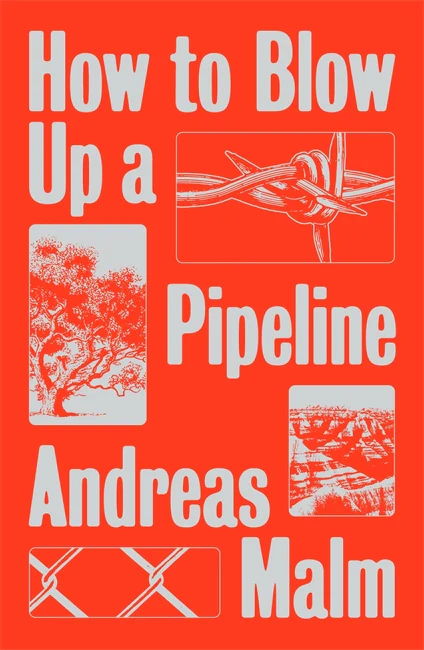
In a book that one might think would be sympathetic to Earth First! and the Earth Liberation Front, How to Blow Up a Pipeline, Andreas Malm concludes, after a brief discussion of the groups: “All of those thousands of monkeywrenching actions achieved little if anything and had no lasting gains to show for them. They were not performed in a dynamic relation to a mass movement, but largely in a void.”
Generally speaking, Malm is correct. Earth First! did save some forests and did prevent some mining, which was meaningful for a few communities and some animals, but nothing that made any sort of large impact. The ultimate achievement of the ELF’s actions was clearly not worth the price the activists paid. Vail took their insurance money and rebuilt the burned lodge and structures. The group also committed some arsons that got out of control and destroyed valuable environmental research, or were against targets that were not doing what the activists assumed they were — they caused real damage to people who were otherwise on their side.
Earth First! was, for all its internal battles and the inevitable incoherence of a leaderless group, sometimes “in a dynamic relation to a mass movement” (depending on how one defines “mass”) — both EF! and the large mainstream groups, especially the Sierra Club, said at various times that the purpose of the radicals was to help the mainstream groups look reasonable. Much of Woodhouse’s The Ecocentrists is a story of the dynamic relationship between radical and mainstream environmental activists. Such relationships did have effects, but those effects got undermined by the huge money corporations could put into the political system. Even huge mass movements have proved ineffective against corporate money in politicians’, lawyers’, and judges’ pockets — and that’s not limited to environmental issues. (Millions of people organized and marched against the Iraq and Afghanistan wars, which ended up being the longest conflicts in U.S. history.)
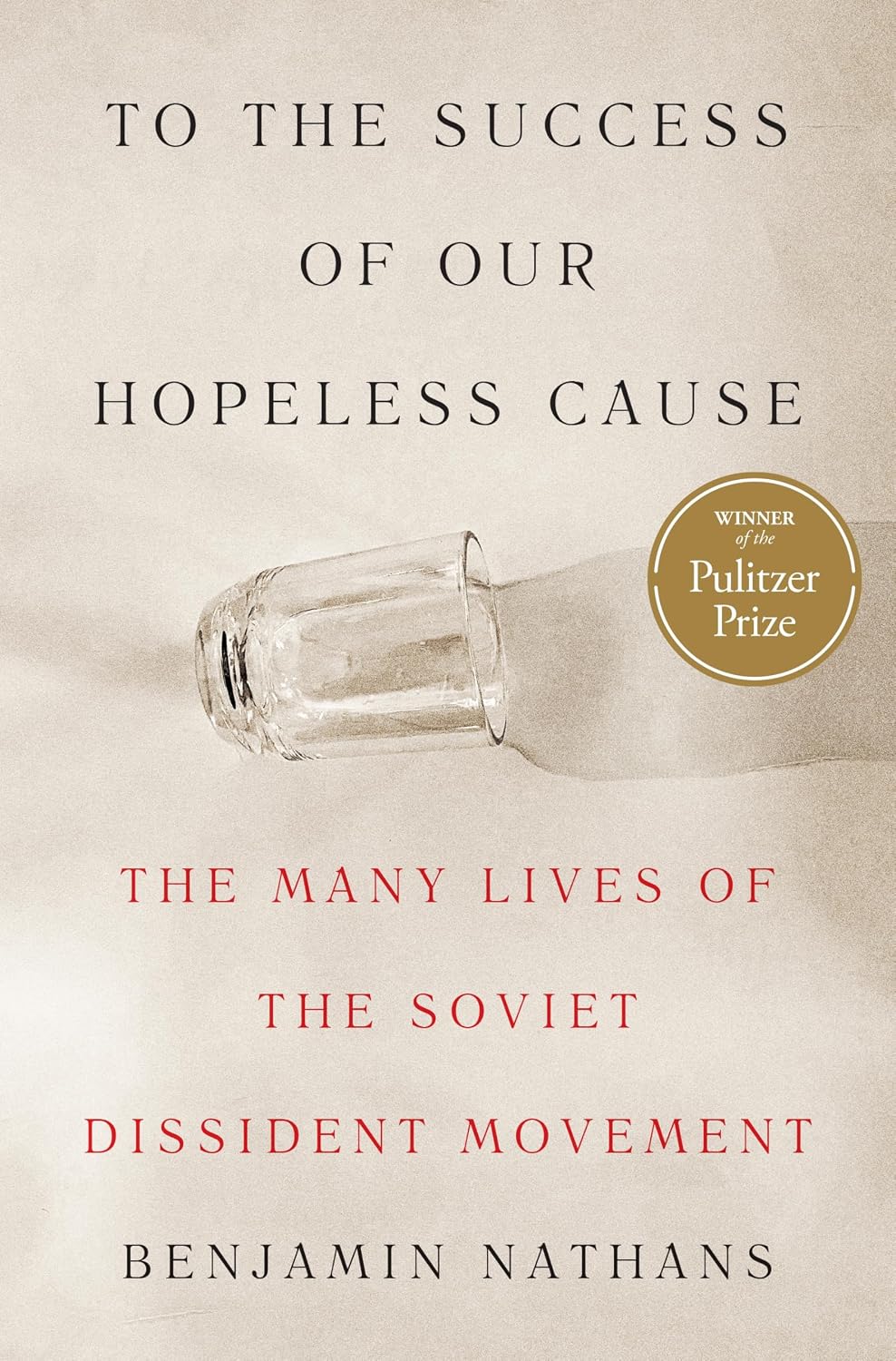
Malm’s criticism is also oddly contradictory to his own goals and philosophy, ones I find persuasive. He writes of the sense of joy and empowerment he has felt on ecotage actions he’s participated in, and he argues against surrendering to defeatism even in the face of certain defeat. “What was the point,” he writes, “of Nat Turner or the Warsaw ghetto uprising? Fatalism of the present holds defeated struggles of the past in contempt…” He quotes Alain Brossat and Sylvia Klingberg’s Revolutionary Yiddishland: “This affirmation of life by way of a sacrifice and combat with no prospect of victory is a tragic paradox that can only be understood as an act of faith in history.” (I think here of Benjamin Nathans’s recent Pulitzer winner, To the Success of Our Hopeless Cause: The Many Lives of the Soviet Dissident Movement.) The fight itself matters. That people fight, even when there is no hope of success, matters.
As Malm also argues, convincingly, any reduction in the consequences of environmental destruction or climate change is a net good, because it reduces suffering. 1° warming is bad, but it’s better than 2°, which is better than 3° and so on. He quotes David Wallace-Wells approvingly: “The fight is, definitely, not yet lost — in fact will never be lost, so long as we avoid extinction, because however warm the planet gets, it will always be the case that the decade that follows could contain more suffering or less.”
Certainly, anybody can think of better strategies and tactics the ELF activists could have used. (I continue to think the Vail attack was stupid and likely counterproductive.) Ecotage, as Dave Foreman pointed out both in Confessions of an Eco-Warrior and Ecodefense, is a variety of economic sabotage: cost the target enough money that it is no longer a good investment. Beyond that, inspire people of like mind and maybe make a few other people take notice and think about their own choices. Earth First! was occasionally pretty good at meeting both goals, but many of the ELF actions fail on them completely. That’s a necessary critique, but in How to Blow Up a Pipeline, Malm just seems to be mad at EF! and ELF for not being sufficiently Marxist.
In an interesting conversation on the Green and Red podcast, Matthew Wolfe notes that political violence is in a different place in public consciousness today than it was twenty years ago when the Elves were prosecuted. We’re living in a time when the violence of the white supremacists has come to fruition and found a home in the White House. In a sane world, January 6, 2021 would have been the end of rightwing extremism and the end of Trumpism, but it turned out to be the beginning of our terrible new era. The left has not yet responded in kind, but violence is clearly brewing. (Burning Teslas became a sport.) As people grow more desperate, as they feel more and more alienated from political processes, as they see their lives and livelihoods threatened with extinction, they will fight in any way they can. The challenge for contemporary movements is to channel that fight toward productive, meaningful goals. That challenge is daunting, but also inspiring.
9.
My roommate who I think I can see in one of the snapshots briefly shown in If a Tree Falls was a companion in leaving radical environmentalism. He and I would have long talks late into the night about what we were doing, what it meant, what hope there might be of change and success. Together, we led each other to the conclusion that we were wasting our time. Neither of us had much interest in doing anything big or dangerous, neither of us wanted to spend significant time in jail — we just didn’t have it in us to be true believers. So where did that leave us? We still despaired for the future of life on the planet. But we couldn’t even get our demonstrations noticed by the alternative press, never mind the New York Times.
Actually, we did have one pretty successful action. As part of the NYU environmental club (Earth Matters was the name, now that I think of it — a name I haven’t remembered for a very long time), we were part of a national campaign to, among other things, convince Pepsi to divest from Burma (Myanmar) and in support of the imprisoned Nobel Peace Prize winner Aung San Suu Kyi. We had spent quite a bit of time trying to get NYU to cancel its Pepsi contract, but we’d gotten nowhere. This was during a time of increased attention to student activism because of some things students at Columbia were doing, and a CNN reporter got the phone number of one of my friends in the group, called him up, and asked when the next protest would be. “When would be convenient?” my friend asked, and we built our next demonstration around the reporter’s schedule. CNN came, did a brief story about the general campaign for Burma, and included our group prominently. The story played on the channel for a couple of days in pretty regular rotation. My father, who never called me, called one morning: “Why the hell am I eating my breakfast and watching CNN and seeing my son on the TV?!” he said, and I couldn’t tell whether he was angry or proud — maybe both. The media attention was enough to convince Pepsi to at least reduce their presence in the country. The news was tremendously exciting for us, because for once it felt like we’d accomplished something.
The history of Myanmar since then has been complex and often depressing. All the efforts of activists, diplomats, and even international corporations haven’t made a lasting difference, it doesn’t seem. But the little group I was part of did what we could, and achieved more than we’d really ever hoped, and I suppose that’s something — even if, now, given all that happened later, our little moment of success hardly seems worth remembering.
(Here’s to the success of our hopeless cause…)
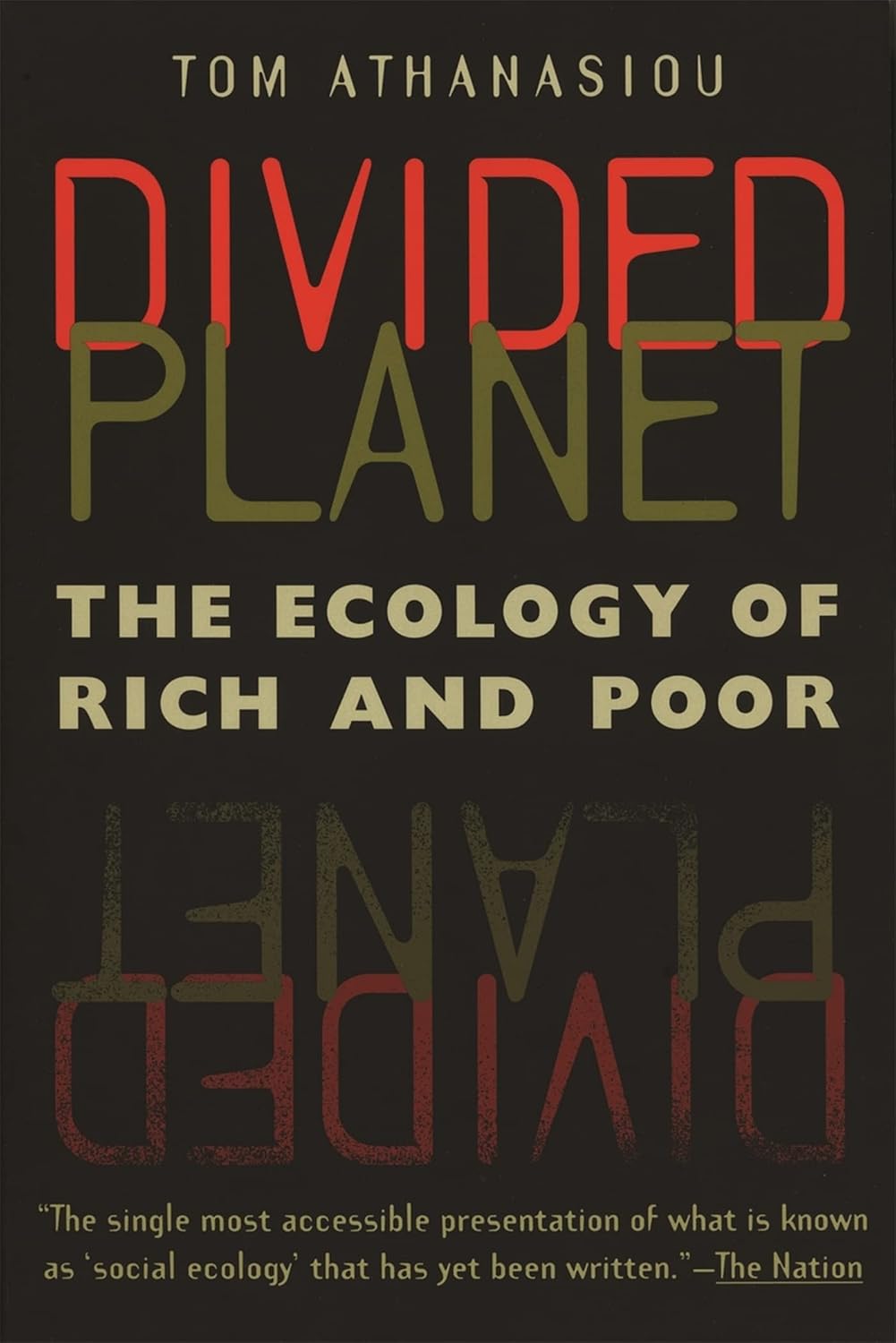
Back when we were deciding to quit trying to be radical environmental activists (and Daniel McGowan was beginning the journey that would lead him from Wetlands to the ELF), my roommate and I read a book together, Divided Planet: The Ecology of Rich and Poor by Tom Athanasiou. At first, we got pretty angry at the book, because it accuses radical environmentalists of the Earth First! type of tremendous failures of thought and solidarity, of misogyny, of racism. Though we could certainly say that the radical environmentalism we were a part of was not like that, we were also experienced enough to have seen the periphery where such things did, in fact, fester. I myself had written things saying that I didn’t care about people’s social beliefs so long as they were committed to fighting for wilderness and the planet — in a fight for survival, I thought, we didn’t have the luxury of purity tests, and if somebody was chained to a bulldozer and wanted to call me a faggot, well, so be it — stopping a bulldozer is more important than my feelings.
If Athanasiou had only offered (as he does) a critique of Green Rage and the reactionary elements of radical environmentalism, I don’t think my roommate and I would have been as affected as we were. What got us was Athanasiou’s social justice approach to ecology. Suddenly, a lot of things made sense that hadn’t before. It was an inspiring and truly ecological view — one committed to seeing networks of power, networks of capital, networks of oppression. I had been interested in anti-miltarism and joined the War Resisters League, but had no idea how to link those ideas to my interest in environmentalism until I read Athanasiou’s writing. From there, I began to think about my commitment to AIDS activism and queer rights, among other causes.
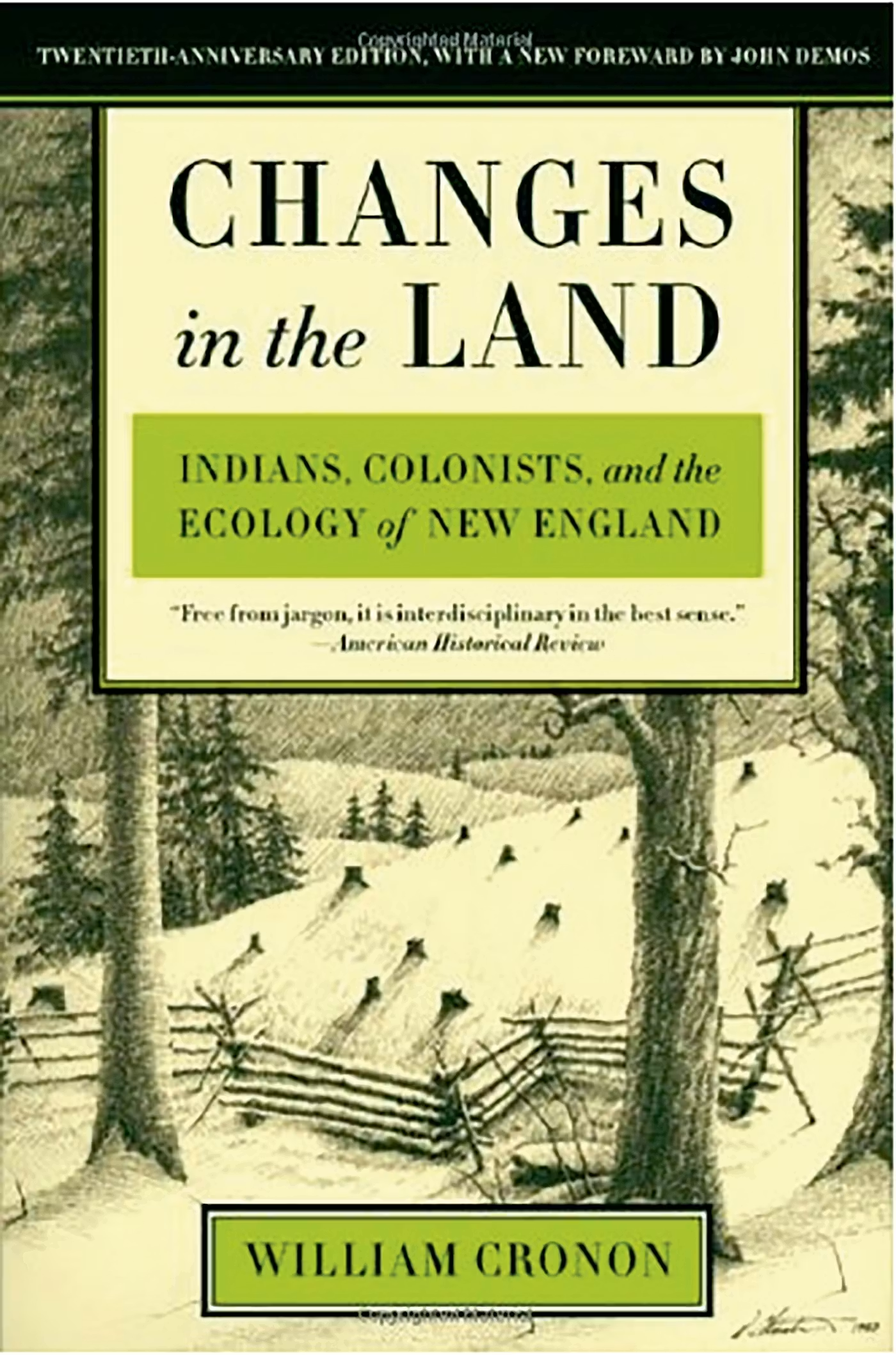
I remember reading, too, William Cronon’s essay “The Trouble with Wilderness”. I’d read and deeply enjoyed his classic book Changes in the Land: Indians, Colonists, and the Ecology of New England in an environmental history course. “The Trouble with Wilderness” questioned a lot of the assumptions I’d brought to environmental activism, and I hardly knew what to make of it. Somewhere — probably in Wild Earth magazine, which Dave Foreman was one of the creators of, and to which I faithfully subscribed — I read critiques of Cronon, but something about them struck me as off. I was (and am) really too much of a philosophical materialist to find Romantic idealism persuasive for long. I had, I thought, allied myself with a non-anthropocentric, stubbornly ecocentric point of view, but the more I considered my ideas, the more I wondered if such thinking wasn’t, paradoxically, just another way to get stuck in my self.
“Wilderness,” Cronon wrote, “hides its unnaturalness behind a mask that is all the more beguiling because it seems so natural. As we gaze into the mirror it holds up for us, we too easily imagine that what we behold is Nature when in fact we see the reflection of our own unexamined longings and desires. For this reason, we mistake ourselves when we suppose that wilderness can be the solution to our culture’s problematic relationships with the nonhuman world, for wilderness is itself no small part of the problem.”
It took years for the spark Athanasiou and Cronon lit in me to burn into a fire, but eventually I got there, cobbling together something like a usable philosophy to get me through my days. Cronon particularly stuck with me — enough that in 2024 I published novella titled Changes in the Land.
Every day, I’m still trying to figure out whether anything I believe is coherent, whether any political opinions I hold have a way to be useful in the world, whether I have managed to reduce anybody’s suffering. I don’t know. These days, I feel most comfortable roaming through the philosophies of degrowth and rewilding (of which the forests around me are great examples).
10.
Often, I think about a song Pete Seeger wrote after reading a newspaper story about the anti-war protestor Lisa Kalvelage, who was arrested in 1966 after sitting in front of a forklift carrying napalm bombs, briefly delaying its deadly cargo. Kalvelage had grown up in Nuremberg, Germany and shortly after the war married a U.S. Air Force soldier, then applied to join him in the United States. At first, her application was denied, and she was angry at being equated with a Nazi. What might she do, she wondered, in the future to make sure she was not again mistaken for one of the oppressors? The song, “My Name Is Lisa Kalvelage” was mostly written from her words. My favorite version of it is the one sung by Ani DiFranco. But in any version, it speaks a truth I think remains a good guide for us all:
And now I also know what it is to be charged with mass guilt—
once in a life time is enough for me.
No, I couldn’t take it for a second time,
and that’s why i’m here today.The events of May 25th, the day of our protest,
put a small balance weight on the other side.
And hopefully some day my contribution to peace
will help just a bit to turn the tide.Perhaps I can tell it to my children six,
and later on, their own children.
And at least in the future
they need not be silent
when they’re asked,
“Where was your mother when…?”
—–
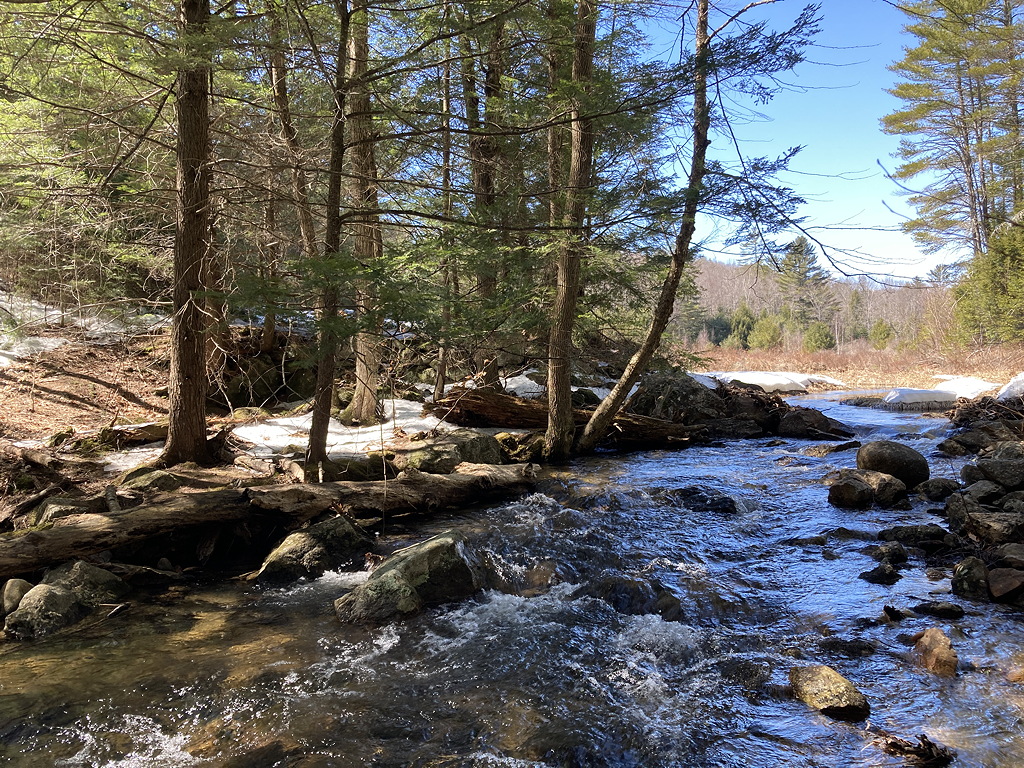
images: photo of WTO Seattle protests by John G. Mabanglo/Agence France-Presse; Judi Bari/Darryl Cherney bomb scene photo via Metro Silicon Valley; photo of woods and stream by Matthew Cheney, CC-BY-NC-SA.
Discover more from Matthew Cheney
Subscribe to get the latest posts sent to your email.
