
Arthur Machen’s 20th century writings are simultaneously fascinating and frustrating. These days, if Machen is known by general readers, it is not for the relatively more recent works, but rather for his extraordinary writings of the 1890s (even if some of them were not published until later): “The Great God Pan”, The Three Imposters, The Hill of Dreams, “The White People”. I cannot argue with that. Those are the stories I also find most compelling and satisfying (I’ve written at some length about “The White People” and its rich complexities). During his lifetime, Machen sometimes received more notice for his recent work than the writings of the ’90s — “The Bowmen” (1914) achieved significant fame and influence by inspiring the “Angel of Mons” myth — but with the passage of time, it was the 1890s fiction that survived most steadily. While some of his later work has gained interesting and even passionate support, I’ve never known anyone to argue that the 20th century Machen is superior to the 19th century.
Still, there is much that is worth investigating across the whole of Machen’s career, especially for patient readers who find interest in how a writer may use fiction and essays to search for a kind of meaning and form that feels somehow beyond grasp. Machen was a wanderer and a searcher, and it is that searching and wandering that we find in the progress of his 20th century work.
The novel The Secret Glory (published 1922) is one of Machen’s more ragged and ranging books, the tale of a sensitive young man, Ambrose Meyrick (same initials as Arthur Machen), who survives brutal schooling, absconds to London with a maid who may have been abused/assaulted by Ambrose’s uncle/tutor, then makes his way home to Wales, writes some manuscripts, publishes a few articles and maybe a book or two (it’s a bit unclear), imagines publishing a dozen books, and then takes the Holy Grail to the Middle East, where he is crucified. Yes, literally crucified. (And yes, the Holy Grail.) The story is told by an unnamed narrator who knew Meyrick and is piecing together his life from the traces left behind.
Before plunging in to the novel itself, though, we should pause to consider some context.
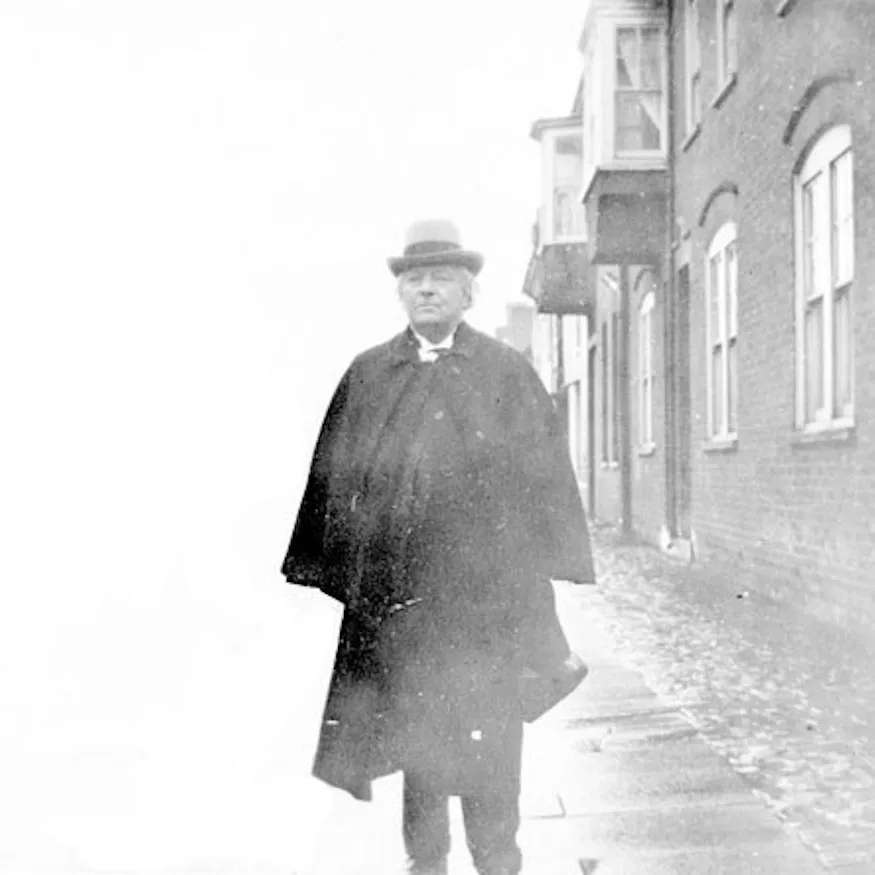
Arthur Machen
Let’s be honest: It is hard to read the 20th century Machen without wondering, “What happened?” He published a significant amount of nonfiction and fiction, almost all of it with passages of interest, almost all of it displaying classically-structured and quite satisfying prose … and yet, so much of it feels, to me, underconceived and overwritten. Consider, for instance, the novella “The Terror”, which ought to be one of the great weird horror stories of the century, a story that leads (via Frank Baker and Daphne Du Maurier) to one of Alfred Hitchcock’s strangest and most powerful films, The Birds. But “The Terror” is (at most) 20 pages worth of story expanded to about 100 pages. Its concept of a natural world revolting against an artificial, corrupted human world is a powerful one, but barely developed. (A reader who finds “The Terror” less disappointing than I do might argue that the central concept or theme is not as I have said, hence the reason why I have trouble finding more of it in the story. Which is a fair criticism. Nonetheless, I find the story disappointing and quite a slog to get through.) The great shock of “The Terror” is not its final revelations, but rather where Machen chose to expend his authorial energies — page after page of … not much. It all feels terribly effortful, as if he’s forcing himself to write a popular mystery story and every bit of his soul is resisting.
We might suspect that what I perceive as the failure of “The Terror” is a difference between a contemporary taste in fiction versus the taste of a more leisurely age over 100 years ago. After all, we see a lot of the same problem (if you consider it a problem) in the work of Algernon Blackwood, whose novels in particular offer forty sentences wherever one would do just fine. Yet for Blackwood it seems to be somewhat of a different problem than for Machen, since it was in Blackwood’s novels where he felt compelled to indulge in page after page of ethereal philosophizing that anybody else would recognize to be fairly simple, needing little more than a paragraph or two of explication, but which Blackwood considered so complex it must deserve an entire book. This is not quite the same problem Machen’s 20th century work poses, since even Machen’s weakest work still seems to by striving toward a form, whereas Blackwood’s novels generally feel content with the looseness of their structures. (Blackwood’s ideal medium was the novella, the form in which he published his best work: “The Willows”, “The Wendigo”, “Sand”, “A Descent Into Egypt”, “The Lost Valley”, and my beloved “The Man Whom the Trees Loved”. But he could also be quite good at short lengths, where he didn’t have the space for extended philosophizing. Pity the poor fiction writer who thinks he is a philosopher!)
After the death of his first wife, Amy Hogg, in 1899, Arthur Machen seems to have lost whatever ability he previously had to focus his talent and vision fully. The pain of her loss seems not only to have delivered a shock of grief to him, but to have forever shattered the creative spark he enjoyed while she was alive. He was able to go on with his life, to remarry and have children, to live to quite an old age, but the concentrated magic of all he wrote while living with Amy was forever gone. And so his search began.
Though they were married for twelve years, it is astonishing how little Arthur Machen ever wrote directly about Amy Hogg Machen, and how little is now known of her life. In the fullest account I know, which was published in Faunus 12 in 2005 (and reprinted in Faunus: The Decorative Imagination of Arthur Machen), Gill Culver and Geoffrey Brangham state: “Amy Hogg’s personal history must be pieced together through scant and disparate sources.” After their marriage in 1887, Amy and Arthur spent time in France, where they had a lease on a small vineyard, providing wine to friends and colleagues such as Machen’s publisher John Lane and their good friend Jerome K. Jerome. Before and after their marriage, Amy was a devoted theatre-goer, a founder of the Playgoer’s Club, which began with the radical idea of not separating members by gender, though after a few years it fell back to privileging men over women — which there is some evidence, according to Culver and Brangham, that Amy Machen protested against. From the few references to her in the historical record, it seems likely she was something of a New Woman, confident and outspoken. Her confidence and voice seemed to stay strong even after the diagnosis of breast cancer in 1893, but her final years were clearly difficult and painful because of her illness.
Machen seems by all accounts to have adored her and been utterly undone by her death, and his silence about her in his autobiographical writings suggests that for the rest of his life her death remained too painful for him to approach. I like what Culver and Brangham speculate regarding Machen’s turn to acting in regional theatre productions: “On stage … he would have been performing under the gaze of an audience that might once ideally have included Amy herself.”
(A side note: It is Machen’s clear devotion to Amy that makes me read the women in his 1890s stories with more sympathy than many critics have, and to take some of his later comments about those works and years, which can be sexist and even misogynistic, with a few big grains of salt. A productive study might be made of the 1890s writings from the point of view of Machen feeling, yes, a bit conflicted and confused about gender and sexuality, but working through his conflicts and confusions by writing. I expect Amy was a good challenge to him in lots of ways, just as his bohemian friends were good challenges to him. His best later writings are all clearly read as explorations of philosophical and metaphysical ideas, and I see no reason to read his 1890s writings as anything less than explorations, too, though of a different sort: explorations of belief, of reality, and of his unsettled feelings regarding men, women, and sex — as makes perfect sense for a man with a clearly conservative personality who loved a woman who seems, from what scant evidence survives, to have been a bit more daring and uninhibited than he.)
Machen remarried in 1903 (his bride, Dorothie Purefoy Hudleston, was the aunt of Sylvia Townsend Warner), and I expect that also affected his desire to minimize discussion of his previous life. Additionally, he became more openly and determinedly religious, and much of his writing in the 20th century sought to explore and explain his Celtic Christian / Anglican mysticism.
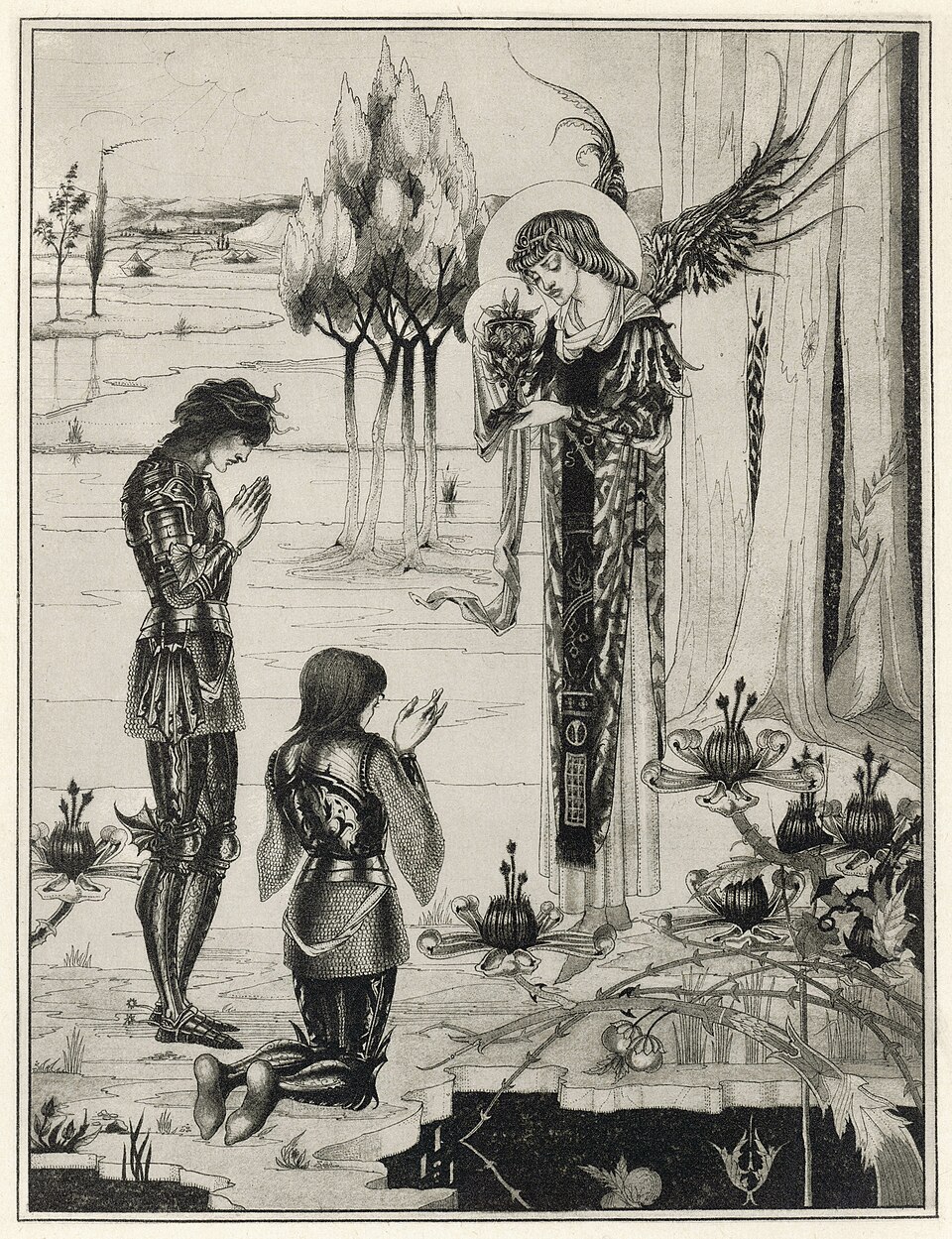
The Holy Grail is Achieved — Aubrey Beardsley
Which brings us to The Secret Glory, mostly written around 1907 but not published as a book until 1922, and not published in complete form until 1998, when the essential and erstwhile Tartarus Press, who had previously published the rediscovered fifth and sixth chapters as a small book, released the first full edition. (The complete text is also available in the Hippocampus Press Collected Fiction).
Machenites are divided about this novel, though the restoration of the final two chapters has raised it at least a little bit in many people’s estimation. But it has always had its fervent supporters and detractors. In their useful and generally sympathetic biography, Aidan Reynolds and William Charlton write:
Of narrative that follows the natural time sequence, there is very little; there are long flash-backs and flashes forward, long quotations purporting to be from memoirs, articles, and similar biographical sources, ecstatic visions, passages of pure satire, and sections which seems to have been inserted merely because the author liked them and wanted to see them in print. To say that Machen is experimenting with the novel form, is to be too kind; much of the book is palpable patch-work.
That’s from friendly readers!
Still, as Mark Valentine pointed out in a blog post celebrating the book’s centenary, it sold well enough to have to be reprinted within a couple months of publication, and there is plenty of testimony that
the book had a strong influence on its readers. John Betjeman describes, in his verse autobiography Summoned By Bells (1974), how a copy was given to him by a Cornish priest and had a profound effect. Years later, in sending a cheque to the Machen appeal fund, he wrote: “I really owe Arthur Machen more than money can show”, for, he said, the book had made him a High Church Anglican when he had been a Public School Evangelical, aged 15.
I suspect that the novel’s ability to affect susceptible readers is enhanced rather than hindered by what Reynolds and Charlton call its “palpable patch-work” form. In fact — while I am in no way inclined to see it as a great novel or one of Machen’s best works, and I find the experience of reading it sometimes jaw-clenchingly frustrating — I am tempted to say it has the perfect form for what it is.
Whether he sought to do so or not, Machen was experimenting with form, and doing so in a way that developed from his previous experiments with frame narratives in The Three Imposters, “The White People”, and elsewhere. It is quite an appropriate serendipity that The Secret Glory was first published as a book in 1922, the annus mirabilis for Modernist literature (and much else). While Machen’s is a less successful experiment overall than Woolf’s Jacob’s Room, the two books go well together, both of them being concerned with reconstructing an idea of a young man from the impressions and fragments he has left behind.
If anything, The Secret Glory is even more confounding, diffuse, and ambiguous than Jacob’s Room. Its most coherent sections are in the first chapters, which present an entertaining and biting portrait of life at a British school somewhat like Harrow, here called Lupton. (Machen’s niece, Sylvia Townsend Warner, was born at Harrow, where her father was a house-master, but the Harrow connection to Lupton is specific to Machen’s reading of a biography of “one Bowen, a famous Harrow master. The point of view annoyed me; and the annoyance got into my book.” That statement is from a 1919 letter to Vincent Starrett that Mark Valentine quotes in his insightful short study of Machen from 1995. There was also Machen’s experience of performing with a theatre troupe for unappreciative boys at Harrow, an incident that gets dramatized in Chapter Six of The Secret Glory.) Machen detested the ways the British public schools (boarding schools) were portrayed in nostalgic memorials and hagiographies, and some of the liveliest writing in the novel comes in passages where Machen skewers such nostalgia and highlights the cruelty and intellectual sterility of Lupton.
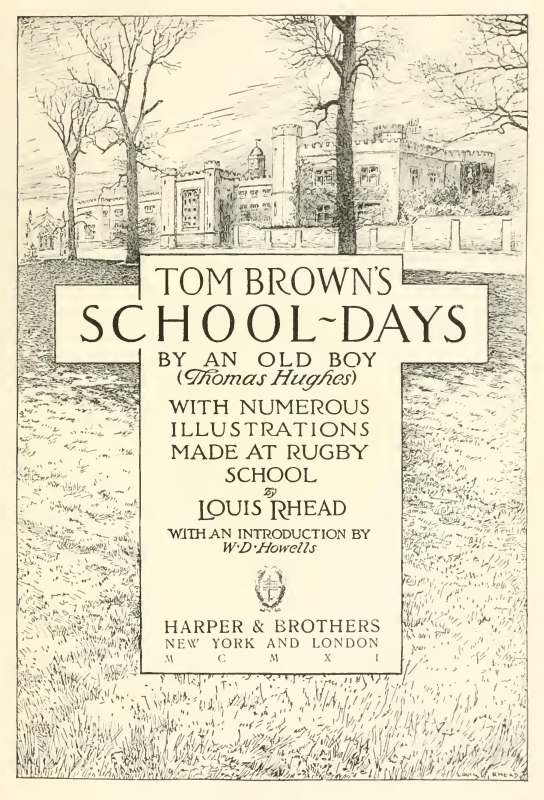
From the beginning, The Secret Glory sets itself in contrast to the coherent and assured narratives of adult men looking back on their childhood experiences with unjustified, fantasy-fueled fondness. Their memoirs and the biographies they write of teachers and headmasters are, in Machen’s presentation, falsified histories that do nothing but flatter the tellers and strengthen cults of cruelty and ignorance.
And yet, The Secret Glory is itself a kind of biography. Or tries to be. Against the unified, coherent stories of the hagiographies — too unified, too coherent — Machen’s narrator presents something far more mysterious, contradictory, uncertain. The structure of the book highlights the narrator’s ultimately doomed work to bring Ambrose Meyrick’s story into some sort of order. Machen could have quoted the famous line by his occasional acquaintance W.B. Yeats: “Things fall apart; the centre cannot hold.” The center he seeks is Ambrose Meyrick, but Meyrick is asymptotic, his character and personality growing less and less clear as the book adds more and more detail, more and more evidence.
Part of this strange effect comes from Meyrick starting as a more or less conventional character, someone out of Tom Brown’s School Days or Kipling’s Stalky & Co. So far, so bildungsroman. Then there is the trip to London with Nellie, providing scenes that feel drawn from fond memories of the city when Machen was young. It’s hard not to wonder how much of Amy Hogg is in Nellie, too. The character is not richly drawn, and given how little about Machen’s first wife has survived it’s impossible to judge with any certainty, but it is tempting to imagine something of Nellie’s independence and practicality reflecting Machen’s memories of Amy. I am also tempted to wonder about Meyrick’s sudden sense of needing to let Nellie go for moral reasons. He feels that though his actions and intentions have all been innocent, that he has nonetheless crossed a moral line, and the only honorable thing to do is to separate from her. At the risk of a kind of psychologizing I usually dislike, I wonder if this is Machen perhaps recasting the liberalities of his 1890s years as innocent but misguided — and softening some of his memory of grief by reimagining himself as choosing to leave Amy rather than of her, by her death, leaving him.
In any case, Ambrose leaves Nellie and returns to Lupton, then to Wales, and then on beyond.
But Meyrick’s story ultimately is less about an individual coming of age and more about the revelation of a secret history, the history of the survival of the Holy Grail. Soon enough, the narrative is in tension with exactly what Meyrick himself is in tension with: whether this is the story of a person or a myth. Meyrick decides to stop fighting against the strictures of Lupton and instead accept that he must play a role until his fate offers him the opportunity to commit a great deed. Hence the appeal of joining a theatre troupe, as he does. Accepting his fate means acting as if he does not have a fate, as if he is a normal person like anybody else, when actually he has an ancient inheritance and is to be the guardian and bearer of the Holy Grail. The world he exists in is no more meaningfully real than the world of the stage.
As Meyrick gets farther away from being a conventional individual self, the narrator struggles to represent him in any way. It’s quite an astonishing, even self-sabotaging choice by Machen — instead of dramatizing Meyrick’s transformation from schoolboy to secretly mythic figure, he instead presents it as he would a moment of cosmic horror. Meyrick escapes ordinary narrative and reality, and Machen demonstrates this by — especially in the complete manuscript — letting the novel collapse into scraps of theological and historical argument, much of it repetitive and obscure, often admittedly so. (The narrator gets exasperated by it all more than once, but seems helpless to stop trying to pile on more.)
In a July 1930 letter to a Tennesseean, Ralph Grainger Morrissey, who had written a thesis about him at Vanderbilt University, Machen said, “I do not like to see ‘The Hill of Dreams’ and ‘The Secret Glory’ discussed as novels. They are, or they are meant to be, Romances: tales of adventure of the spirit.” This is especially interesting to think about with regard to The Secret Glory because in Chapter Five there is a character who is writing an interminable, unfinishable Romance — he is Meyrick’s old, hermit-like cousin, and his name is Vaughan, a name Machen used repeatedly, most famously with Helen Vaughan in “The Great God Pan”. Machen got the name Vaughan from the seventeenth century Welsh philosopher and alchemist Thomas Vaughan, from whom he likely learned the idea of first matter, which is key to the fate of Helen Vaughan. (Reynolds and Charlton quote the third chapter of Vaughan’s Lumen de Lumine: “When I consider the system or fabric of this world I find it to be a certain series, a link or chain, which is extended ‘a non gradu ad non gradum’ . . . . Beneath all degrees of sense there is a certain horrible, inexpressible darkness. The magicians call it ‘tenebrae activae’.”)
His cousin’s Romance confounds and amuses Meyrick, who gets Vaughan to tell him about the concept and show him some pages. Vaughan was writing it in “a kind of ‘faked’ Low Latin” so that it could be read by properly educated people at any time, and “there was a fantastical unreasonableness about it that was after [Meyrick’s] own heart” but nonetheless he can’t help but find it all so absurd that the moment he can get free from Vaughan he bursts into laughter and falls to the ground. “Yet: if he listened to the old man, his scheme seemed absolutely logical; it was quite impossible to resist the cogency of his arguments.” We don’t learn much more about this Romance of Vaughan’s, aside from that Vaughan has collected an eclectic library of research material for it (including works of history, philosophy, books on the Holy Grail, and even “a manual of the Tarot” — likely, that of Machen’s close friend A.E. Waite). However, I can’t help but think of Vaughan’s Romance as the book we are, in fact, ourselves reading….
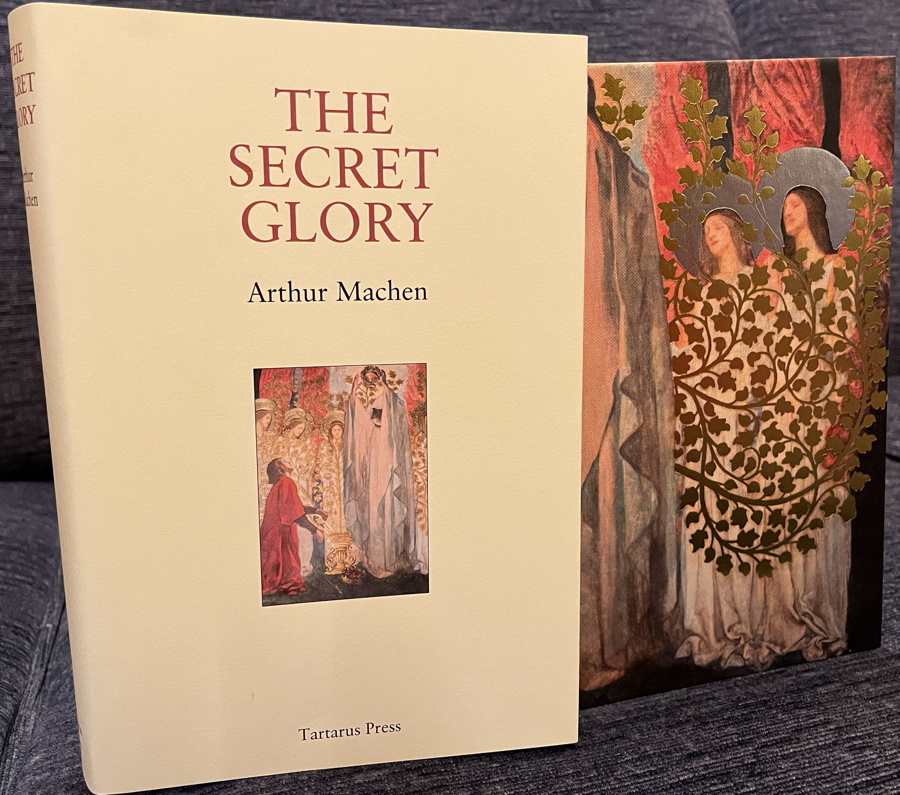
(The Tartarus hardcover of The Secret Glory that I have adds to this sense of the physical book itself embodying what Machen was writing about. The standard, plain Tartarus dustjacket comes off to reveal bright, gilded, gorgeous boards reproducing “The Golden Tree” panel of Edwin Austin Abbey’s Holy Grail mural at the Boston Public Library. The beauty hidden beneath the pleasant but sedate cover is a perfect representation of the material.)
Meyrick succeeds in his quest for the Holy Grail, but the narrator fails in his quest to solve the mystery of Meyrick. Even though Meyrick might qualify for a hagiography in the original sense (biography of a saint), the narrator can’t achieve it and also remain truthful. The only truth is the sense mystery: a mystery that is too big for storytelling, too big for language. Instead of a dramatization of immense mystery, The Secret Glory is an embodiment of that mystery.
And so, frustrating as it often is, The Secret Glory exists like a piece of conceptual art. It is a collage of impressions and moments and scraps of life that don’t — can’t — add up to a systematic whole. The narrator makes the same error Meyrick seems to make for a while: He seeks to be able to explain what is beyond explanation. The original version of the novel felt abruptly cut off at the end, the mythic elements mostly gestured to, summarized, ellided. The full version is far weirder and more satisfying, even though more tedious, bogged down with Meyrick’s many manuscripts trying to put words to the unwordable. Ultimately it is (and must be!) an unsatisfying book, a book whose subject is its own failure.
Machen felt that failure. In a December 1940 letter to the book collector Montgomery Evans, he wrote: “The ‘unpublished or suppressed’ leaves of the Secret Glory represent failure and disappointment. I found myself on a hopeless track which could land me in a swamp. So I threw them out, cobbled up an ending, & bore it as best I could. … As it is: let those fallen leaves lie. It is only in great men’s rubbish heaps that diamonds are found.”
Machen underestimated himself; there are diamonds there. For instance, in one section in Chapter Six, Meyrick discusses the odd aesthetic certainties of Samuel Johnson (a writer Machen adored), who for all his greatness, the refinement of his taste, and the sublimity of his expression, was nonetheless oblivious to what Meyrick considered obvious beauties such as Lincoln Cathedral and Milton’s “Lycidas“. (“It was as if a man walked through a wood, admiring the beauty of the oak, and at the same moment wondering why an all-wise Creator had made the grotesque ugliness of the ash and the beach and the yew!”) This leads to some lines whose wisdom we all ought to hold on to:
Unless we take up the position that we have attained to final perfection, that we have surpassed all the wisdom of the wise, all the art of all artists, all the visions of all seers, that compared with us all precedent humanity is in all things, as a schoolboy in the multiplication-table to Sir Isaac Newton, that the universal goal is attained, the race run and won forever — unless we take up this slightly ridiculous and monstrous position, we must confess that there is a high probability, at all events, that we, in our turn, are blind to many sights, deaf to many sounds, insensitive to many wonders, ignorant of many mysteries.
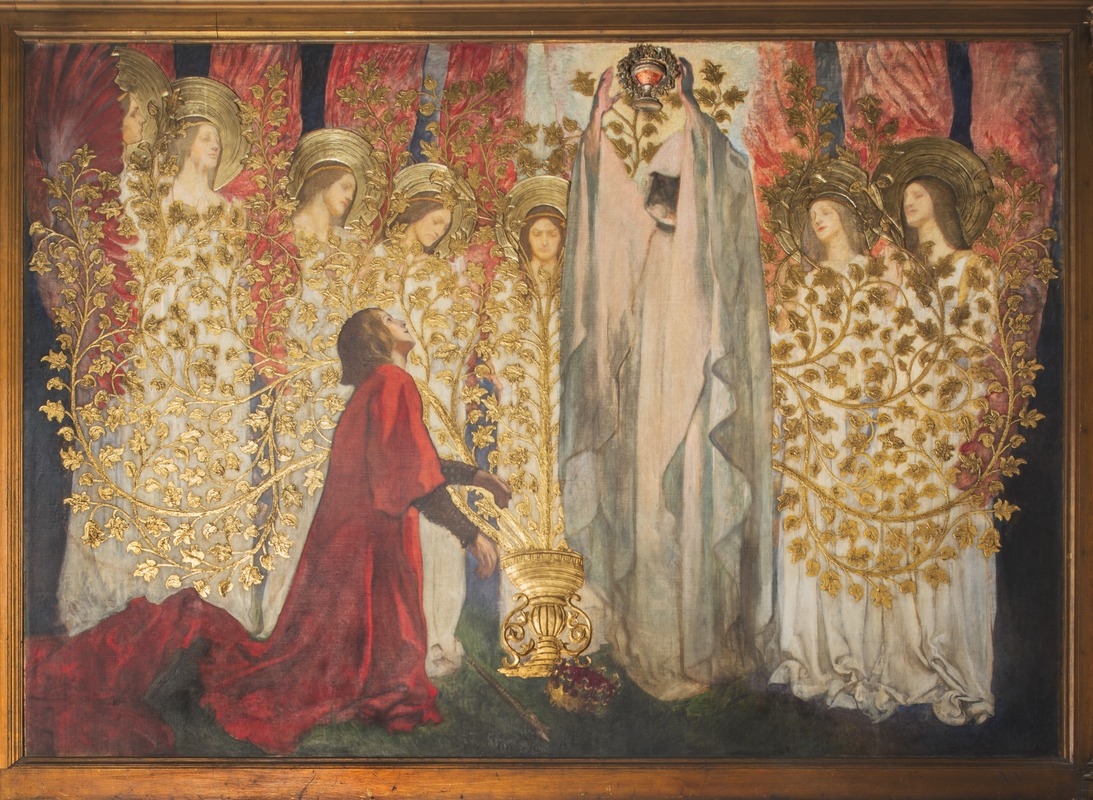
The Golden Tree — Edwin Austin Abbey
Discover more from Matthew Cheney
Subscribe to get the latest posts sent to your email.
