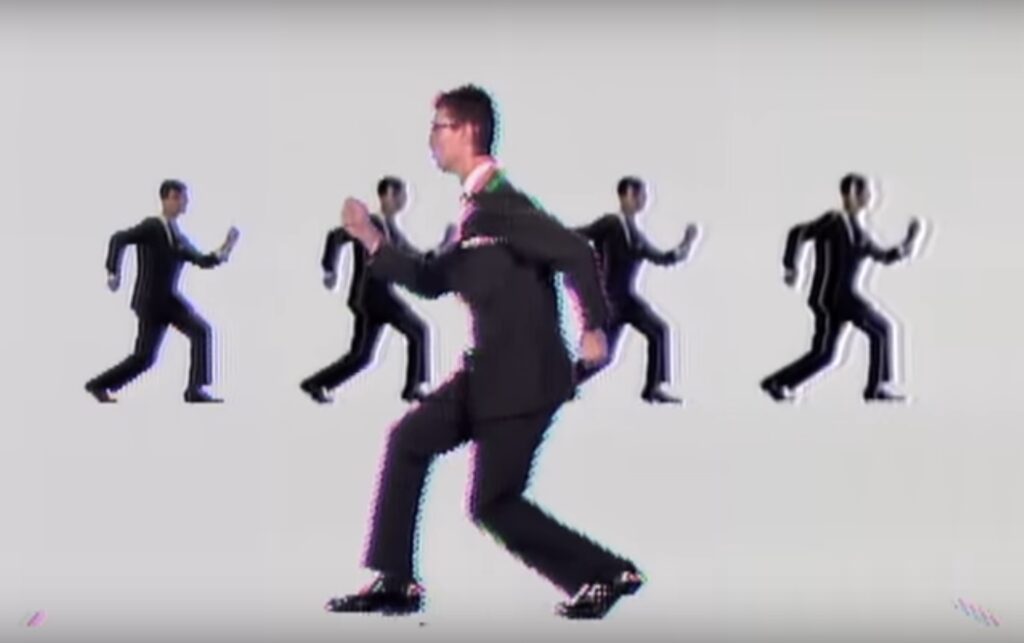
And you may ask yourself, “Well, how did I get here?”
…
Same as it ever was, same as it ever was
Same as it ever was, same as it ever was
Same as it ever was, same as it ever was
Same as it ever was, same as it ever was—Talking Heads, “Once in a Lifetime”
I’m planning to post here in the coming weeks and months some notes toward a new project, one looking at the history and cultural effect of the far right in the United States over the last 100 years, from the second KKK of the 1920s through the rise of the John Birch Society and then the development of movements such as the American Nazi Party, Christian Identity, the Aryan Nations, the militia movement … up at least through the Oklahoma City bombing of 1995. We live in the world those movements and events made possible.
What I write here will be exploratory, and perhaps only of interest to myself. For a couple months now, I’ve found myself unable to read much except material about the American far right. A lot of it is stuff I knew already, but it’s provided a certain comfort in recognizing that while there are unprecedented and surprising elements to our current situation (Elon Musk!), there’s also a tremendous amount of continuity with tendencies going back to the earliest days of the U.S. as a country, and even as a colony.
Here, then, are a first set of notes about what I’ve been reading and thinking…
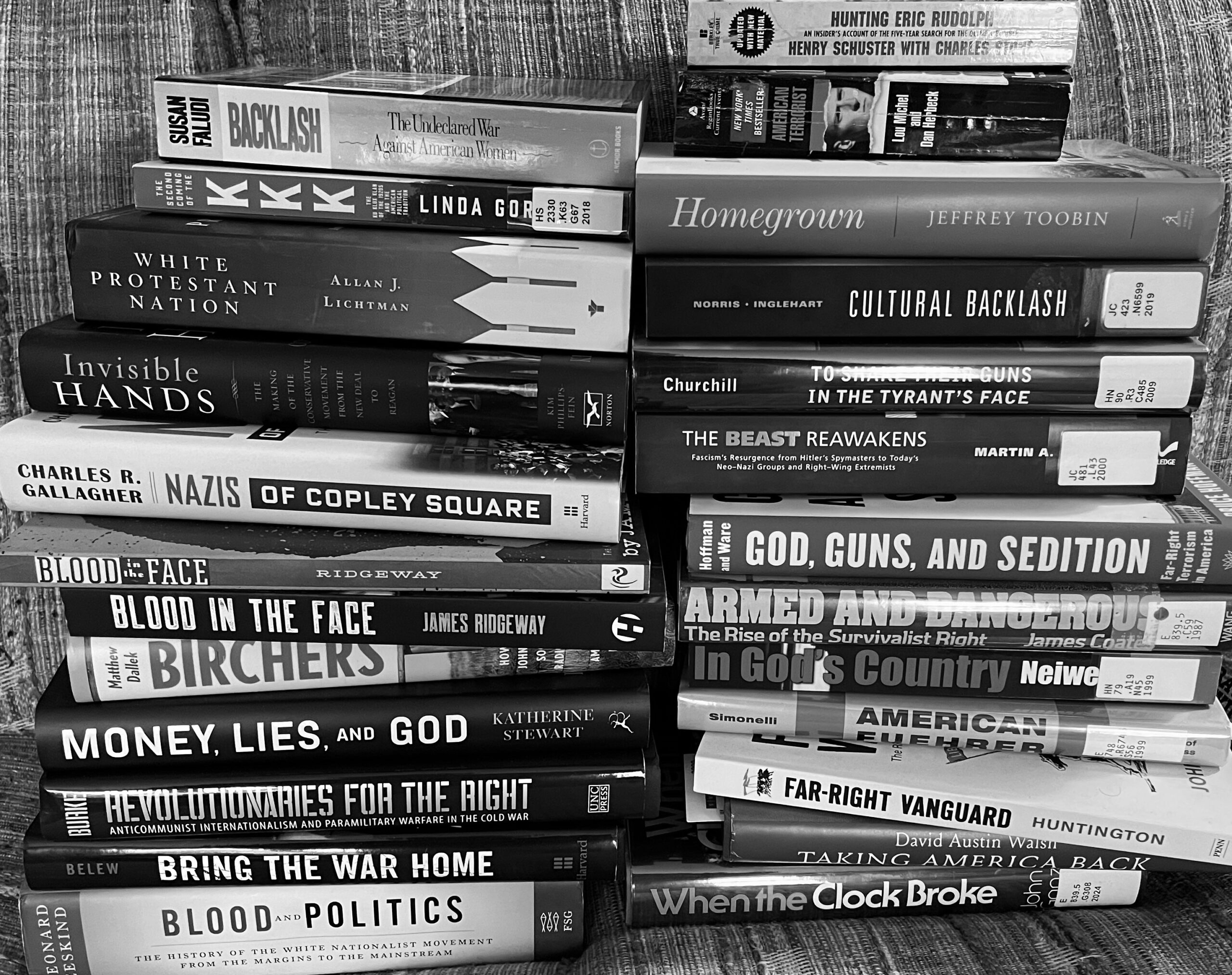
Some recent reading material
Look at the news any day since the election of Donald Trump to a second term as President of the United States and you may ask yourself, “How did we get here?”
How did we get to a place where the U.S. government is in the hands of avowed white nationalists, neo-reactionaries, technofeudalists, and outright fascists?
There is no one answer, of course. People may have grand unified theories, but reality rarely fits neatly into them. Lots of factors — lots of histories — led to now. If you’ve paid attention to American history and politics, you shouldn’t really be surprised, even if, naturally, you’re disturbed. There is much truth to the insight that the U.S. never finished Reconstruction and is still mired in the Civil War. Du Bois put it well in the penultimate chapter of Black Reconstruction: “If the Reconstruction of the Southern states, from slavery to free labor, had been conceived as a major national program of America, whose accomplishment at any price was well worth the effort, we should be living today in a different world.”
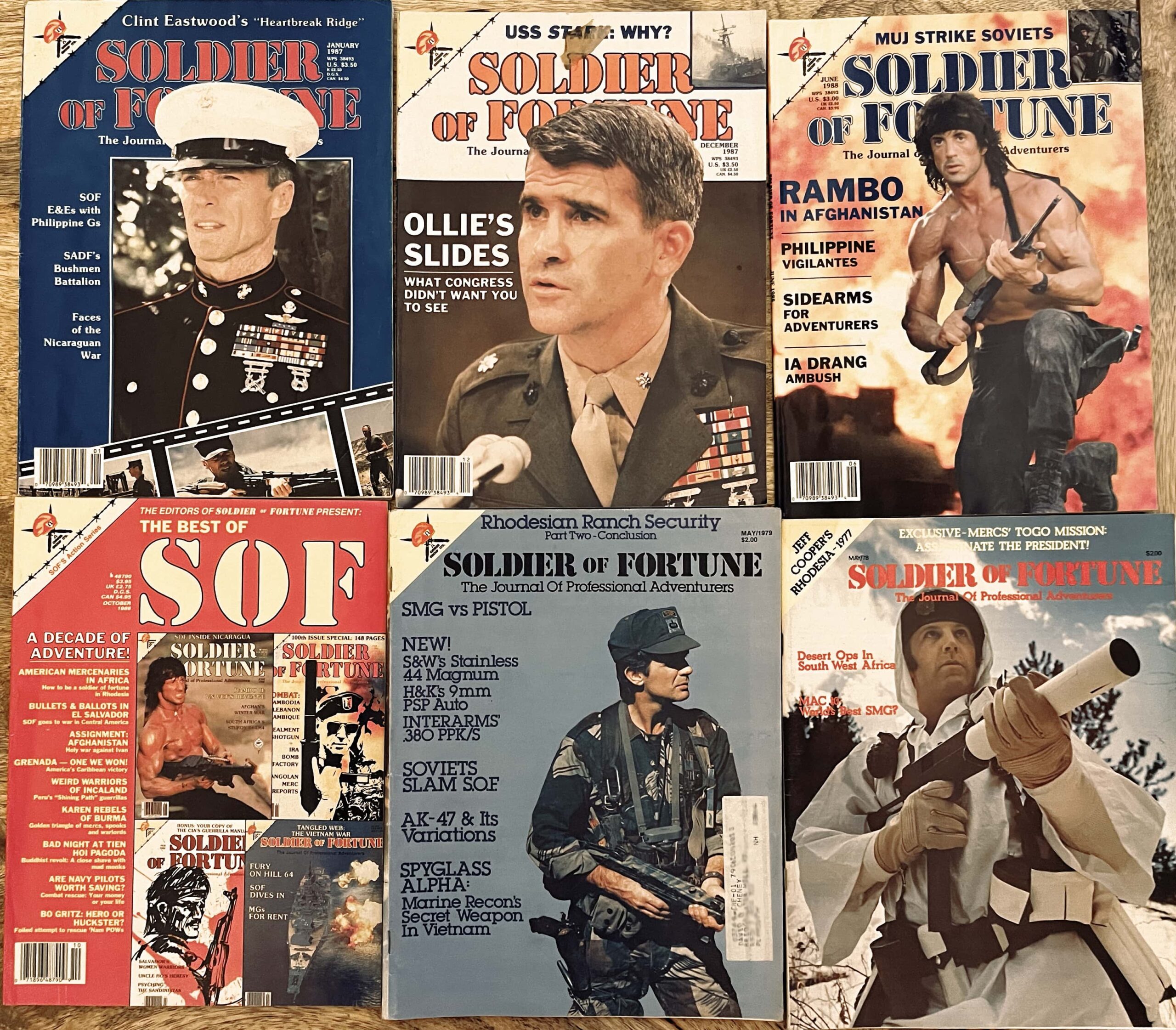
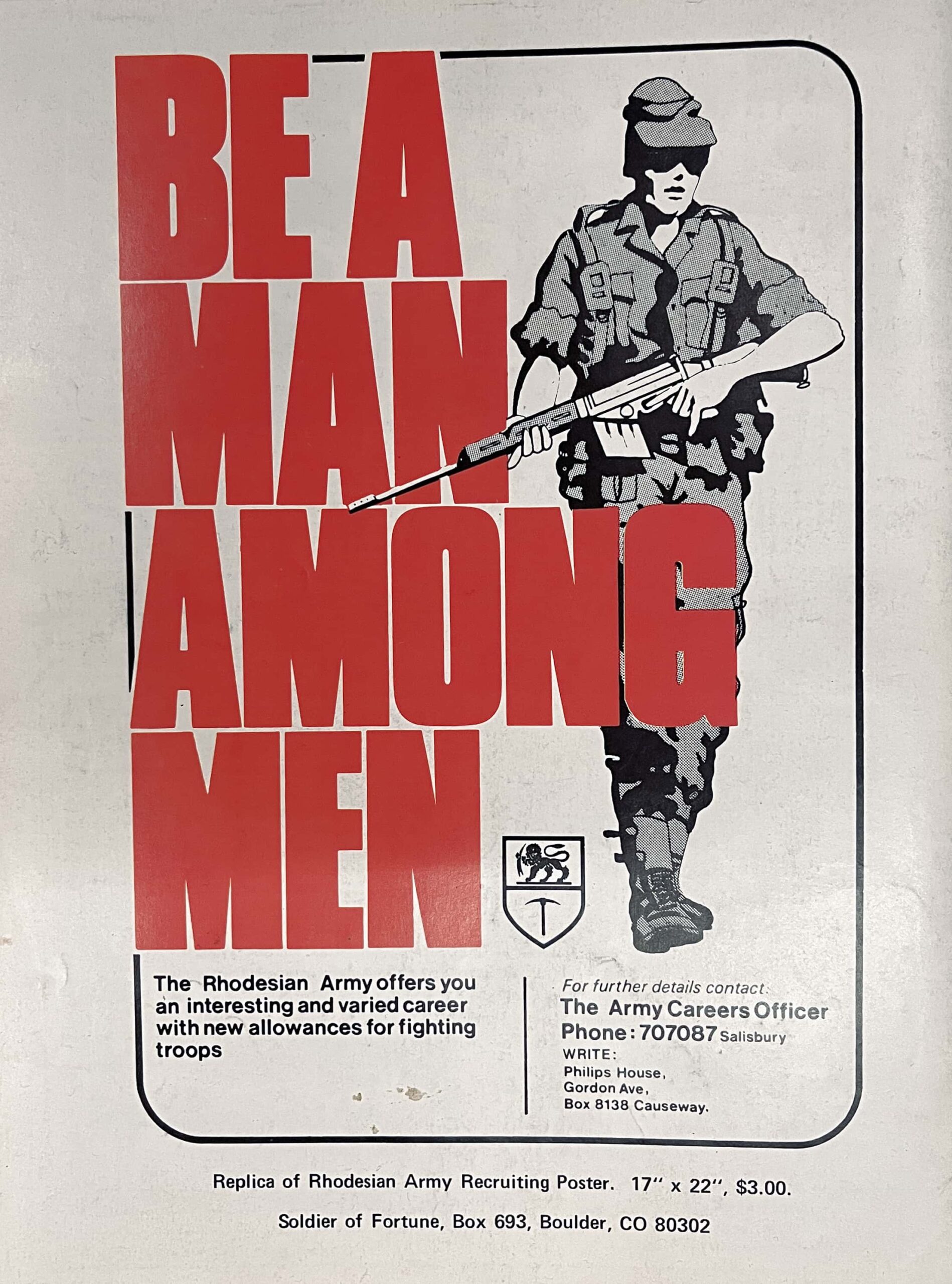
As I noted in my recent post about the film The Order, I have a longstanding interest in the politics and movements of the far right in the U.S. Fifteen years ago, I was working toward writing a book called The Reagan Imaginary, about the connections between the Reagan presidency and 1980s action movies. Life went in different directions and the book never became more than a proposal, but I spent years researching it. (Thankfully, J. Hoberman wrote a good book covering a lot of the ground I had planned to.) When a young white supremacist attacked the Emanuel African Methodist Episcopal Church in South Carolina in 2015, many people were confused by his wearing symbols of apartheid South Africa and post-UDI Rhodesia; since I’d grown up reading Soldier of Fortune magazine, it made sense to me, and I wrote about it at the time. And (inevitably) I’ve written a lot about guns.
Recently, I’ve been returning to thinking about the ways that far right ideas have long been laundered into mainstream culture by more (supposedly) mainstream people like William F. Buckley. There’s been some good writing about this recently by Matthew Dallek, John S. Huntington, David Austin Walsh, and others. Mainstream American conservatism’s distance from the KKK, the Birch Society, white power activists, and militia groups has largely been an aesthetic distance more than an ideological one (mainstream conservatives didn’t like the tone and style of the radicals, even as their beliefs, goals, and policies were cut from the same cloth). Rightwing politics has always had a porous border between its respectable establishment figures and those of the fringe. What we see today is that the border is no longer simply porous — it doesn’t exist at all.
To begin, let’s consider a cast of characters over the last 100 years or so. Most of their names are not well known, but their influence on the present is considerable. Others could certainly be added, but moving one by one through this group, we’ll see the primary lines of thought, influence, and action that have led to our current political reality:
Elizabeth Tyler (1881-1924): Cofounder of the Southern Publicity Association, Elizabeth Tyler was perhaps more responsible than anybody else for the popularity of the KKK in the 1920s. William Simmons was inspired by Birth of a Nation and the trial (and lynching) of Leo Frank to revive the Klan in 1915, but Simmons was a terrible organizer, and by 1920 had only recruited a few hundred members. That all changed when he hired Tyler and her partner Edward Clarke as publicists and gave them a huge percentage of all future membership dues. Tyler and Clarke’s activist background was in the eugenics movement, which may have helped spark their key insight: that the Klan shouldn’t just target black people, but should expand to antisemitism and anticatholicism. It was a winning formula, making Clarke and Tyler piles of money. Tyler was hugely ambitious (and greedy), and soon enough she sidelined Clarke and Simmons both. Tyler is important not only as a brilliant publicist, but also as someone who understood how ideas of white womanhood could be used for racist and conservative causes.
Charles Coughlin (1891-1979): Father Coughlin brought an American Catholic spin on fascism and Nazism to the country’s radio airwaves. Coughlin started broadcasting his Sunday sermons in 1926 on a local (Detroit) radio station, and in 1929 the station’s new owner, George Richards, encouraged Coughlin to focus more on politics in his weekly show. By 1930, the show was distributed nationally by CBS, and Coughlin was a fierce foe to Herbert Hoover as well as to Henry Ford, whom he accused of Communist sympathy for contracting to build tractors in the USSR. In 1931, with complaints about Coughlin’s content rising, CBS let him go, and Coughlin and Richards developed their own national distribution system. Anticommunism, antisemitism, and isolationism were his primary causes. He was an inspiration and consultant to the Christian Front, a short-lived but important American pro-Nazi group with paramilitary inclinations that operated mostly in New York and Boston. Interestingly, Coughlin was also quite anticapitalist, which led him to a position that would become a hobbyhorse of the far right: opposition to the Federal Reserve — a position that Robert Mathews (see below) would use as partial justification for robbing banks and armored cars. But Coughlin’s primary importance here is as the predecessor to every broadcasting rightwinger, from Pat Robertson to Rush Limbaugh to Alex Jones.
Francis Parker Yockey (1917-1960): Antisemite, Holocaust denier, fascist, author of Imperium: The Philosophy of History and Politics, co-founder of the European Liberation Front. Imperium drew ideas from Oswald Spengler, Thomas Carlyle, and Carl Schmitt — important influences still on people such as Curtis Yarvin (see below). In 2017, Anthony Mostrom reported that “since first being reprinted back in the early 1960s (by Noontide Press of California), [Imperium] has never gone out of print.” Yockey is less important for himself than for his influence on Willis Carto (below), but he’s also a bridge between the 1920s KKK, the first generation of neo-Nazis, and the far-right fringe of the 1950s.
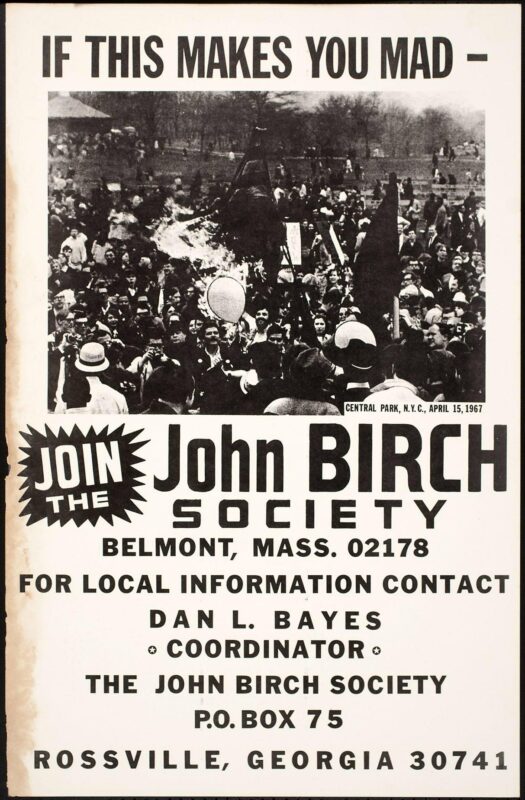
Robert Welch (1899-1985) is best known as the founder of the John Birch Society, a key disseminator of ideas and conspiracy theories that influence the shape of American politics to this day. Welch and the JBS were not as explicitly racist and antisemitic as many of the people I’m listing here, but this makes him important as a ferryman across the border between the most radical far right people and the more mainstream politicians and writers.
Willis Carto (1926-2015) founded Noontide Press (with his wife) and worshipped Yockey, whom he visited in prison just before Yockey’s suicide in 1960. It would take a book to do justice to Carto’s influence, but just consider: He founded the Liberty Lobby in 1958 and started publishing The Spotlight. He briefly joined the John Birch Society, but got into an altercation with Robert Welch and considered the JBS to be too moderate on racial questions. He turned a group supporting George Wallace into the National Youth Alliance, recruiting William Luther Pierce (see below) from the American Nazi Party to be its chair. He was a founder and first secretary of the Populist Party, under whose banner David Duke ran for president in 1988 and Bo Gritz ran in 1992. He was a co-founder of the Institute for Historical Review, one of the most prominent Holocaust denial organizations. He received an obituary in the New York Times.
Richard Butler (1918-2004) was a member of the Nazi-supporting Silver Shirts, an admirer and associate of William Potter Gale (of the Christian Identity movement and Posse Comitatus), and, most importantly, the founder of the Aryan Nations. Butler was a spiritual leader for many white supremacist groups, and a mentor to Robert Mathews (see below) of The Order.
William Pierce (1933-2002) is perhaps most infamous as the author of The Turner Diaries, one of the most tragically consequential books of the 20th century. Pierce earned a Ph.D. in physics from the University of Colorado at Boulder, then became an assistant professor at Oregon State, but soon left the position to become a researcher for Pratt & Whitney in Connecticut. He relocated to Washington, D.C. and started working with George Lincoln Rockwell and the American Nazi Party, then was recruited by Willis Carto to help lead the National Youth Alliance. Carto and Pierce clashed, and Pierce then founded the National Alliance and National Vanguard Books, and eventually helped distribute Resistance Records, making him the most prominent and influential white supremacist intellectual and propagandist during the later decades of the 20th century.
Robert K. Brown (1932- ): Unlike most of the people listed here, Robert K. Brown is not an avowed racist, antisemite, or white supremacist. He was a supporter of Ian Smith’s government in Rhodesia, but his motivations seem to have been primarily anticommunist, and he happily promoted the Rhodesian African Rifles, a regiment of black soldiers (with mostly white officers). From the late 1970s through at least the early 1990s, Brown was an important conduit between various elements of the far right (especially paramilitarists) and mainstream conservatives — because he was the publisher and editor-in-chief of Soldier of Fortune magazine, which promoted paramilitarism, survivalism, gun fetishism, and anticommunist adventurism in ways that were controversial but also, especially during the Reagan administration, tremendously influential. The cultural impact of SoF was summed up by AmmoLand this past January: “The influence of Soldier of Fortune extended beyond its readership to impact popular culture and the broader discourse around military issues. The magazine’s style and content inspired books, films, and debates on military policies and ethics, embedding itself into the fabric of American cultural and political life. Its investigative pieces often led to legislative and policy changes, showcasing the power of media in shaping governmental agenda.” Brown has been a longstanding and radical member of the NRA Board of Directors, which also makes him important here, as the NRA has been one of the most effective institutions for transmitting far right ideology into mainstream politics and culture.
Louis Beam (1946- ) is famous among militant rightwingers for popularizing the idea of “leaderless resistance”, or lone wolf activism, which became key to many paramilitary and terrorist groups on the right. (It’s hardly an idea limited to the right, of course, but Beam’s explanation and advocacy of it was significantly influential.) Beam was also important as the creator of the Aryan Nations Liberty Net in the early 1980s, an electronic bulletin board that brought to fruition his longtime goal of providing reliable communication between various hate groups. This early use of computer technology for organizing, recruitment, and propaganda distribution prefigures so much of the contemporary rightwing environment (for instance, the use of Telegram).
Robert Mathews (1953-1984) joined the John Birch Society when he was 11 years old and moved on through other far right and then paramilitary and white supremacist groups. He met William Pierce at a National Alliance rally and read The Turner Diaries, which became as important to him as the Bible. He moved to Washington state, became friends with Richard Butler, and gathered a group to commit robberies and murders along the lines laid out in Pierce’s novel. According to some witnesses at the trials of various Order members, among the people who benefited from Mathews’s robberies was probably Louis Beam, though the FBI never traced or recovered more than a fraction of the stolen money. For more on Mathews, see my post on The Order.
David Lane (1938-2007) was a member of The Order and the driver during the assassination of Alan Berg. He is perhaps most important, though, as the writer of the “14 words” (“We must secure the existence of our people and a future for white children”), often referenced in signs and tattoos as 1488 (88 referencing Heil Hitler, since H is the 8th letter of the alphabet). While many people on the far right espouse a reactionary patriotism, Lane was more like Francis Yockey in his anti-Americanism, though for Lane it was truly a white nationalism, as he saw race as the primary affiliation for people. Thanks to his wife Katja’s 14 Words Press, his writings became popular and influential throughout the white power movement.
Pat Buchanan (1938- ) is one of the most important of what I think of as the ferrymen — people who carry radical far-right ideology into the mainstream. Buchanan is famous and prominent enough that I don’t need to say much about him, but I will put him here as an important node between other people I’m not listing: Barry Goldwater, Ronald Reagan, David Duke, and Rush Limbaugh. Put these five horsemen together, and you see the ways the lesser-known people on this list influenced the general political culture of the U.S. in such a way as to make the apocalyptic triumph of Trumpism possible.
Timothy McVeigh (1968-2001) and Eric Rudolph (1966- ) are the culmination of the strains of rightwing ideology embodied by the people above. McVeigh was the total anti-government militia movement guy, Rudolph the religious extremist, with particular hatred for abortion and lgbtq rights. There were plenty of rightwing terrorists before and after McVeigh and Rudolph (we should not forget the many abortion clinic bombings and murders of clinic workers since the late ’70s), but between them we have something like the climax of an era. Both McVeigh and Rudolph set out to change the world, but they merely caused carnage and misery. The world itself was changing. The internet was becoming influential (allowing powerful new methods of propaganda, recruitment, and communication) and Muslims were replacing Communists as the bogeys of the right. All the underlying hatreds and resentments that fueled the rightwing would continue, but the shape and spread of those hatreds and resentments would change.
James Mason (1952- ) joined Rockwell’s American Nazi Party when he was a teenager, and there met William Pierce. The SPLC offers a useful insight about Mason: “Years after Rockwell was assassinated by one of his supporters, Mason grew dismayed by efforts within neo-Nazism to build large political parties and organizations, and he began to advocate for an underground, terroristic approach to catalyzing white revolution.” Like Louis Beam’s promotion of the idea of leaderless resistance, Mason’s advocacy of lone wolf terrorism would eventually have terrible consequences. Mason’s newsletter Siege, published from 1980-1986, was not especially well known, and was marginalized even among white supremacists for Mason’s praise of Charles Manson, but when it was collected as a book in the early 1990s it gained some reknown, and then later became a vital influence for one of the most disturbing and violent current manifestations of white supremacy and neo-Nazism, the Atomwaffen Division. After the deadly Unite the Right rally in Charleston in 2017, #ReadSeige became a popular hashtag among white power and alt-right groups online.
John O’Sullivan (1942- ): British and relatively mainstream, O’Sullivan is a bit of an outlier on this list, but I include him for a specific reason relating to the current moment: He is a professional apologist for Hungary’s Viktor Orbán. O’Sullivan was a policy- and speechwriter for Margaret Thatcher, then became editor-in-chief of William F. Buckley’s National Review for nine years, where he proudly made the decision to devote the whole of one issue’s articles section to an anti-immigration screed by the white nationalist Peter Brimelow, whom O’Sullivan described as “a friend and gifted writer”. He is now director of the Danube Institute, a conservative thinktank in Budapest that is associated with the Heritage Foundation (publisher of Project 2025), funded by Orbán’s government, and described by Hungarian investigative journalism site Atlatszo as “one of the main tools of the Orbán government’s ideological expansion abroad, especially in the US.” (See also Casey Michel in the New Republic on Orbán, Trump, Heritage, and the Danube Institute.)
Curtis Yarvin (1973- ) brings us fully into now. Yarvin is a self-avowed neoreactionary who loathes democracy. He is also a favorite of tech billionaire Peter Thiel and Thiel’s puppet, J.D. Vance. Yarvin is not a white nationalist, though in 2007 he wrote on his blog (when writing under the pseudonym Mencius Moldbug), “I do read white-nationalist blogs, and I’m not afraid to link to them.” That post was inspired by readers’ comments on his requiem for Rhodesia’s Ian Smith — a topic on which Yarvin and Robert K. Brown (above) are aligned. (As far as I can tell, Yarvin’s epigraph from Rian Malan is a bit of a misquotation and a huge decontextualization.) Like many neoliberals (including his beloved Ludwig von Mises), Yarvin seems to believe in racialist quackery and IQ hogwash (cf. Charles Murray), and he has had something of an obsession with the idea that black people are a major source of crime. But Yarvin is not a nationalist of any sort, instead promulgating a techbro quasi-Libertarian vision of corporate fiefdoms, which he originally called neocameralism. His Libertarian inclinations are limited by his devotion to the idea of strongmen with absolute power. (It’s exactly the sort of thing somebody who, say, admires Silicon Valley CEOs as superheros would think.) One of the first analyses of Yarvin’s work characterized him as attracting “the usual teeth-gnashing white supremacists who haunt the web while also leaving room for a more socially acceptable assortment of ‘men’s rights’ advocates, gun nuts, transhumanist libertarians, disillusioned Occupiers and well-credentialed Silicon Valley entrepreneurs.” It’s a stew that is spilling through the U.S. government, where many of those folks now work. Of note: Yarvin coined the acronym/command RAGE: Retire All Government Employees … a concept we see being put into play throughout the federal workforce in recent months.
What do we see by looking at this rogues gallery?
What sticks out for me at the moment is the effectiveness of the rightwing coalition. It may not seem especially coherent at first glance, but look again. These figures are united by a deep, visceral hatred of egalitarianism. They disdain equality and cooperation, instead valuing hierarchy and competition — though only if they are on the side of the “winners”. (This is one reason why Trump is the quintessential cheerleader for these folks: He sees everything in terms of winners and losers.) Even if a rightwinger is a complete failure at everything in life, they will not perceive themselves as losers; instead, their natural entitlement to winning has been thwarted by the empowerment of undeserving people. The game is always “Heads, I win; tails, you lose” — the wealthy white CEO is proof of the superiority of his kind; the downtrodden working class white guy is proof that the deck is stacked against the worthy. It leads to a politics that can feel incoherent to someone not sympathetic to it, but there is some consistency both emotionally and intellectually.
Corey Robin’s book The Reactionary Mind lays out these dynamics:
This vision of the connection between excellence and rule is what brings together in postwar America that unlikely alliance of the libertarian, with his vision of the employer’s untrammeled power in the workplace; the traditionalist, with his vision of the father’s rule at home; and the statist, with his vision of a heroic leader pressing his hand upon the face of the earth. Each in his way subscribes to this typical statement, from the nineteenth century, of the conservative creed: “To obey a real superior . . . is one of the most important of all virtues—a virtue absolutely essential to the attainment of anything great and lasting.”
The other important element is violence.
I can think of ways religious conservatives in particular might tend toward pacifism, but I can’t imagine a rightwing pacifism. The concepts just seem completely contradictory. We’re in a murk of labels here, though, one I’d hoped to save for later. I haven’t made any distinction yet between conservatism and the rightwing (or the far right, a term I use because others do, but which always seems a bit off to me — I struggle to perceive any consistent different between the right and the far right). We might think (contra Corey Robin) of conservatism as a big tent tendency toward traditionalism, caution, and classical liberalism — and that would allow for the idea of a conservative pacifism. Even Gandhi fits within something of a conservative tradition, or at least we could say he held clearly conservative beliefs. There are probably more examples internationally. It’s an interesting question, then: conservative pacifism? But a term like the right in its current usage presupposes an acceptance of violence that is at odds with pacifism. No matter a person’s individual feelings about violence, a devotion to hierarchy must inevitably proceed to a plan for the maintenance and imposition of hierarchy, and such a plan is hard to conceive without at least the threat of violence.
But violence within the rightwing tendency I’m looking at here is more than just a last-ditch tool to strengthen a desired hierarchy. Violence within this tendency is a purifying force, a righteous expression of power, a sacred path to regeneration. Violent fantasies lead not only to violent acts by individuals (lynchings, murders, bombings) but also, and more often, to violent policies. All government, right or left, organizes and controls violence; the left tends to want to minimize or at least excuse that violence, while the right — perhaps more honestly — glories in it. But the question of the violence of the rightwing is big and needs to be left for future development.
The ideological line I’m exploring did not start with Elizabeth Tyler in the early 1920s any more than it will end with Curtis Yarvin today. Nonetheless, we need some parameters for analysis, and these seem like solid ones to me, especially as my interest is primarily the 1980s and 1990s. I’m interested in the similarities across different sorts of rightwing thinkers and activists, not to try to define whatever fundamental belief makes conservatism conservatism (other people have done a perfectly good job of that), but rather to look at the ways the beliefs and actions most observers consider “fringe” have been assimilated into political mainstreams.
Ultimately, I would hope such analysis might point toward ways to innoculate the social body from these ideas, since I consider them deeply destructive to human life and happiness. But that seems an overwhelming task — analysis feels, for the moment, a little more possible. We shall see…
Discover more from Matthew Cheney
Subscribe to get the latest posts sent to your email.
