
1.
Director Justin Kurzel’s latest feature film, The Order, tells the true story of a group of white power terrorists in the Pacific Northwest who killed Jewish radio “shock jock” Alan Berg, bombed porn theatres and a synagogue, counterfeited money, robbed banks and armored cars, and planned other attacks and assassinations before they were killed or arrested in the mid-1980s. It’s an important story, beautifully acted and filmed, but overall for me it raised questions of how and why we tell stories such as this one at this time.
Kurzel has made three previous films based on historical events, all of them about his native Australia. His first, Snowtown (known in the US as The Snowtown Murders), is one of the most powerful and disturbing films I know. Then came The True History of the Kelly Gang, based on Peter Carey’s Booker Prize-winning novel, an epic and sometimes surreal movie that is surprising, funny, weird, and unsettling. And then there’s Nitram, with which Kurzel returned to the intimate and more contemporary mode of Snowtown to tell the story of the perpetrator of the 1996 Port Arthur Massacre. Each of these three films is, in addition to being based on actual events, a study of male extremism and violence.
We could then be forgiven for assuming that The Order might somehow be similar — after all, the story of the group that was sometimes called The Order is the story of a charismatic leader who assembles a ragtag bunch of racists into the most successful group of paramilitary white power terrorists since the days when men in white sheets were riding horses. It is easy to imagine the story told as a mix of Snowtown, True History of the Kelly Gang, and Nitram.
But it is not that. Partly, this may be because those three films were written by Shaun Grant, whereas The Order is written by Zach Baylin. On Marc Maron’s podcast, Kurzel said he was attracted to the script because he had long wanted to make a thriller like The French Connection or Dog Day Afternoon. (Maron plays Alan Berg in the film — Kurzel is a master of casting, and the choice of Maron is simply perfect. He is only on screen for a few minutes, but his time in the film is moving and memorable.) The result is gripping, well acted, beautifully shot by frequent Kurzel collaborator Adam Arkapaw … and also feels like it’s telling the story from entirely the wrong angle. Whether this is a bad thing or not, though, I’m not sure. Because to tell the story in a more powerful and meaningful way would have been to risk making a film that, for all its best intentions, might have skirted dangerously close to being a recruiting vehicle for white supremacists. And The Order, to its credit, is very much not that. But it is also, for all its virtues, ultimately a bit thin, and it’s hard to overcome a certain feeling of inconsequence at the end, a feeling of, “So what?”
2.
The Order would have been more powerful if it were structured more like Snowtown, telling the story of how Order leader Robert Mathews managed to convince otherwise law-abiding people to ruin their lives for his cause. This is what makes Snowtown so disturbing: slowly, bit by bit, moment by moment, we watch a young man be twisted toward brutality and murder.
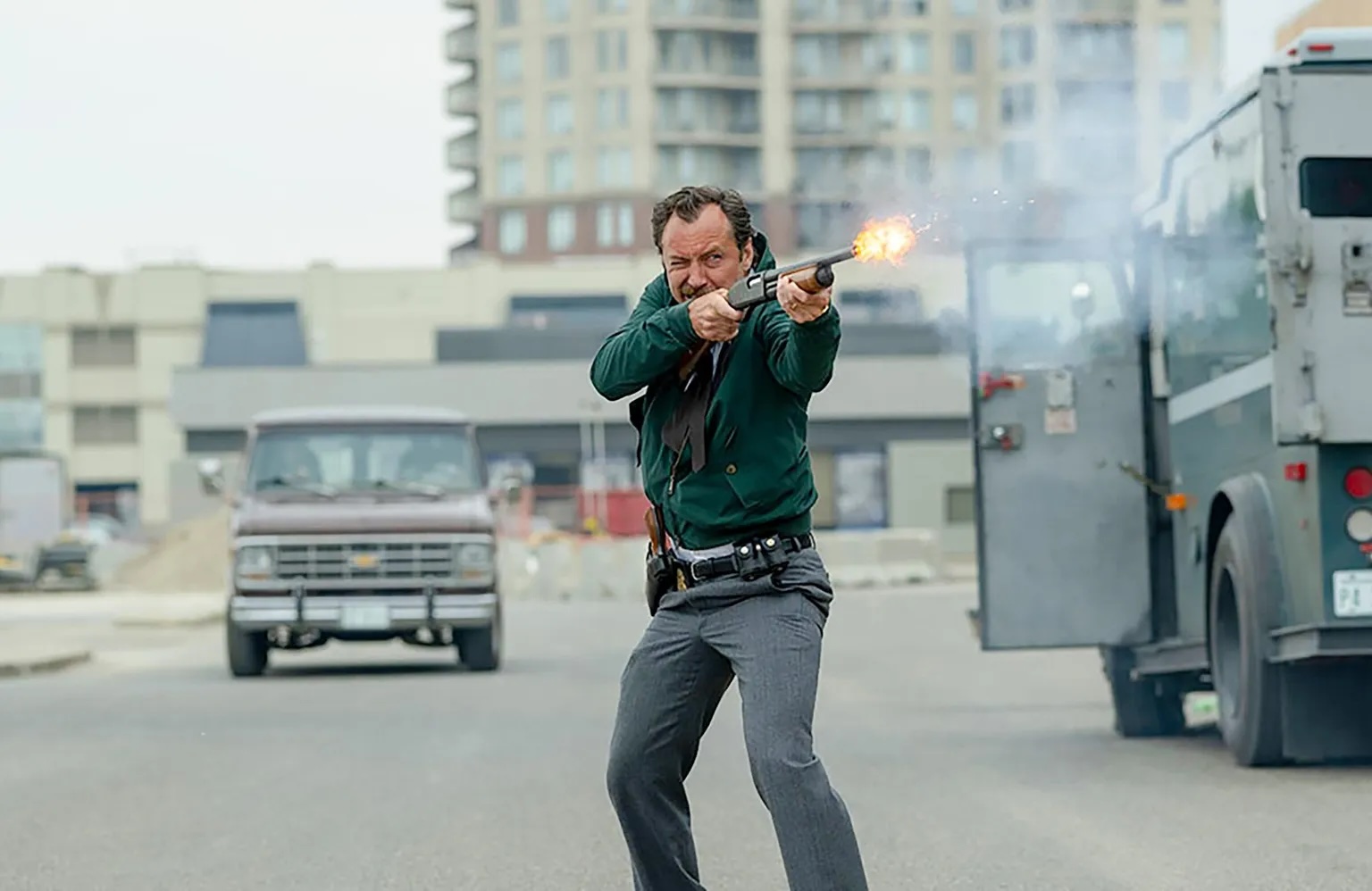
Instead, The Order takes the material of reality and shapes it into a conventional, even clichéd, frame. The story Kurzel tells is of a grizzled, driven FBI agent (played by Jude Law) chasing down Mathews (Nicholas Hoult). Law’s character, Terry Husk, is fictional, though sort of an analogue to agent Wayne Manis. What meaning the film offers lies in its comparison of these two men willing to sacrifice everything in their life for a cause. This is made explicit in something Husk says to Mathews’s wife:
Husk: Debbie, none of this is for you. Or Clinton [their son]. It’s for [Bob].
Debbie: You don’t know him.
Husk: I do. And at the end of the day — the sacrifices, the work, the women — you can justify everything with a cause that you’re fighting for — but in the end — it’s all about him. Believe me.
After they leave Debbie, Husk’s partner for the interrogation, Special Agent Carney (Jurnee Smollett), asks, “So was it worth it? The work — women — the sacrifices?” Husk dodges the question, but the film’s primary theme has been presented for us. Husk has ruined his health and family for a life in pursuit of justice, but justice has been rare. Has it all been worth it? He tells the young sheriff’s deputy Jamie Bowen (Tye Sheridan) about inadvertently getting a mob informant killed, the murder remaining unsolved. “Why are you telling me that?” Jamie asks, but Husk gets interrupted and never gets a chance to explain.
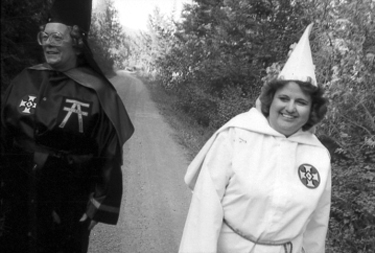
Richard Butler’s wife (L) and Debbie Mathews (R) at a rally, 1986
As viewers, we can fill in for ourselves the implications of these conversations. They tilt our understanding of the story’s purpose toward a pretty familiar exploration of the echoes and rhymes between cops and robbers. As such, the movie works fine. But it lacks the originality and intensity of Kurzel’s best work previously.
The story of Bob Mathews’s life and exploits has inspired two other films that I have seen: Betrayed (dir. Costa-Gavras, 1988) and Brotherhood of Murder (dir. Martin Bell, 1999). (I’m leaving aside Eric Bogosian’s play and Oliver Stone’s film of it, Talk Radio, which was partly inspired by the murder of Alan Berg, since it’s focused on the DJ character and not the murderers.)
Betrayed tells the story of a female FBI agent who infiltrates a group based on The Order, though most of the details are changed. It’s a pox-on-both-your-houses tale of, on one side, a naive but well-intentioned agent brought to the edge by ambitious, heartless senior FBI agents; and on the other side, good, salt-of-the-earth people led astray by a charismatic leader and a psychopath or two — a story of individual people sacrificed and ruined for other people’s obsessions.
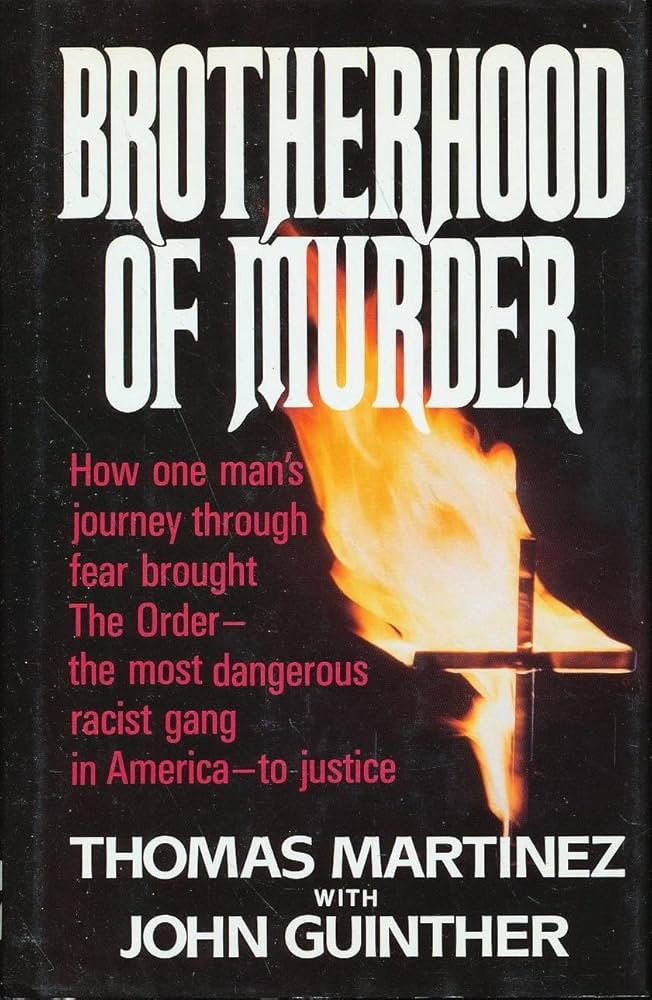
Brotherhood of Murder is based on a memoir by Thomas Martinez, an Order member from Philadelphia who became the most important FBI informant from the group.William Baldwin plays Martinez, Peter Gallagher plays Mathews. The film has hardly any redeeming qualities — it’s clunky, obvious, and inert. But if we think about how Kurzel might have approached the story of Bob Mathews from a similar angle, we can begin to see how The Order could have better avoided clichés and increased its emotional and thematic effects, though not without some added dangers.
In Kurzel’s film the character inspired by Martinez is named Tony Torres (played by Matias Lucas), his identity changed, I expect, to allow better narrative focus — The Order keeps Mathews and crew in the northwest, whereas in reality though they were based there, they traveled quite a bit to recruit and to spread their stolen money to various white power groups. Martinez never moved to the northwest, though Mathews wanted him to. He got his last name via his father’s ancestry, which was partly Spanish; the character of Torres has a somewhat more interesting story: He claims to be descended from Spanish nobility, but Husk reveals that he’s Mexican. Had Torres been the main focus of the movie, his sense of shameful identity, and joining a white power group to hide that sense of shame, could have been productive for character development. But the actual film doesn’t do anything much with it, focusing instead on the comparison between Mathews and Husk.
The true story of Martinez could make a powerful film. As a child and young adult, he experienced his all-white school in Philadelphia become integrated through busing, which caused many white families of means to move their children to private or religious schools, and led to neglect of Martinez’s school by the local community. Gangs formed and Martinez abandoned school in tenth grade after a gangmember threatened his life. He entered the military, hoping to learn a trade like baking, but after he completed basic training, that didn’t seem to be the direction they were sending him, so he felt betrayed and left. He got jobs and lost them, blaming affirmative action (rather than, as his older self writes, the fact that he was a high school dropout). And then he saw David Duke on Tom Snyder’s tv talk show and heard that his problems were not his fault but were instead the fault of an establishment that used busing and affirmative action to oppress hardworking white people. Martinez contacted Duke’s organization, began reading their literature, and eventually found his way to Klan rallies and then a convention of the neo-Nazi National Alliance, where he first met Bob Mathews.
Martinez also met the founder of the National Alliance, William Pierce, who wrote the novel The Turner Diaries, which not only provided a blueprint for Mathews (and the name of The Order), but also inspired other white power terrorists, most consequentially Timothy McVeigh, whose bombing of the Federal Building in Oklahoma City in 1995 came directly from Pierce’s book.
From the moment they met, Martinez was on his way to becoming part of Mathews’s plans — plans that got derailed when Martinez, against his comrade’s orders, passed counterfeit money in his own neighborhood, making it easy for law enforcement to identify him and then give him the option of becoming an informant to avoid serious jail time.
In The Order, Husk makes the connections that in reality were made for the FBI by Martinez (plus some careful analysis of phone records). Before they convinced Martinez to talk, the FBI had no idea that the Berg killing and various robberies were all the work of Mathews’s group. They were still thinking of the white power movement as more or less harmless weirdos, disconnected from each other and without a lot of financial resources. Once they had the information from Martinez, it was relatively easy for the FBI to put everything together, especially since Mathews and the others made a number of mistakes, including Mathews leaving a traceable gun behind at the biggest robbery and the MAC-10 machine gun that killed Berg being kept as a souvenir that got discovered when Order member Gary Yarbrough fired on agents and then fled, leaving his stash of equipment and literature behind.
In addition to Martinez, the FBI also soon had at least one other informant, though that person’s identity has never, as far as I know, been revealed — and this informant led them to Mathews’s hideout on Whidbey Island, where he died in a shootout when flares tossed into the house set the place aflame. He probably could have escaped the fire if he had wanted to, but Mathews had no intention of being taken alive.
Had Kurzel chosen to tell the story of Tom Martinez (or Tony Torres), he would have had a complex character from whose viewpoint the film could explore ideas of identity, resentment, community, and extremism. Martinez’s later life would have been well worth representing, too, as instead of joining the witness protection program (which was offered to him), he instead did work to speak against neo-Nazi radicalization and to show a path out of a hate group. Ultimately, he found a new purpose in life, one that allowed him to take a truly courageous stand.
But a story like that is not what screenwriter Baylin and director Kurzel were interested in, which seems to me unfortunate, a missed opportunity, because especially right now, when neo-Nazi and fascist groups are ascendant not only on the fringes of society but within the core of some countries’ political institutions, we need more stories not of obsessed men clashing but of people who find ways to get free of hatred, prejudice, and their desire for apocalyptic power.
3.
Many people in Australia did not want Justin Kurzel to make Snowtown or Nitram, fearing that telling stories of notorious murderers would likely achieve little more than glorification and retraumatization. Kurzel took these concerns seriously and produced films that are difficult and painful, but also illuminating. The brutality in Snowtown is purposeful and necessary, a protection against complacency or minimization of the crimes committed; the ways the tortures and murders are filmed is far from exploitative. Nitram goes in the opposite direction, mostly keeping the crimes offscreen, and instead bringing us into its protagonist’s warped perceptions and chaotic, terrifying world. Both films seem to me to be exemplary models for how to represent violence and psychosis in ways that avoid sensationalism, glorification, or exploitation. Both also possess a certain sympathy for the plights of people caught up in madness, which is essential — we gain little from representing people who do terrible things as inherently evil monsters. Snowtown and Nitram don’t provide explanations for crimes whose enormity radiates beyond any satisfactory explanation, but their narratives allow us to feel our way toward understanding how such crimes become possible.
Just such an artistic sensibility is what we need when the ideas of people like William Pierce, Richard Butler, and Robert Mathews are now part of the mainstream.
Toward the end of the 2018 Frontline/ProPublica documentary Documenting Hate: New American Nazis, notorious neo-Nazi James Mason tells journalist A.C. Thompson that with “Trump winning [the 2016] election by surprise, and it was a surprise, I now believe anything could be possible. … As Trump says, and he has it printed right across the front of his hat, ‘Make America Great Again.’ In order to make America great again, you’d have to make America white again. Okay? It’s interesting. We’re headed for interesting times.”
Now, with Trump in a second term and various members of his administration cheerily issuing Nazi salutes, espousing old ideas of scientific racism and eugenics, and waging war against minorities, America has moved closer to becoming the country Robert Mathews always wanted it to be. Various far-right activists over the decades have said they thought it would be catastrophic for a quasi-Nazi to be elected to a powerful office, since that might provoke both a strong backlash before the armies of bigots were ready to defend against it or it might lead less committed people who agree with the bigots to feel that they don’t need to fight for anything, since their point of view would now be well represented in the halls of government. Trump has proved those fears to be wrong. He is the culmination of many decades of work by the far right, the human embodiment of their vision of hate, the useful idiot twisting the powers of government toward murderous white supremacy.
(The question of antisemitism has been complicated in the current environment in ways I don’t have room to go into here. The confluence of a far-right government in Israel and the rise of Christian Zionism has shifted some of the priorities and alliances of hate groups.)
As scholars such as David Austin Walsh, John S. Huntington, Matthew Dallak, and Bruce Hoffman & Jacob Ware (to pick four recent examples) have shown, the far right has always had a clear conduit into the Republican party, with “moderate” Republicans like William F. Buckley disagreeing with the radicals more on style than substance. Robert Mathews and many of his compatriots got their start with the John Birch Society — Mathews was 11 years old when he first joined — and through it found their way to more explicitly racist and paramilitary groups. The Republican party of today is nearly indistinguishable from the Birch Society except that anticommunism is less salient in a post-Soviet world (indeed, a world where the rightwing U.S. president is indistinguishable from a Russian agent), though the right nonetheless trots out vague claims of communism or socialism against any policy that doesn’t fit their white supremacist capitalist vision.
The Order forced law enforcement to pay attention to rightwing terrorism, and then the Oklahoma City bombing made it clear just how deadly such people could be. But with 9/11, American priorities shifted to the Middle East, and the whole idea of rightwing domestic terrorism got lost outside of the occasional investigation of the Aryan Brotherhood. As more and more white men committed hate crimes, attempts were made to raise the alarm, but the government now works to suppress concern — the 2009 Department of Homeland Security report on rightwing extremism has proved prescient, but it was disavowed at the time and the group that did the analysis was forced to disband. We can be sure that with the current leadership of the U.S. government, not only will such investigation be prohibited, but the very people who would be investigated could be empowered.
And so the question of how we represent rightwing hate in movies, tv shows, plays, books, and stories becomes an important one.
4.
I said that the danger Kurzel faced with The Order was that a story about neo-Nazis could inadvertently become a recruiting film for neo-Nazis. Of course, any deeply unstable person might be set off by anything — just look at John Hinckley, Jr. I’m thinking about something broader and less inflected by mental illness. Bigotry and hate are insidious and attractive to a lot of people, and powerful representations can be galvanizing for more than just a few fringe nutballs. Unless the racists are presented as buffoons, it is possible that for a certain segment of the movie-going public, racist characters will seem to be offering reasonable ideas, necessary tactics, patriotic defense of American liberties. The rightwing always taps into American myths of individualism and freedom that run deep and powerful in U.S. culture. Let’s not forget that the first movie shown in the White House, The Birth of a Nation, was a big recruiting tool for the KKK and inspired various crimes.
The assumption that racist activists are stupid hillbillies is one of the reasons that law enforcement did not take rightwing domestic terrorism seriously until Mathews and company stole millions of dollars and committed murders. Even today, people often assume militia members are beer-bellied losers playing army in the woods, no real threat to anybody. The assumption that rightwingers are uneducated and ineffectual has only been to their benefit over the last 100 years, making them easy to underestimate, easy to ignore. (For more on this, check out David Austin Walsh on the Know Your Enemy podcast. See also Rick Perlstein’s New York Times Magazine article “I Thought I Understood the American Right. Trump Proved Me Wrong.”)
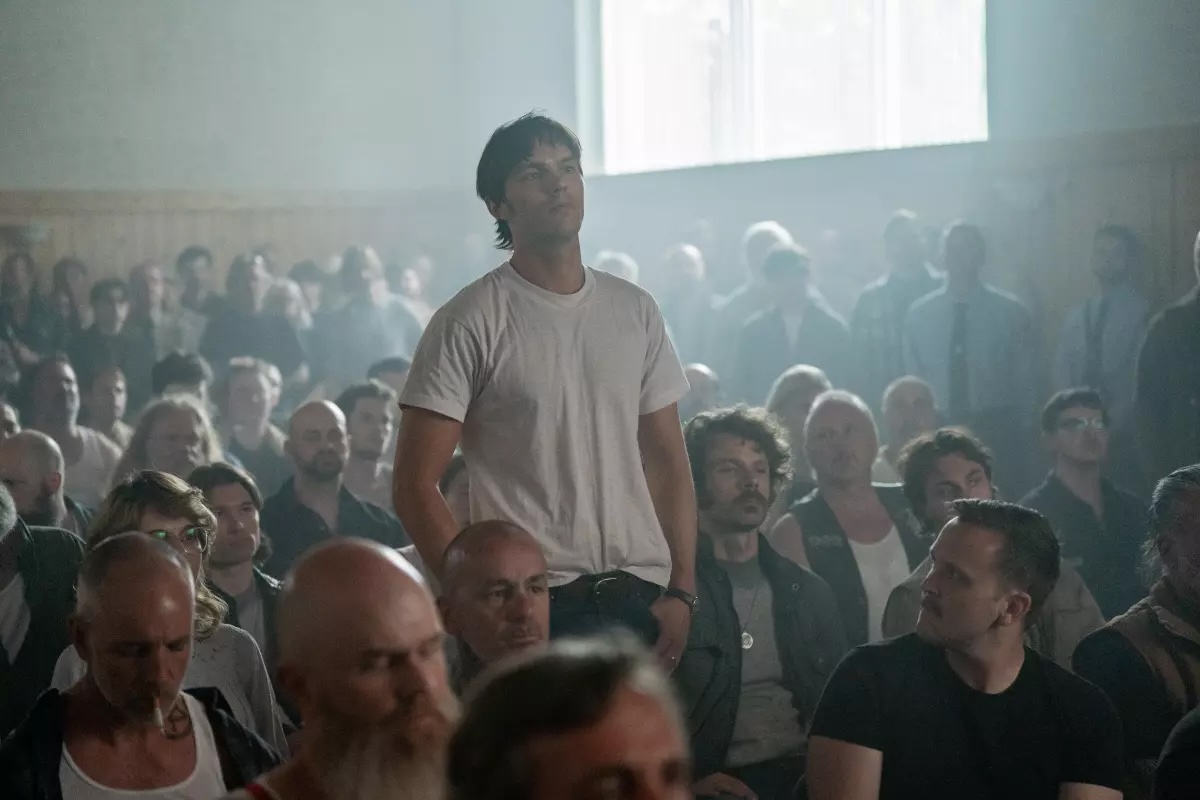
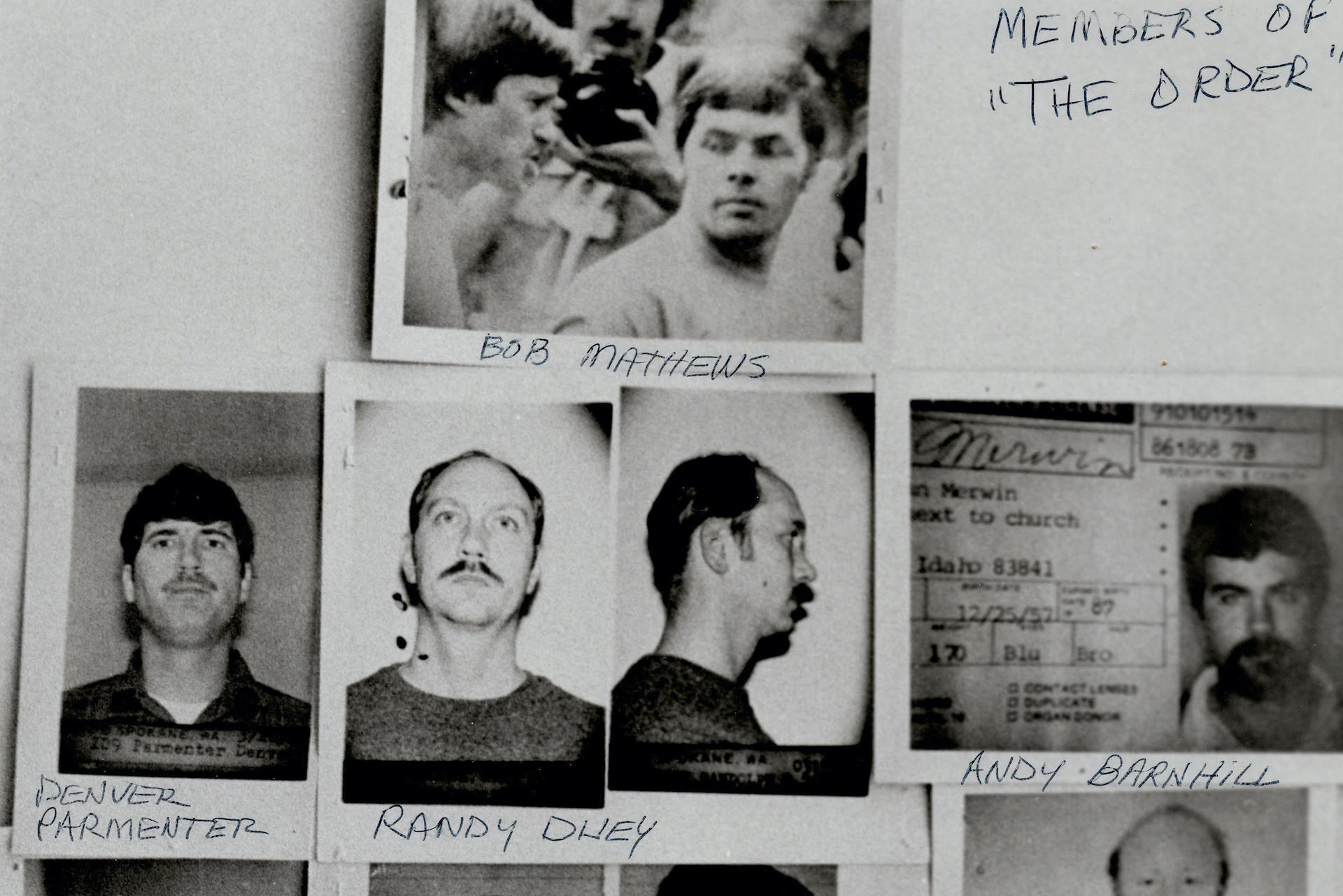
A film accurately presenting a character like Mathews — smart, good-looking, well-spoken, charming — risks popularizing his ideas. The Mathews presented in Kurzel’s film is not likely to be attractive in that way because the character isn’t really developed. He’s enigmatic and his statements are mostly brief and uncompelling. The film spends very little time on how Mathews recruited and why he was so successful. The recruitment has already happened by the time the film opens. It really is just a story of two already-established groups: The Order and the FBI.
(The Order gives some brief attention to tension between the older generation’s fondness for speeches and the younger generation’s impatient desire for action, but this is a little exaggerated for dramatic purposes — prominent Christian Identity preacher and Aryan Nations founder Richard Butler was a staunch supporter of Mathews, simply wanting any illegal activity kept off his land, since he knew he was himself watched by some elements of the police; the film implies a rivalry and maybe even a break between Mathews and Butler, but that lets Butler off the hook a bit. The association of the two men was profitable for both.)
Snowtown is about grooming and recruitment, about the ways a charismatic, psychopathic figure like John Bunting convinces people to become murderers. It protects against becoming itself a recruiting film via careful aesthetics. The slow pace is not at all exciting, the murders are presented with gut-churning realism, and the dominant emotion is terror, not excitement or enthusiasm.
True History of the Kelly Gang in some ways offers an even better template for a version of The Order that might have been, since True History has a certain epic scope, covering quite a few years in its characters’ lives, and bringing in a variety of historical and social forces, creating a wild, dizzying vision of the place and era it depicts. We see how the young Ned Kelly gets radicalized over time in various experiences. The historical distance protects against our seeing the characters as inspirations — we can sympathize with the difficulties of some of their circumstances, but nobody who sees the film is likely to use it as a blueprint for much of anything.
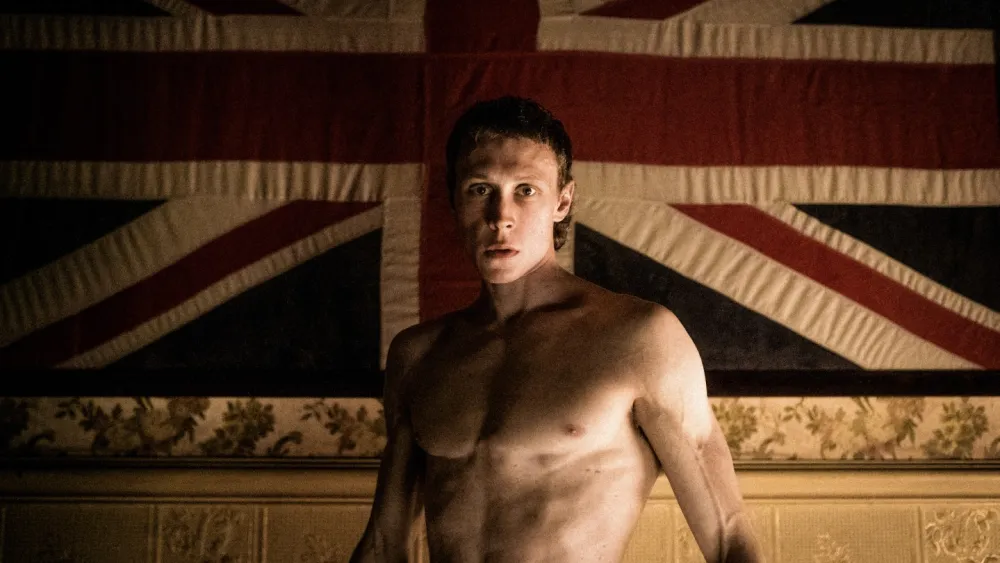
Something like a melding of Snowtown and True History of the Kelly Gang might have been possible with The Order, but it was not of interest to Kurzel. (Understandably — he’d done it so well with his earlier films, so why tell a variation on the same story? He wanted to make a 1970s-style cops & robbers thriller.)
The character of Robert Mathews would also present something of a challenge if he were the center of the depiction, because Mathews was a lifelong zealot. From the moment as a preteen that he first learned of the John Birch Society, his life’s path was clear to him. This is one of the most difficult sorts of people to depict in narrative fiction: someone, for reasons probably mysterious even to them, whose beliefs are not really based in any direct experience, not initially influenced by family or friends, but are nonetheless deeply held and more or less unchanging over a lifetime. Narrative relies on contrast, and there just wasn’t any contrast within Mathews’s personality. Productive narrative contrast comes from comparing Mathews with other people.
Some people would argue, with good reason, that now is not the time to tell stories about violent racist men, that what the world needs are other stories, stories of heroic resistance, of marginalized people fighting back against the forces of oppressive societies, of targeted groups finding ways to persevere, to build community, practice mutual aid, and offer hope to an ever more terrifying world. Let’s forget the lives and deeds of men like Robert Mathews. Life is too short to give them more attention.
I have some sympathy for that argument. I would never insist someone ought to watch a movie like The Order, and certainly not one like Snowtown, extraordinary and powerful as it is. I am as frustrated as anybody by the news media’s tendency to seek out a few disgruntled white guys and interview them endlessly about what the Democrats got wrong in whatever election happened most recently. Even in the current environment, the vast majority of Americans are not about to join a militia or be tempted toward some version of the American Nazi Party. Might there be a danger in overpublicizing these sorts of groups?
In some ways, I’m the wrong person to ask.
Perhaps my own lifelong interest in studying the far-right is just an unhealthy obsession with solving the mysteries of my childhood, or overcoming some old, deep trauma. Maybe any justification I can make is self-serving more than illuminating. (You’ll find these interests throughout my writing, from “Blood” to “Where’s the Rest of Me?” to “Mass” to “After the End of the End of the World” to “A Suicide Gun” to “Wild Longing” — and that’s just the fiction.) But now, trapped in an increasingly terrifying world where rightwing authoritarianism is immensely powerful, I try to hold onto something like sanity by seeking out the connections, meanings, and motivations of the past’s crackpots. It really does help (me, at least) to seek a sense of how we got here, of the types of ideas, people, and events that led to the triumph of fascism in America.
I’m one of the targeted — though I grew up around various sorts of gun nuts, apocalypse fanboys, and militia members, I’m also a lifelong leftist and a gay man. (And though not myself Jewish, I worked for a year at a yeshiva high school and probably half my friends are Jews.) Though there have been rightwing queers ever since the invention of fascism, the rightwing has long been viciously, murderously against us, because the rightwing is obsessed with ideas of traditional, patriarchal families and the propagation of the white race. Knowing about the history, ideology, and psychology of the people who want to kill me feels necessary for self-preservation.
And so I seek out the history as well as wondering about how fiction might help us expand our imaginations of what has happened and what is possible in response. I don’t really have any sort of answer to all this right now, but I would not have written all these words and given The Order all this thought if, ultimately, I didn’t think it was, overall, a missed opportunity.

—–
Images: 1. poster for The Order; 2. Jude Law in The Order; 3. Richard Butler’s wife and Debbie Mathews in 1986 by Mary Ellen Mark; 4. cover of Brotherhood of Murder by Thomas Martinez with John Guinther; 5. Nicholas Hoult in The Order; 6. images of Order members from PBS’s Extremism in America episode, “The Order”; 7. George MacKay in True History of the Kelly Gang; 8. photo of Metaline Falls, Washington by Daniel Andrews via Washington Filmworks.
Discover more from Matthew Cheney
Subscribe to get the latest posts sent to your email.
